
A garment bag that will not close may have too much inside, trapped fabric, or a folding mechanism you have not identified. Pulling the fasteners harder can make the problem worse.
To fold a garment bag, identify the exact model and follow its folding instructions. Arrange the garments, keep fabric clear of the closure, use the intended fold points and fasteners, then check the closed bag. Simple covers, folding bags, and convertible designs may require different methods.
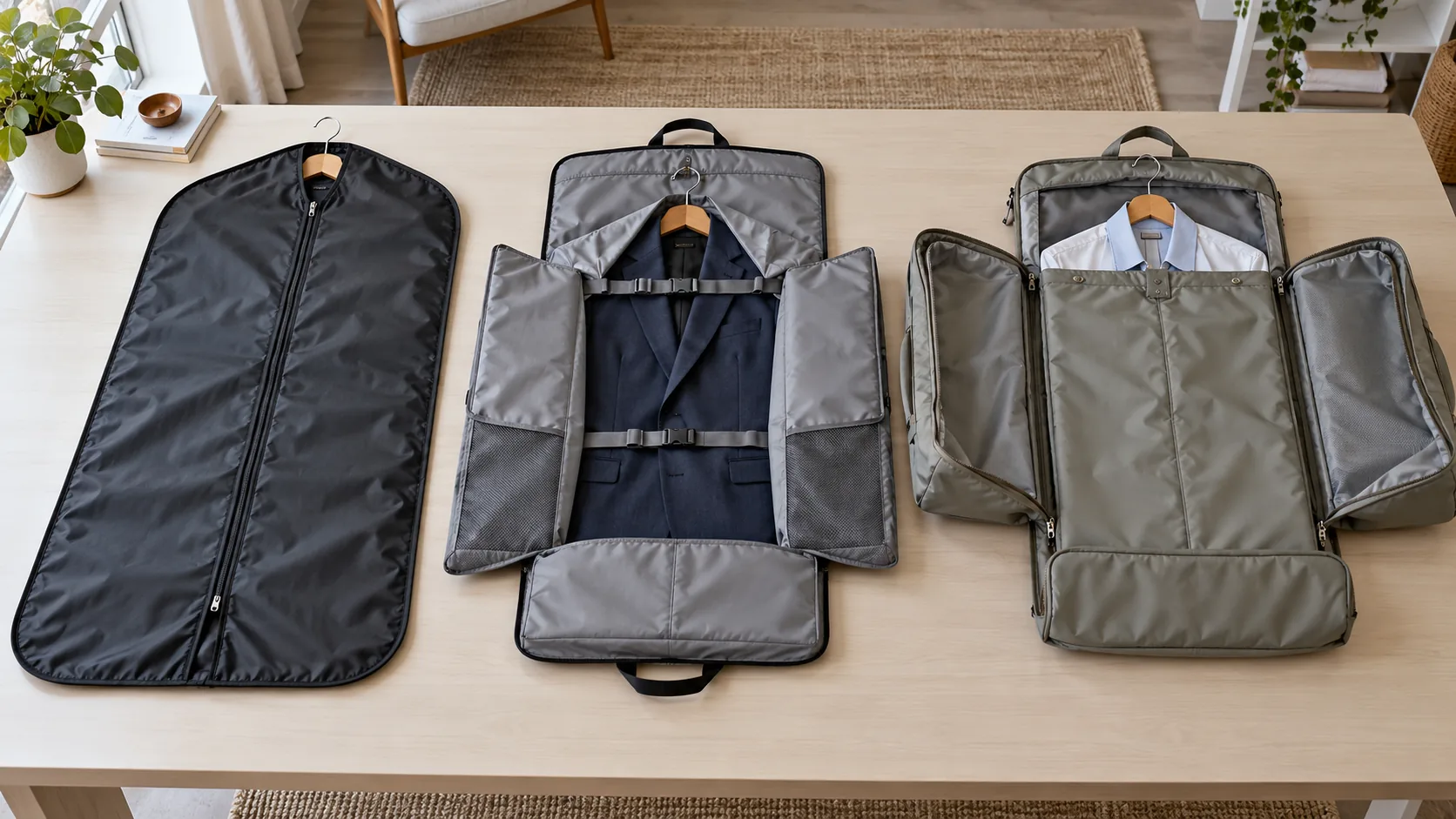
Which Type of Garment Bag Are You Folding?
Find the model label and its instructions before choosing a sequence. A product name such as “bi-fold” or “convertible” is a starting point, rather than a complete operating guide.
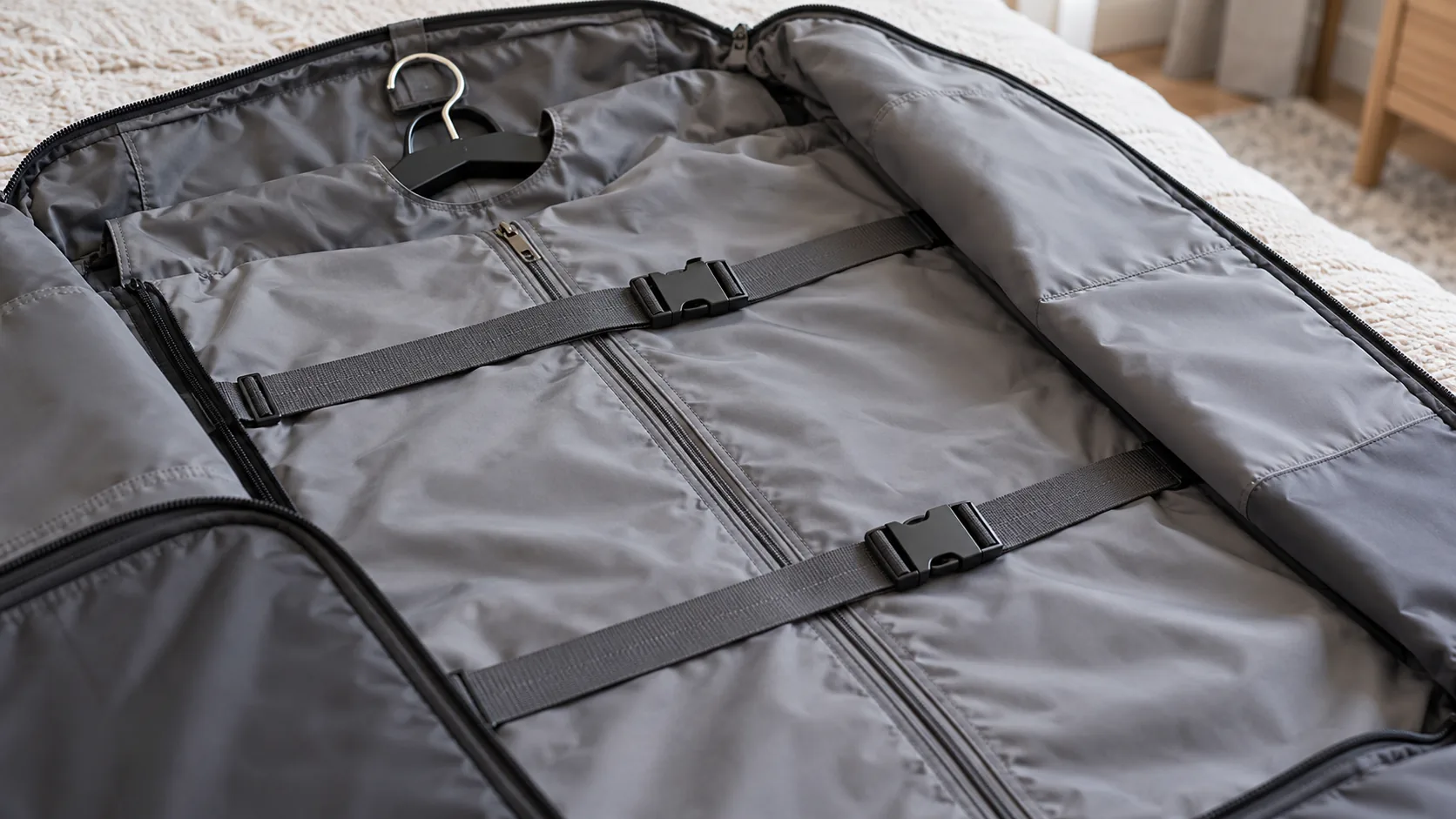
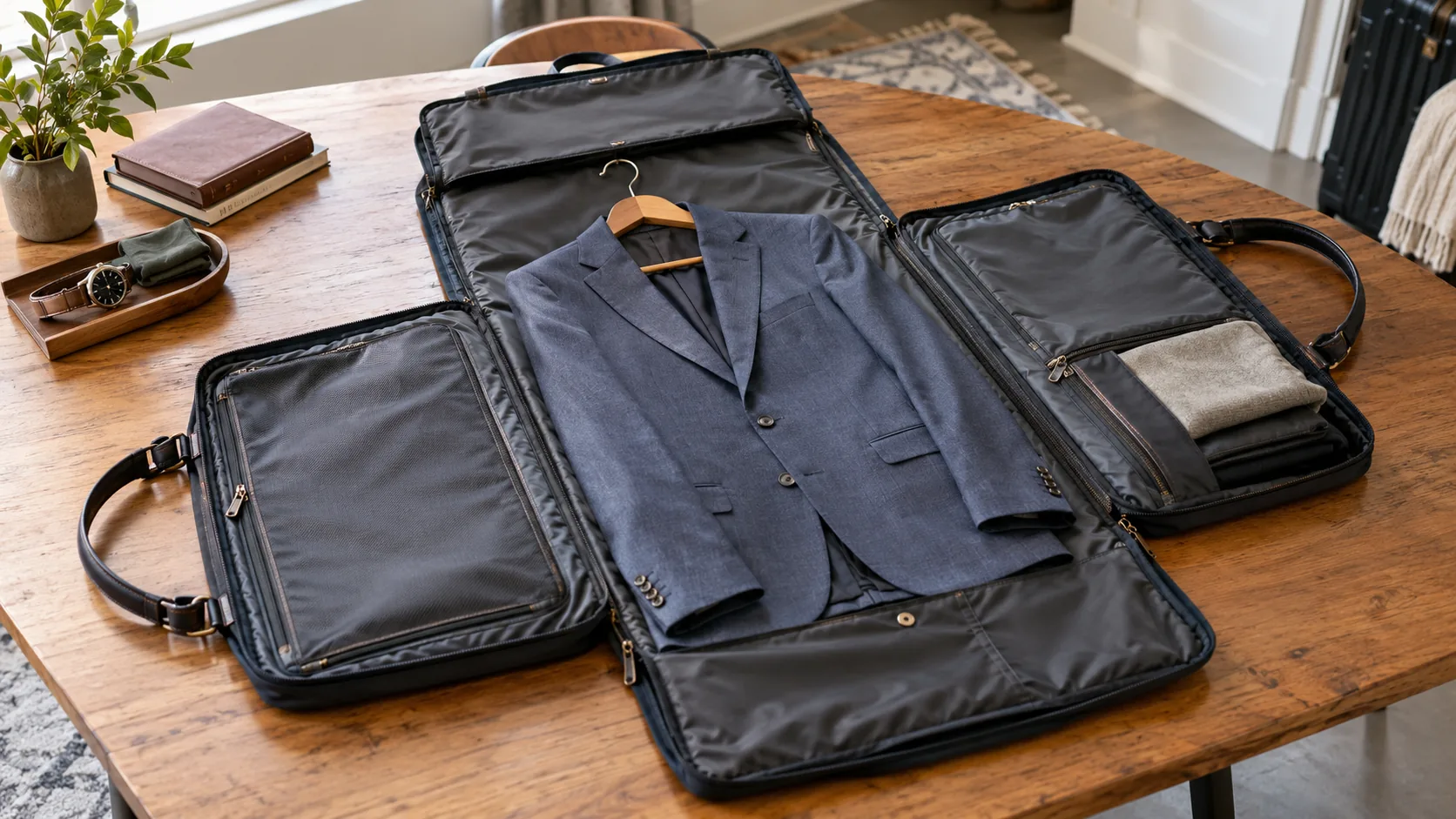
Look at the bag while it is open. Note any flexible panels, hanger fitting, securing straps, buckles, removable supports, and zipper paths. These features help you locate parts mentioned in the instructions; their appearance alone does not establish which part carries the load or what order to use.
| Illustrative design | Features you may see | What to confirm for the exact model |
|---|---|---|
| Simple garment cover | Long body, hanger opening, front closure | Whether folding for travel is permitted |
| Folding garment bag | Panels, handles, securing straps or fittings | Fold points, sequence, and hanger position |
| Multi-panel folding bag | Several body sections and fasteners | Order of folding and placement of each section |
| Convertible garment carrier | Garment panel and a conversion closure | How the maker instructs you to form and secure the carrying shape |
Designs can combine these features. The table is an identification aid, not an exhaustive construction taxonomy.
If the instructions are missing, request them using the model name and photos of the open bag. Avoid forcing a rigid hanger, hook, buckle, or support across a fold while trying to guess the mechanism.
What Should Be Prepared Before Folding?
Prepare the garments and the bag separately. Check the garment’s care instructions for cleaning and handling, and the bag’s instructions for packing. Do not pack damp garments for storage.
Lay the open bag on a clean surface large enough to support it. Check pockets and set loose accessories aside while you arrange the main contents. Add accessories only to locations the bag provides for them, and inspect their position after folding.
Place garments in the orientation the maker specifies. If the design uses hangers, confirm their compatibility and intended position. Smooth out sleeves or hems that lie across a closure path without pulling the garment out of shape.
Close only the parts that the instructions tell you to close at this stage. Some designs need further steps before the body folds.
Ordinary folded clothing is a separate packing task.
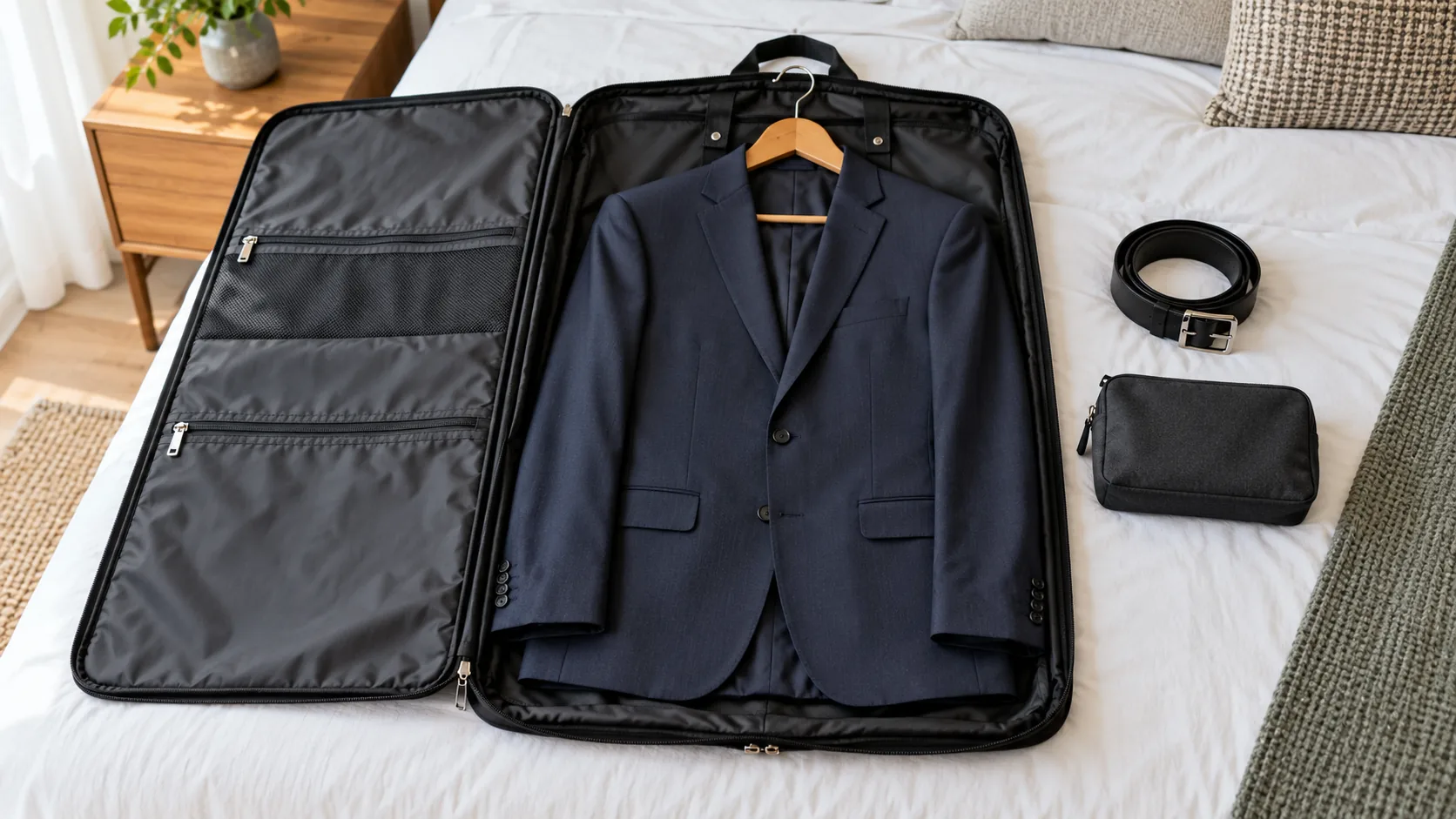
How Do Fold Points and Fasteners Affect the Method?
Use the model’s instructions to identify the intended bend points and the position of hardware. A seam, panel division, or strap can be a useful clue, but it is not proof of a fold direction or load rating.
For each step, check where the hanger hook, handles, fasteners, and supports are meant to sit. If a part will not reach its intended position without pulling the bag tight, stop and check the contents and instructions.
Do not infer that all securing straps carry the same load or that a conversion zipper supports the entire bag. For a custom specification, map the components and interfaces that actually exist, including straps, adjusters, anchors, sewn connections, and reinforcement.
Record the closure configuration too. Zipper chain, tape, slider, puller, end parts, and installation are separate specification details. A size designation or color alone cannot define how that assembly should operate.
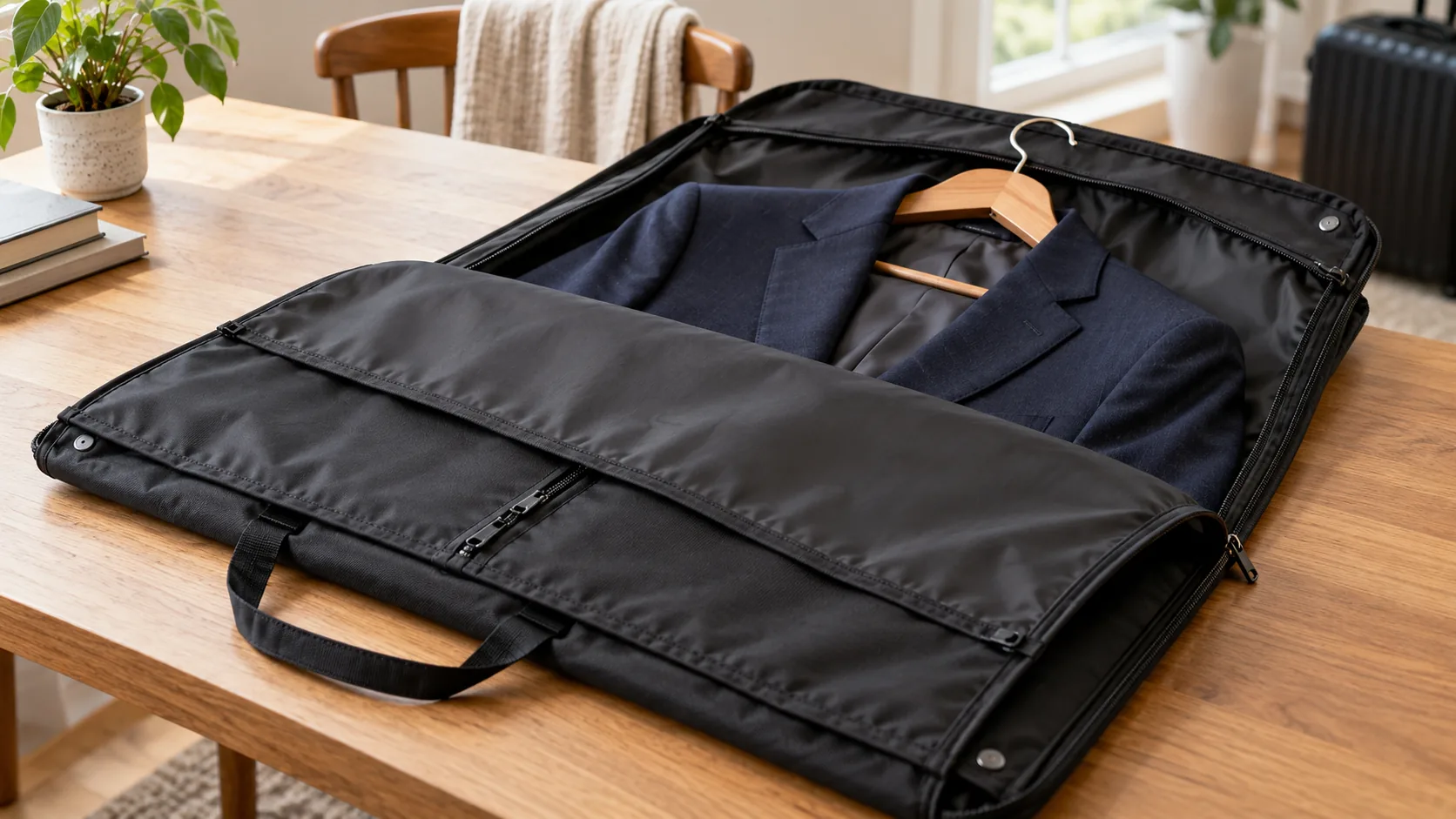
How Should a Bi-Fold or Trifold Garment Bag Be Closed?
A bi-fold or trifold label does not supply a universal “zip first, fold next” sequence. Use the steps for your model, with these checks between them:
- Confirm that the intended contents and hangers are in place.
- Keep sleeves, hems, lining, and loose straps out of the closure path.
- Move each panel in the instructed direction while supporting the contents.
- Position the hardware as specified, without forcing rigid parts through a bend.
- Fasten the intended closures without compressing the bag to make them reach.
- Reopen it and check for caught fabric, displaced contents, or difficult operation.
YKK’s zipper precautions warn against forcing a stuck slider and forcibly closing the zipper of an overfilled bag. If the closure resists, check the obstruction or reduce the contents rather than pulling harder. The guidance concerns zipper operation, not a folding sequence for every garment bag.
A caught zipper or shifted hook does not identify the cause by itself. Check what changed during the fold, and seek model-specific help if the mechanism remains unclear.
How Does a Convertible Garment Duffel Fold Differently?
A convertible design combines a garment-carrying section with another packed shape. The conversion may use zippers, panels, straps, or a combination of fittings. The resulting shape and operating order depend on the model.
Start with its conversion instructions. Identify which closures form the carrying body and which open accessory compartments. Follow any stated order for garment placement, side panels, end sections, and fasteners.
After conversion, inspect the whole assembly. Check that the garments are contained as intended, the closures operate, and the handles or straps sit in their designated positions. Measure the converted bag with the planned contents inside.
Do not add a suit-bag fold to a converted carrier unless the instructions permit it. A shape that looks compact does not establish suitcase fit or airline acceptance.
What Should You Check Before Travel or Storage?
Measure the closed, loaded bag at named points. Record length, width, and depth with any protruding hardware included where the intended space requires it. The bag measurement guide explains related distinctions between physical size and capacity.
| Intended use | Check before committing |
|---|---|
| Car or rail travel | Packed fit, handling position, and whether other luggage presses on the garment section |
| Inside a suitcase | Actual case interior, bag profile, hardware contact, and removal without forcing |
| Air travel | Current rules for the operating carrier and that bag’s packed dimensions; this guide states no universal allowance |
| Shipping | Packaging and handling requirements for the chosen service |
| Long-term garment storage | Garment-specific care and a suitable storage method, rather than leaving the travel fold in place by default |
Travel folding and textile preservation answer different questions. The Canadian Conservation Institute’s flat-storage guidance recommends minimizing folds for collection textiles. That guidance concerns conservation storage, not a tested wrinkle-prevention technique for modern travel bags. Seek garment-specific advice for fragile, heavily decorated, or heirloom clothing.
For an empty bag, follow its own material and storage instructions. Do not assume it should be zipped closed, rolled, hung, or compressed for a long period.
Which Folding Problems Need a Recheck?
Pause when a closure needs force, rigid hardware sits across a bend, fabric enters the zipper path, or the instructions and the bag’s visible parts do not match. Those observations call for a recheck; they do not prove one particular failure mechanism.
Reopen the bag, remove the obstruction or reduce the load, and repeat the applicable steps. Stop if the material or hardware appears damaged. Do not attempt to make a rolling method out of a folding design because a suitcase space is too small.
For a product-development sample, record the model or version, garment load, fold sequence, closure setting, and observations after reopening. Keep measurement acceptance separate from an appearance reference. An approved sample records the scope of that check; it does not guarantee future production or damage-free travel.
A brief for custom bag development can include the intended packed shape, folding steps that need confirmation, and unresolved hardware-contact issues.
Frequently Asked Questions
Do all garment bags fold the same way?
No. Confirm the exact model’s instructions. Product names and visible panels can help identify the bag, but they do not establish a universal order for folding and closing.
Should the hanger stay inside when folding?
Follow the model’s instructions and hanger-compatibility guidance. Some designs retain a hanger; others require a different arrangement. Do not force a rigid hanger through a fold.
Can a folded garment bag go in a carry-on?
Check its loaded dimensions and the operating carrier’s current policy. A bi-fold or trifold name alone does not establish acceptance or which bag packs smaller overall.
How do you fold a garment bag to fit inside a suitcase?
Use the permitted fold for that model, then compare the loaded shape with the actual case interior. If it does not fit without force, change the load or carry arrangement instead of adding unsupported folds.
Can you roll a garment bag instead of folding it?
Only use rolling when the model’s instructions permit it. If the mechanism is unclear, ask the maker before bending panels, hardware, or closures into a different shape.