
How do you pack a gym bag for school? Start with clean training apparel, high-performance shoes, a durable water bottle, specialized toiletries, and a reliable organizational system that separates wet gear from dry items. Imagine waking up early, crushing a high-intensity workout, and feeling fully unstoppable. However, the moment you open your bag at your next destination, you are hit with a wave of stale sweat, only to find your clean clothes wrinkled, your work files damp, and your keys lost in a black hole of unorganized gear. Transitioning between the gym, office, or classroom shouldn't feel like a logistical nightmare. By upgrading your packing strategy and choosing a smart carrying system, you can keep your active lifestyle organized, fresh, and prepared for any environment. For teams developing student-friendly OEM gym bags, this same packing logic starts with clean-dirty separation, pocket access, and comfortable daily carry.
Why Does Your Choice of Gym Bag Matter?
Your choice of gym bag directly determines your daily comfort, gear protection, and ability to prevent clean and dirty items from cross-contaminating. Selecting an inferior, single-compartment model quickly leads to torn seams, trapped moisture, and ruined equipment. When considering how do you pack a gym bag for school?, prioritize well-built compartmentalization to handle classrooms, locker rooms, buses, and after-school training. The same sports bag market context shows why students and active commuters care so much about clean-dirty separation and easy-access pockets.
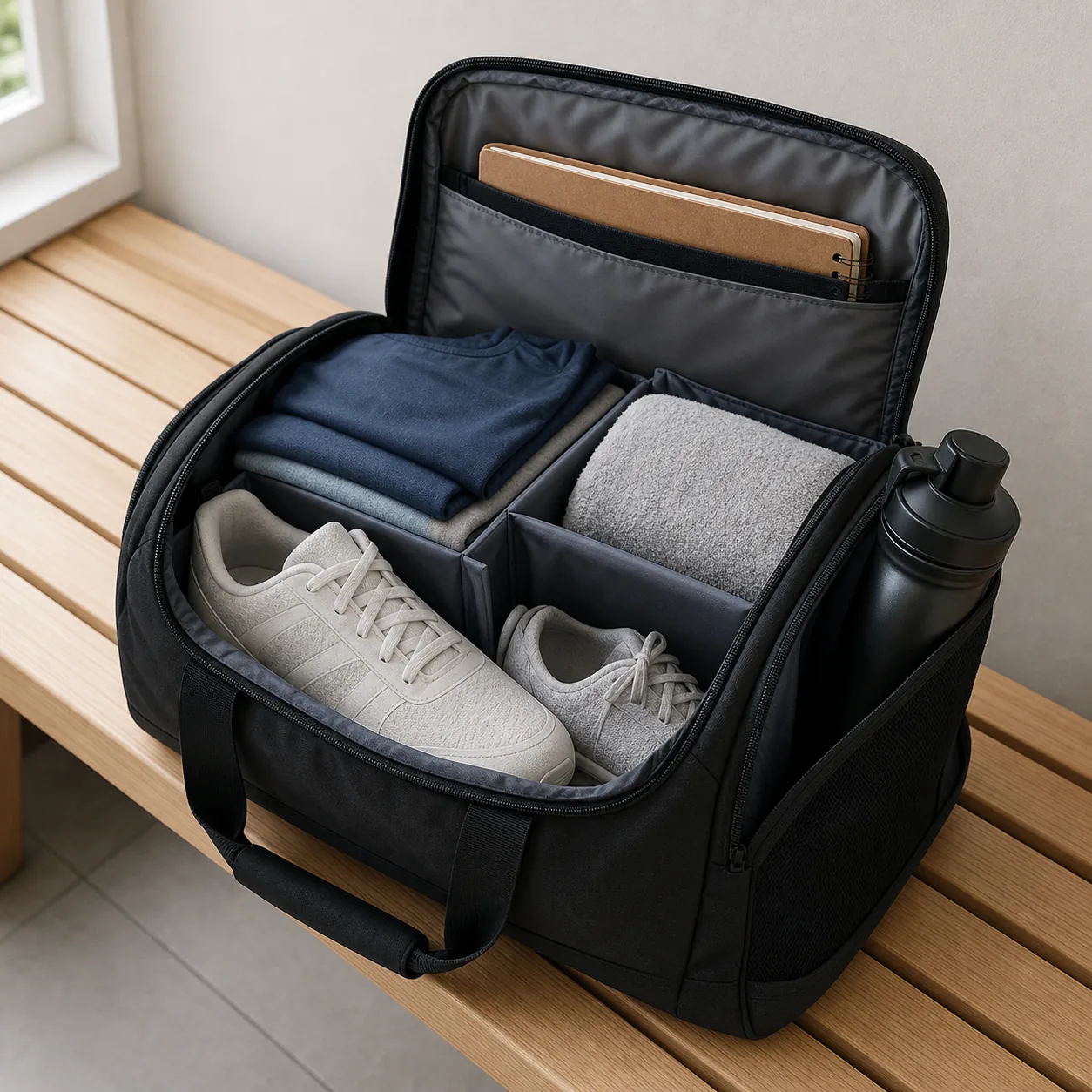
What is the ideal duffle bag capacity?
Choosing the correct capacity ensures you have enough space without carrying excessive bulk. Think about it. If you choose a bag under 30 liters, you will likely struggle to fit your sneakers, clean clothes, and lifting accessories. A 30L to 40L duffle bag offers the perfect balance for most daily gym-goers.
Over-packing a small bag places extreme pressure on the zippers and seams, eventually leading to structural failure. Here is the deal: when you carry a medium-capacity bag, you ensure that every item has breathing room, preventing gear compression.
- Small (20L – 25L): Perfect for light runners who only carry shoes and a water bottle.
- Medium (30L – 45L): Ideal for multi-sport athletes requiring changes of clothes, shoes, and toiletries.
- Large (50L+): Necessary for powerlifters with heavy belts, wraps, and multiple pairs of shoes.
Should you select heavy-duty, water-resistant fabrics?
You must select highly durable, moisture-wicking materials to protect your contents from external dampness. Let me explain. High-density ripstop nylon or TPU-coated fabrics work incredibly well to prevent pool water or rain from soaking through your bag's outer shell.
These specialized fabrics are designed to resist abrasions, tears, and heavy friction from rough locker room floors. They also make cleanup simple because you can easily wipe off dirt with a damp cloth.
- Ripstop Nylon weave: Prevents small tears from spreading across the main body.
- TPU backing: Keeps internal moisture from leaking out onto your car seats.
- Ventilated mesh inserts: Allows continuous airflow to stop bacterial growth.
Key Takeaway: Heavy-duty, water-resistant fabrics are non-negotiable for protecting expensive electronic gear from locker room moisture.
| Fabric/Bag Feature | Durability Level | Best Application | Moisture Resistance |
|---|---|---|---|
| Ripstop Nylon | Outstanding | Daily high-intensity training | High |
| TPU-Coated Polyester | Maximum | Wet environments and pools | Complete waterproof seal |
| Standard Canvas | Moderate | Dry, casual storage only | Poor |
This structured fabric matrix ensures you select a gym bag shell capable of handling high moisture loads without wearing down prematurely.
How Do You Keep Your Work Clothes Clean?
You keep work clothes clean by storing them in structured, separate compartments or dedicated garment bags away from dirty sneakers and damp towels. This division is especially key if you want to avoid arriving at your professional commitments smelling like a fitness locker room. If you are wondering how do you pack a gym bag for school?, keeping your apparel separated from academic books is just as necessary. Using dedicated protective boundaries ensures that your clean clothing remains completely unwrinkled and free of athletic moisture.
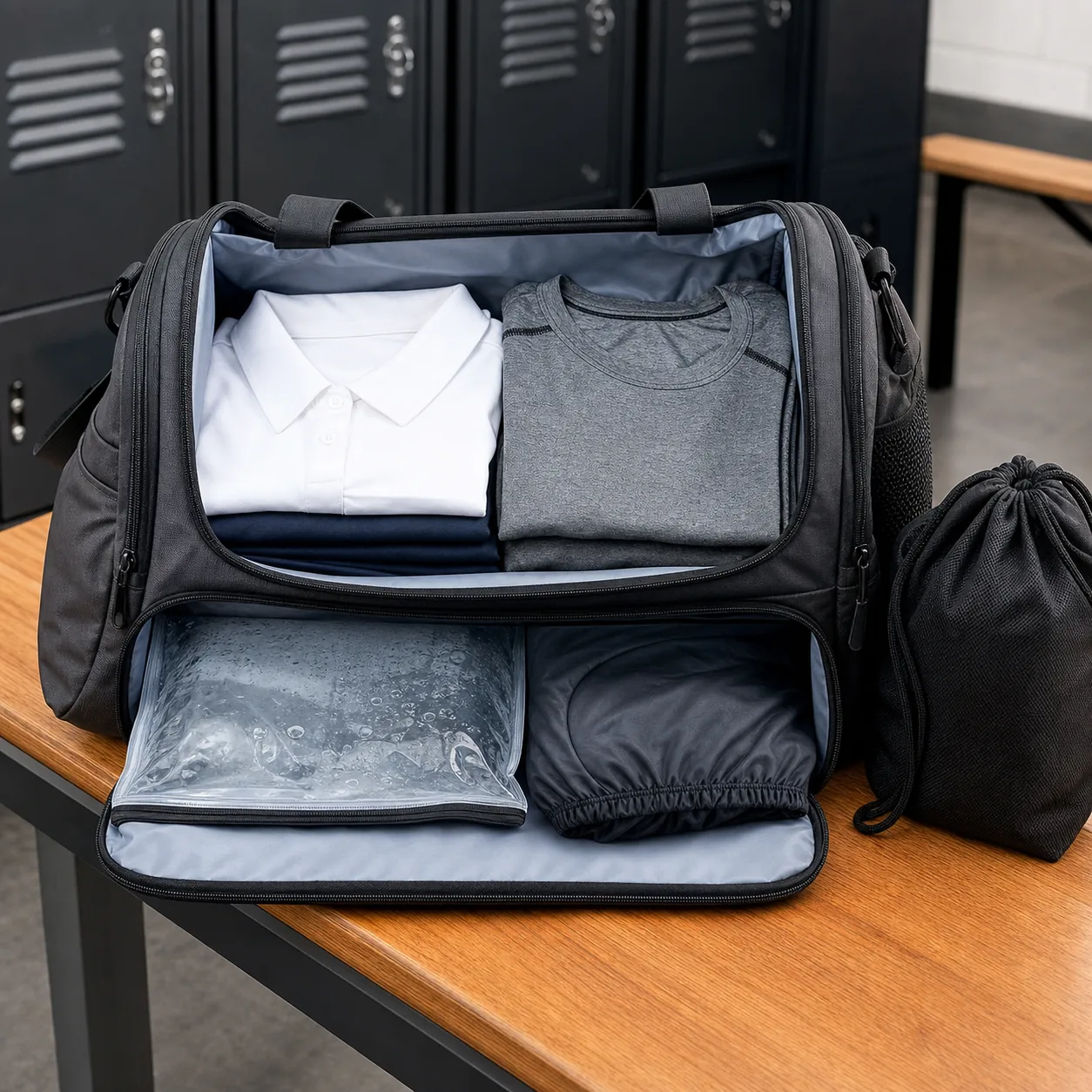
How do you prevent fabric wrinkles in transit?
You can keep your business casual clothes crisp by avoiding traditional folding and using the rolling method. It gets better. Rolling your shirts and trousers prevents sharp crease lines from forming under weight.
You should also place these rolled items inside structured packing cubes. This prevents other heavy accessories in your bag from pressing down on the fabrics during your commute.
- The Roll Method: Roll shirts tightly instead of folding to prevent sharp crease lines.
- Hard-shell Dividers: Place clean items against flat interior walls of the bag.
- Tissue Paper Layering: Wrap fabrics in clean paper to reduce friction and static.
Should you use dedicated laundry bags for damp gear?
You must isolate your damp towels and sweaty clothes inside a sealed, waterproof laundry bag. Why does this matter? Placing damp workout clothes directly into your bag's main compartment invites mold, bacteria, and awful smells to spread.
A dedicated laundry bag locks in moisture and keeps bad odors from ruining your fresh business shirts. This simple step makes cleaning up a breeze because you can dump the entire bundle straight into the wash at home.
- Odor Containment: Keeps sweaty gym smells locked away from clean business clothes.
- Moisture Block: Protects your laptop, notebooks, and folders from damp air.
- Easy Unpacking: Allows you to dump dirty gear directly into your home washer.
Key Takeaway: Clean clothes must be completely isolated using airtight packing cubes to maintain a professional, odor-free appearance.
| Packing Accessory | Protection Level | Space Efficiency | Best For |
|---|---|---|---|
| Packing Cube | High | Excellent | Folded dress shirts & pants |
| Airtight Laundry Bag | Maximum | Moderate | Sweaty wraps & wet towels |
| Plastic Bag | Low | Poor | Short emergency use only |
Isolating clean garments in specialized packing accessories is the most effective way to protect your business attire.
Can a Backpack Double as Your Gym Gear Carrier?
A high-capacity backpack can easily double as a gym carrier if it has separate compartments for tech safety, ventilated shoe pockets, and heavy-duty straps. This versatile approach allows commuters to carry both academic tools and training gear in a single, streamlined system. Learning how do you pack a gym bag for school? with a dual-purpose backpack simplifies your daily commute, especially when your bag must protect both books and training gear. A well-built custom travel backpacks keeps your hands free and protects your spine from uneven weight distribution.
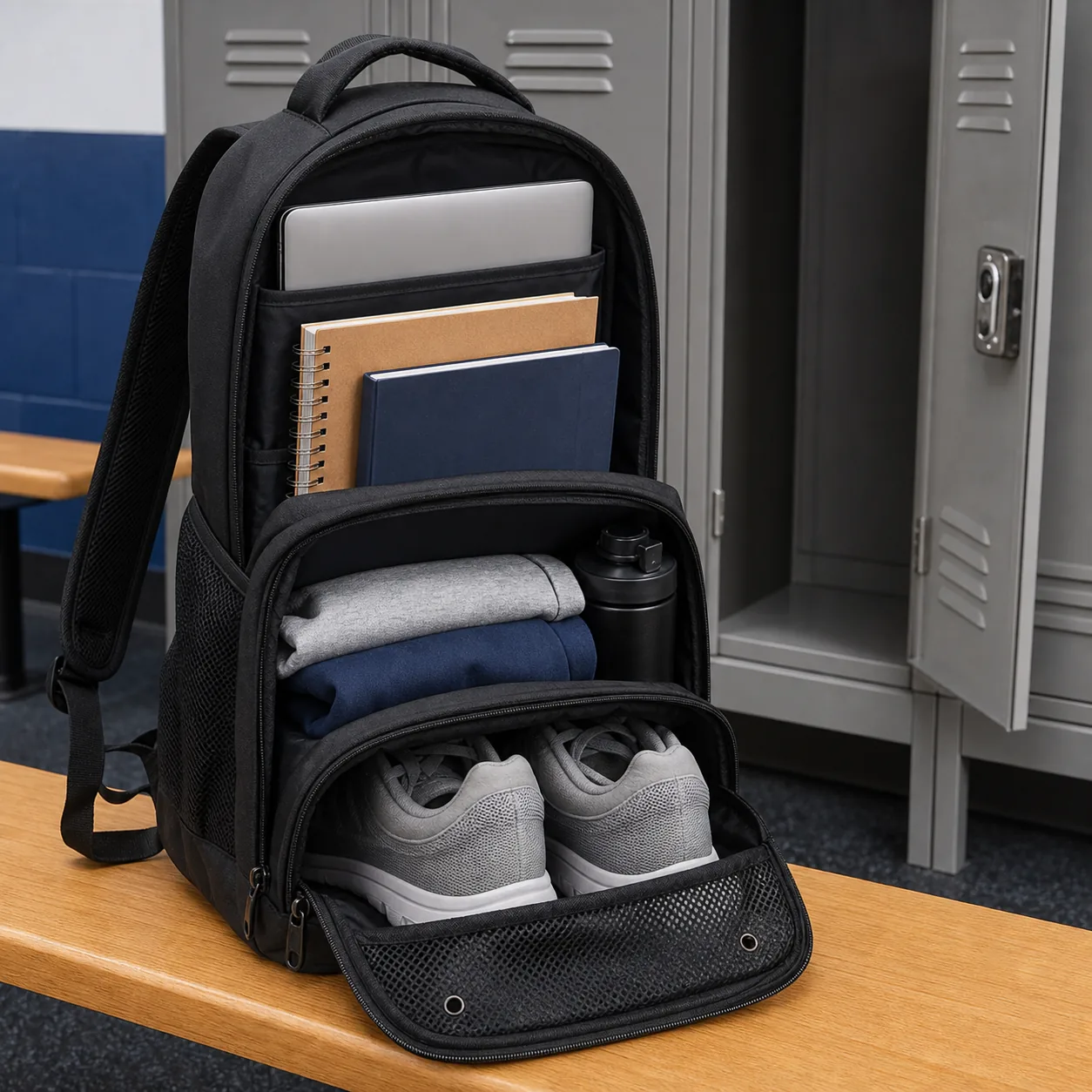
Why are dual-compartment designs superior?
You will find that dual-compartment layouts are a complete game-changer for active professionals and students. What is the best part? These designs feature physical fabric walls that completely isolate your clean laptop and papers from damp athletic wear.
You don't have to worry about your files getting damp or smelling like sweat during your morning meetings. This dedicated setup makes finding your work accessories fast and hassle-free.
- Physical Isolation: Complete barrier between clean papers and dirty shoes.
- Symmetric Loading: Helps keep the pack balanced on your back.
- Quick Access: Retrieve tech gear at security checkpoints without exposing sweaty gym clothes.
How do you balance weight distribution on your shoulders?
You should pay close attention to how you distribute weight to avoid chronic back fatigue. Let me explain. Heavy items like shoes and full water bottles must be placed close to your spine to keep the bag's center of gravity centered.
Using padded, adjustable shoulder straps and sternum clips will help distribute the weight evenly across your chest. This ensures that you stay comfortable and injury-free during long, daily commutes.
- S-shaped Shoulder Straps: Contour naturally around your collarbones to relieve neck pressure.
- Sternum Strap: Distributes heavy loads evenly across your chest.
- Padded Back Panel: Provides a cushioned barrier against sharp book edges.
Key Takeaway: Dual-compartment backpacks offer the best ergonomic support for commuters who carry both laptops and training gear.
| Backpack Feature | Ergonomic Value | Safety Rating | Primary Benefit |
|---|---|---|---|
| Padded Sternum Strap | Outstanding | High | Reduces shoulder fatigue |
| Ventilated Back Panel | High | Moderate | Prevents back perspiration |
| Thick Grab Handles | Moderate | Moderate | Easy quick-carry transitions |
Selecting a backpack with these key ergonomic features protects your spine from chronic strain during heavy carries.
What Hydration Gear Should You Pack?
The clear hydration gear include a durable, insulated water bottle, electrolyte replacement packets, and an airtight shaker bottle for post-workout protein delivery. Staying hydrated is helpful to maintaining physical performance and sharp mental focus throughout your demanding daily routine. If you analyze how do you pack a gym bag for school?, managing your liquids safely is helpful to protect dry textbooks and notebooks. Integrating leak-proof, high-performance hydration storage guarantees that your drinks stay ice-cold while avoiding messy internal spills.
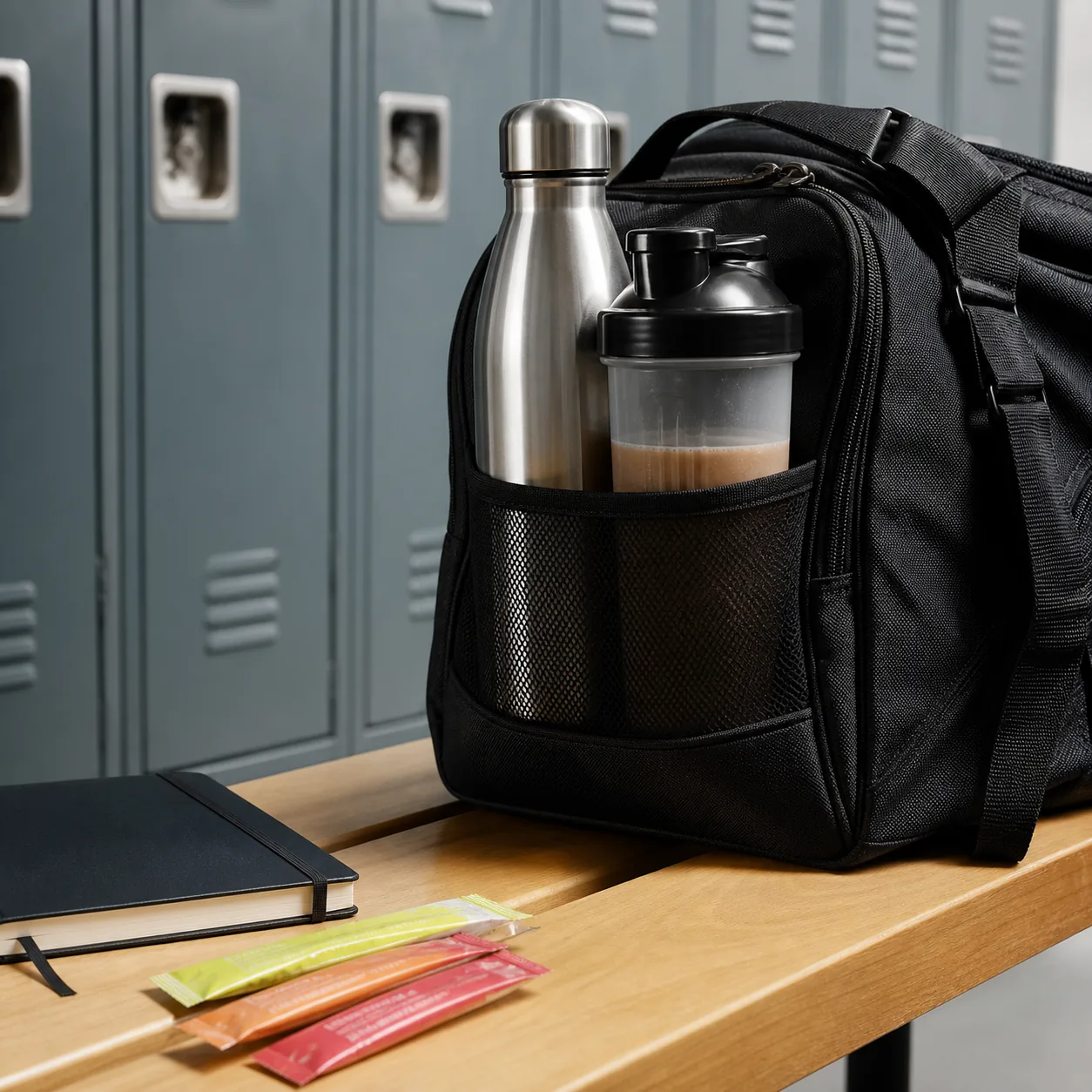
Is a stainless steel water bottle necessary?
You should definitely invest in a high-grade stainless steel bottle rather than relying on flimsy plastic options. Here is the deal: double-walled vacuum insulation keeps your water ice-cold for 24 hours, regardless of how hot the locker room gets.
These durable bottles do not retain nasty odors or sweat on the outside, protecting your dry gear from condensation. You will also enjoy a clean, crisp taste every single time you take a sip.
- Thermal Retaining: Keeps water ice-cold for up to 24 hours.
- Zero Condensation: Prevents sweat from forming on the bottle exterior.
- BPA-Free: Guarantees pure water without chemical leaching.
How should you organize specialized shaker accessories?
You can keep your post-workout supplements perfectly organized by using a shaker bottle with modular, screw-on storage cups. Why does this matter? Storing your protein powder and vitamins in these dry compartments prevents messy powder explosions inside your bag.
You simply fill the main chamber with water when you are ready to drink, screw on the lid, and shake. This ensures that you can enjoy a fresh, smooth protein shake instantly after your final set.
- Detachable Bottom Cups: Lock powder containers directly to the base of the bottle.
- Threaded Pill Trays: Keep recovery capsules organized and moisture-free.
- Wire Mixing Whisk: Ensures smooth protein shakes without annoying clumps.
Key Takeaway: Insulated stainless steel bottles keep beverages fresh and ice-cold while preventing condensation damage to paper goods.
| Bottle Material | Cold Retention | Odor Resistance | Durability |
|---|---|---|---|
| Stainless Steel | Maximum | High | Outstanding |
| BPA-Free Plastic | Low | Low | Moderate |
| Tempered Glass | Moderate | High | Fragile |
Using premium stainless steel bottles protects your hydration supply from getting warm and stale during long training sessions.
How Should You Pack Post-Workout Nutrition?
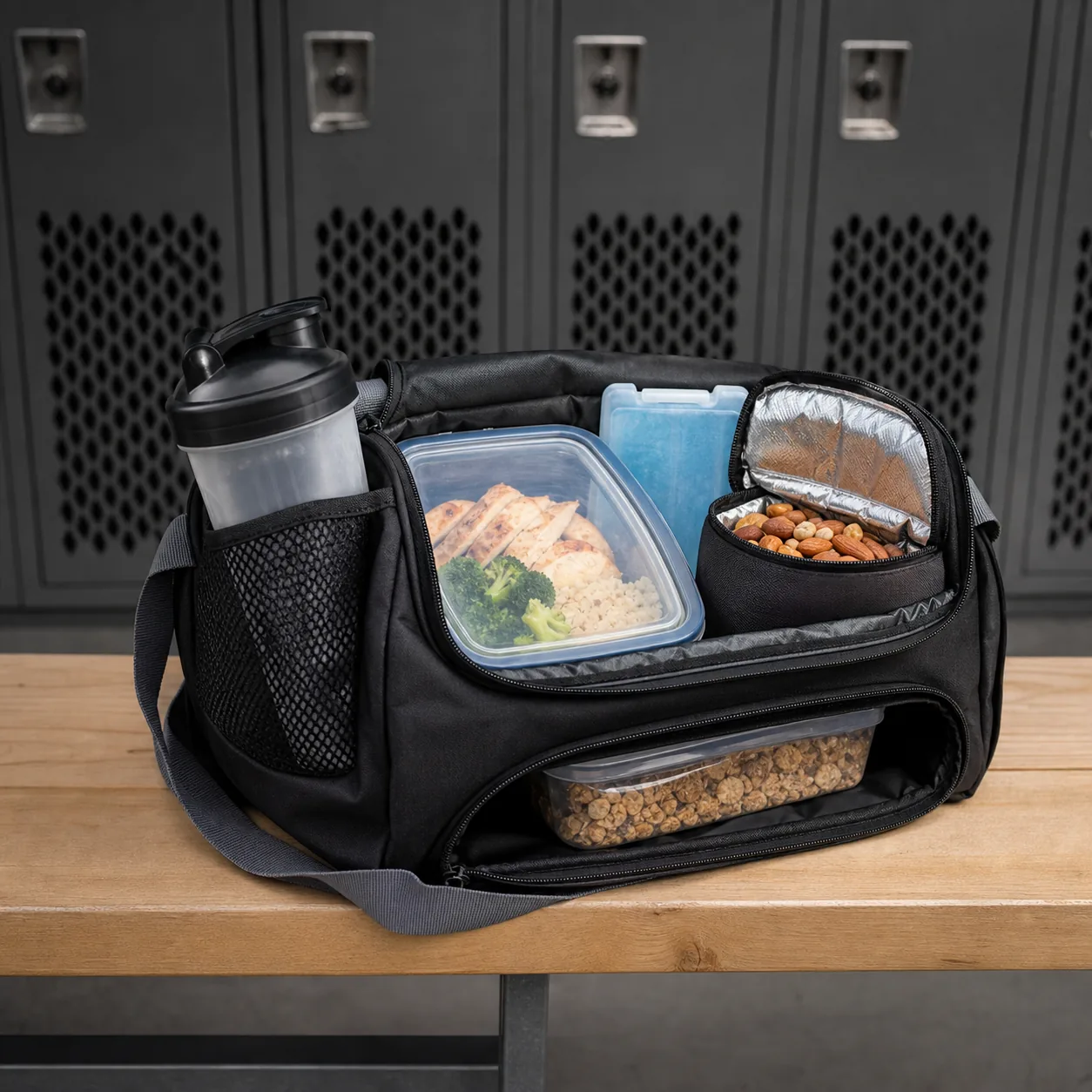
You pack post-workout nutrition using insulated, leak-proof meal prep containers placed inside dedicated thermal lunch pockets to keep meals fresh and safe from contamination. Consuming recovery meals within the optimal post-training window is key for continuous muscle repair and physical growth. When deciding how do you pack a gym bag for school?, organizing fresh meals alongside your study supplies requires smart thermal shielding. In larger product lines, gym duffel bags can use insulated pockets and leak-resistant layouts to keep nutrition fresh without risking notebooks, clothes, or tech.
How do you maintain proper food temperatures?
You must take steps to keep your cooked meals stored at safe temperatures to prevent dangerous bacterial growth. Think about it. Letting high-protein meals sit in a warm bag for hours is a recipe for food poisoning.
Using compact gel ice packs inside insulated compartments will keep your food cold and completely safe to eat. This thermal system gives you the freedom to fuel your body with healthy, home-cooked food wherever you go.
- Foil Linings: Reflect heat waves away from chilled meal containers.
- Gel Ice Sheets: Provide compact cooling without adding unnecessary bulk.
- Double-Zip Seals: Trap cold air inside the food compartment.
How do you store leak-proof meal containers safely?
You should always choose well-built containers that feature four-hinge locking lids and secure silicone gaskets. Here is why: cheap plastic containers will easily pop open under pressure, spilling sauce all over your clean workout gear.
Placing your containers completely flat at the bottom of the bag prevents tilting and reduces the risk of leaks. This smart placement gives you clear peace of mind during bumpy bus rides and quick walks.
- Four-hinge Locking Lids: Create a secure seal that will not pop open under pressure.
- Silicone Gaskets: Seal out liquid pathways to prevent messy leaks.
- Upright Placement: Keep containers flat at the bottom of the bag.
Key Takeaway: Utilizing insulated thermal chambers with secure ice packs is key for preventing dangerous food spoilage.
| Container Type | Spill Protection | Thermal Rating | Weight |
|---|---|---|---|
| Glass Lock Lid | Clear | Moderate | Heavy |
| Snap Plastic | High | Low | Lightweight |
| Silicone Bags | Moderate | Low | Ultralight |
Selecting the right leak-proof container prevents messy spills from ruining clean gym clothes and sensitive electronics.
Why Does Post-Workout Hygiene Matter?
Post-workout hygiene is key because it prevents bacterial skin infections, eliminates offensive body odors, and prepares you to return to public spaces with clean, comfortable skin. Neglecting to clean up after heavy sweating can lead directly to painful chafing, acne, and social embarrassment. If you are practicing how do you pack a gym bag for school?, a quick, efficient hygiene routine keeps you fresh during long lectures. Keeping dedicated hygiene necessarys sealed in your bag makes it incredibly easy to transition from sweat to study.
What goes inside a compact post-gym shower kit?
You can streamline your post-gym cleanup by assembling a travel-sized toiletries kit inside a waterproof pouch. It gets better. A waterproof pouch ensures that even if a shampoo bottle leaks, the spill stays completely contained.
Pack travel-sized body wash, moisturizing facial cleanser, and a powerful natural deodorant to keep you smelling fresh. Having these items ready to go will cut your locker room prep time in half.
- Travel Toiletries: Compact tubes of body wash, shampoo, and conditioner.
- Alcohol-Free Wipes: Quick cleansing wipes for times when a shower is unavailable.
- Natural Deodorant: Long-lasting protection to keep body odor away all day.
Why are microfiber towels a game-changer?
You should ditch your standard, bulky cotton towels and switch to an ultra-compact microfiber towel instead. Why does this matter? Standard cotton towels take hours to dry and quickly become breeding grounds for mold and bad odors inside your bag.
Microfiber towels are incredibly absorbent, dry in a fraction of the time, and fold down to the size of a small notebook. This leaves plenty of space for other workout gear while keeping your bag smelling clean.
- Ultra-Absorbent: Holds up to four times its weight in water.
- Rapid-Dry: Dries up to three times faster than standard cotton.
- Compact Packing: Folds down to a fraction of the size of a cotton bath towel.
Key Takeaway: Pack ultra-compact microfiber towels and travel-sized body washes inside waterproof pouches to prevent dampness and keep your bag smelling clean.
| Towel Material | Drying Speed | Folded Volume | Odor Resistance |
|---|---|---|---|
| Microfiber | Extremely Fast | Very Low | High |
| Turkish Cotton | Moderate | High | Moderate |
| Standard Cotton | Slow | Extremely High | Low |
Using a high-performance microfiber towel reduces packing bulk while preventing damp, musty smells from taking over your gear bag.
How Do You Pack for Racquet-Based Sports?
You pack for racquet-based sports by selecting a wide, structured bag that features a protective, padded compartment to safeguard frames and strings from pressure and temperature changes. Storing expensive athletic frames incorrectly will quickly ruin tension, scratch coatings, or bend the long-term structure. Understanding how do you pack a gym bag for school? for multi-sport schedules allows you to carry academic folders and sports gear simultaneously. For brands testing school-friendly sports layouts, a small pilot order case can help validate whether racquet sleeves, shoe zones, and book compartments feel natural in daily use.
How do you safely secure specialized racquets?
You must protect your valuable carbon-fiber racquets from hitting the heavy, metal items inside your bag. Let me show you how. A specialized racquet slot with built-in thermal lining protects string tension from hot or freezing environments.
Adjustable internal velcro straps will lock the racquet handle in place, preventing it from sliding around and getting damaged. This protection keeps your gear performing at its clear best during competitive court matches.
- Padded Dividers: Separate racquet heads from heavy objects.
- Thermal Lining: Insulates strings against temperature shifts that ruin tension.
- Adjustable Velcro Straps: Lock handles in place to stop them from sliding during transport.
How do you accommodate bulky balls and court shoes?
You will need dedicated outer mesh pockets to secure bulky tennis ball cans and keep them easily accessible. It gets even better: storing dirty court shoes in a separate ventilated shoe pocket keeps clay or court dust away from your racquet strings.
This separate shoe area keeps all abrasive sand and court debris completely contained. Your other clean apparel and sports accessories will remain clean and ready for immediate court action.
- Ventilated Shoe Pocket: Keeps clay-coated outsoles away from clean apparel.
- Mesh Ball Pouches: Provide rapid access to tennis ball cans.
- Grip Accessory Pocket: Organizes replacement overgrips and vibration dampeners.
Key Takeaway: Using a structured bag with padded, insulated compartments protects racquet frames and maintains string tension.
| Compartment Type | Protective Level | String Tension Safety | Best For |
|---|---|---|---|
| Thermal Padded Slot | Maximum | High Protection | Carbon-fiber frames |
| Standard Unpadded Sleeve | Moderate | Low Protection | Casual, basic rackets |
| Main Open Chamber | Low | None (Danger of warping) | General athletic gear |
Storing your rackets in thermal-insulated compartments prevents frame warping and costly string damage during hot and cold days.
What Footwear Gear Should You Carry?
The footwear gear you must carry include sport-specific training shoes, fresh athletic socks, and quick-drying rubber slides to protect your feet in communal gym showers. Wearing dirty shoes inside your bag will contaminate clean clothes, towels, and the interior fabrics with mud and bacteria. When you master how do you pack a gym bag for school?, keeping your dirty athletic shoes completely isolated is the key to cleanliness. Implementing dedicated shoe compartments keeps your outsoles from transferring unwanted germs or moisture to your personal items.
Do you need separate shoe compartments?
You should never let your dirty workout shoes touch your clean clothes or hydration bottles. Truth is: sneakers gather high amounts of bacteria, mud, and dust from the gym floor and outdoor environments.
An isolated, ventilated shoe compartment built directly into your bag allows shoes to breathe while locking away the mess. The continuous airflow through ventilation grommets helps dry out sweat and reduces odor buildup during transit.
- Grime Barrier: Completely seals dirt, mud, and turf debris inside one area.
- Ventilation Grommets: Allow continuous airflow to dry wet shoes.
- Easy Loading: Simplifies packing by sliding shoes into a dedicated compartment.
Why should you pack versatile training slides?
You must wear quick-drying slides to protect your bare feet from painful fungal infections in public gym showers. Here is why you need them: damp locker room floors are hotbeds for bacteria that cause athlete's foot.
Waterproof rubber slides provide a safe, protective barrier and dry off quickly after you finish rinsing. They are lightweight, easy to pack, and double as comfortable recovery footwear after intense training sessions.
- Fungal Protection: Guards feet against athlete's foot in shared showers.
- Quick Drying: Waterproof EVA materials dry off in minutes.
- Lightweight: Adds virtually zero weight to your daily carry.
Key Takeaway: Dedicated, ventilated shoe compartments are useful for isolating smelly outsoles and keeping the rest of your gear clean.
| Footwear Option | Isolation Method | Moisture Defense | Primary Benefit |
|---|---|---|---|
| Ventilated Pocket | Complete built-in compartment | High | Dries shoes on the go |
| Drawstring Bag | Separate inner sack | Moderate | Fits inside any bag |
| No Compartment | None | Low (Contaminates gear) | Avoid this setup |
Utilizing a ventilated shoe pocket is the single most effective way to keep mud, odors, and bacteria away from your clean workout apparel.
How Do You Organize Small Accessories?
You organize small accessories by using interior mesh pockets, zippered pouches, and dedicated security clips to prevent items from sinking to the bottom of the main compartment. Losing track of your keys, headphones, or locker locks can waste precious time during rapid transitions. If you are figuring out how do you pack a gym bag for school?, managing these tiny items keeps your daily routine calm and predictable. Teams planning e-commerce bag projects often treat these small organizer pockets as a major usability detail because they reduce the daily frustration of lost keys, earbuds, and locker locks.
Where should you store smart tech and keys?
You must keep your expensive tech gear, like smartwatches and headphones, isolated from heavy athletic equipment. You will love this: dedicated fleece-lined pockets prevent keys and metal buckles from scratching delicate phone and watch screens.
Utilizing a fixed, internal key clip ensures that your keys are always in the exact same spot when you return to your car. You will save valuable time and eliminate the stress of digging through a messy bag.
- Fleece Lining: Prevents delicate glass screens from getting scratched.
- Built-In Key Hooks: Keep your keys securely in place for quick retrieval.
- Impact Padding: Absorbs shocks to protect headphones during transit.
How should you manage bands and lifting straps?
You can easily prevent elastic bands and lifting straps from tangling around your clothes by using mesh internal pockets. Check this out: mesh pockets let you immediately spot what you need without emptying the entire bag.
Rolling your straps and securing them with integrated elastic loops keep your workout layout highly organized. This rapid setup means you spend more time lifting and less time untangling gym accessories.
- Mesh Pockets: Let you see exactly what is inside each compartment.
- Elastic Loops: Keep rolled-up bands organized and tangle-free.
- Velcro Straps: Lock lifting wraps down so they do not cling to your clothes.
Key Takeaway: Fleece-lined pockets and mesh organizers are useful for keeping small tech and recovery accessories safe and easy to find.
| Accessory Type | Storage Compartment | Tangle Protection | Accessibility |
|---|---|---|---|
| Smart Tech | Fleece-lined pocket | High | Instant access |
| Elastic Bands | Mesh pocket | Excellent | High visibility |
| Car Keys | Fixed key clip | Maximum | Easy retrieval |
Using targeted storage compartments ensures your key valuables remain safe, scratch-free, and easy to grab when you are on the move.
How Do You Master Optimal Bag Layouts?
You master optimal bag layouts by stacking heavy shoes at the bottom, placing daily items in side pockets, and keeping fragile items safely compartmentalized near the top. An unorganized, poorly distributed load leads directly to back strain and makes finding specific gear items highly frustrating. Once you understand how do you pack a gym bag for school?, geometric layering makes packing and unpacking your gear second-nature. Arranging your gear in chronological order of use guarantees a highly efficient transition on the gym floor or in the classroom.
Why should heavy gear always go at the bottom?
You need to load your bag in a way that respects basic laws of balance and weight. It is simple. Placing heavy shoes and locks at the bottom prevents your bag from tipping over when you put it down.
This base layout also keeps lightweight, fragile items like clean dress shirts or sensitive tech from being crushed. Your back will thank you because the balanced weight distribution makes carrying the bag highly comfortable.
- Heavy Base Layer: Place weight lifting shoes and metal locks at the bottom.
- Mid-Level Layer: Pack secondary gear, wash kits, and meal prep containers in the middle.
- Top-Level Layer: Pack delicate shirts, dry microfibers, and snacks on top.
Maximizing outer storage pockets for easy access
You can speed up your transitions by using outer pockets for items you need to grab frequently. What is the best part? Having quick-slip pockets for your gym pass or ID card means you never have to unzip the main compartment.
Keep items like hand sanitizer, transit passes, and lip balm in these external pockets for immediate use. This smart strategy keeps your most key tools handy while keeping the main gear compartment completely secure.
- ID Pass-throughs: Quick-slip pockets for your gym membership or student ID.
- Water Bottle Holders: Exterior mesh sleeves that keep condensation outside the main bag.
- Quick-Zip Top Sleeves: Ideal for rapidly grabbing your smartphone or transit passes.
Key Takeaway: Pack your bag by stacking heavy shoes at the bottom and keeping fragile items and daily items in quick-access pockets at the top.
| Packing Level | Weight Capacity | Recommended Items | Crushing Risk |
|---|---|---|---|
| Bottom Layer | High | Lifting shoes, locks, heavy gear | Extremely low |
| Middle Layer | Moderate | Meal prep, wash kits, accessories | Low |
| Top Layer | Low | Pressed shirts, towels, smart tech | High |
Following a strict layered packing system prevents gear damage and makes accessing your training tools effortless.
Transitioning between school, fitness, and daily errands is demanding, and an unorganized bag should not hold you back. A systematic, layered packing layout with ventilated shoe space, thermal food storage, clean-clothes protection, and quick-access pockets can remove most of the daily friction. If your team is developing student-friendly gym bags, campus sports packs, or active lifestyle carrying systems, contact us today to discuss practical layouts that match real school and training routines.
FAQ
Can I clean my synthetic gym bag in a washing machine?
No, you should avoid machine washing most synthetic bags unless the care label clearly allows it. High-efficiency washing machines can strip water-resistant coatings, warp internal structures, and damage foam padding. Wipe the shell with mild soap, rinse the lining gently, and air-dry the bag fully before repacking it.
What's the best fabric for a heavy-duty gym bag?
High-density ripstop nylon or TPU-coated polyester is usually the strongest choice. These materials offer reliable tear resistance, stay lightweight for daily carry, and are much easier to wipe clean after school, gym, or locker room use.
How do I know if my gym bag is too big?
Check whether your gear bag fits your school locker, gym locker, or daily commute space. If your bag is larger than about 45 liters and you only carry shoes, clothes, water, and hygiene items, it may feel bulky for a normal school day.
Can I use a regular school backpack for gym gear?
Yes, you can use a regular school backpack, but it works best for light gym days. For daily use, choose a backpack with a shoe pocket, damp-dry divider, or at least a removable laundry pouch so sweat and odors do not reach books or tech.
What's the best way to prevent gym bag odors?
Remove damp gear immediately and let the bag dry with all pockets open. Moisture-absorbing pouches, washable laundry bags, and ventilated shoe compartments also help reduce odor buildup between school and training sessions.