
For most trips, how many liters backpack for travel should usually be answered with 35L to 45L, because that range balances carry-on size, packing space, and walking comfort. Oversized 60L or 70L backpacks may look safer at home, but they often create shoulder strain, airline check-in fees, and awkward movement through airports, buses, and hotels. A better approach is to match capacity to trip length, climate, gear type, and airline limits before you buy or design the pack. For brands planning how many liters backpack for travel products, the same sizing logic helps define SKUs, samples, pocket layouts, and retail positioning.
How many liters backpack for travel do you need?
How many liters backpack for travel you need is usually 35L to 45L for standard carry-on trips, with 40L as the safest baseline for many travelers. This size can hold clothing, toiletries, tech, and basic travel accessories without pushing the bag into heavy checked-luggage territory.
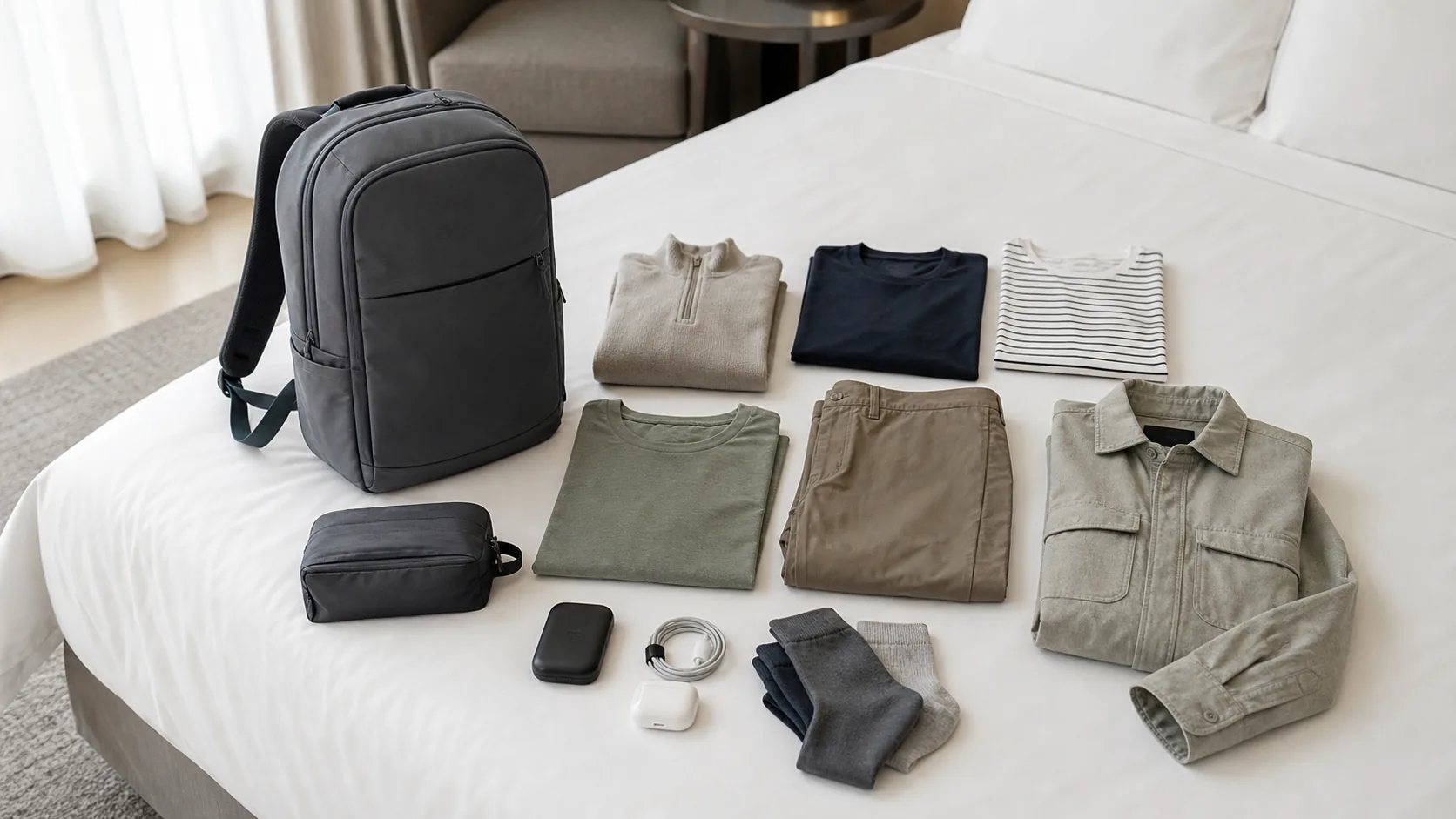
Are you carrying too much weight?
You are probably carrying too much weight if the backpack pulls backward, hurts after a short walk, or becomes difficult to lift overhead. Extra capacity often encourages extra packing.
- Shoulder straps pinch quickly.
- The pack sags below the hip line.
- The bag becomes difficult to fit into bins.
What is the quick capacity baseline?
Use 40L as the quick baseline for week-long and flexible trips. With laundry access, many travelers can use the same 40L system for longer travel.
Key Takeaway: A 35L to 45L backpack is the practical starting point for most travel plans.
| Travel Need | Recommended Capacity | Portability |
|---|---|---|
| Minimal clothing | 30L-35L | Very easy |
| Standard travel | 35L-45L | Carry-on friendly |
| Gear-heavy travel | 50L+ | Often checked |
For product teams, this baseline should guide the main compartment shape, compression system, and expected loaded weight.
Is a 30L bag too small for travel?
A 30L bag is too small for many trips, but how many liters backpack for travel depends on whether the traveler is packing for a weekend, warm weather, or a strict minimalist route. A compact bag can work very well when the packing list is short and clothing layers are light.
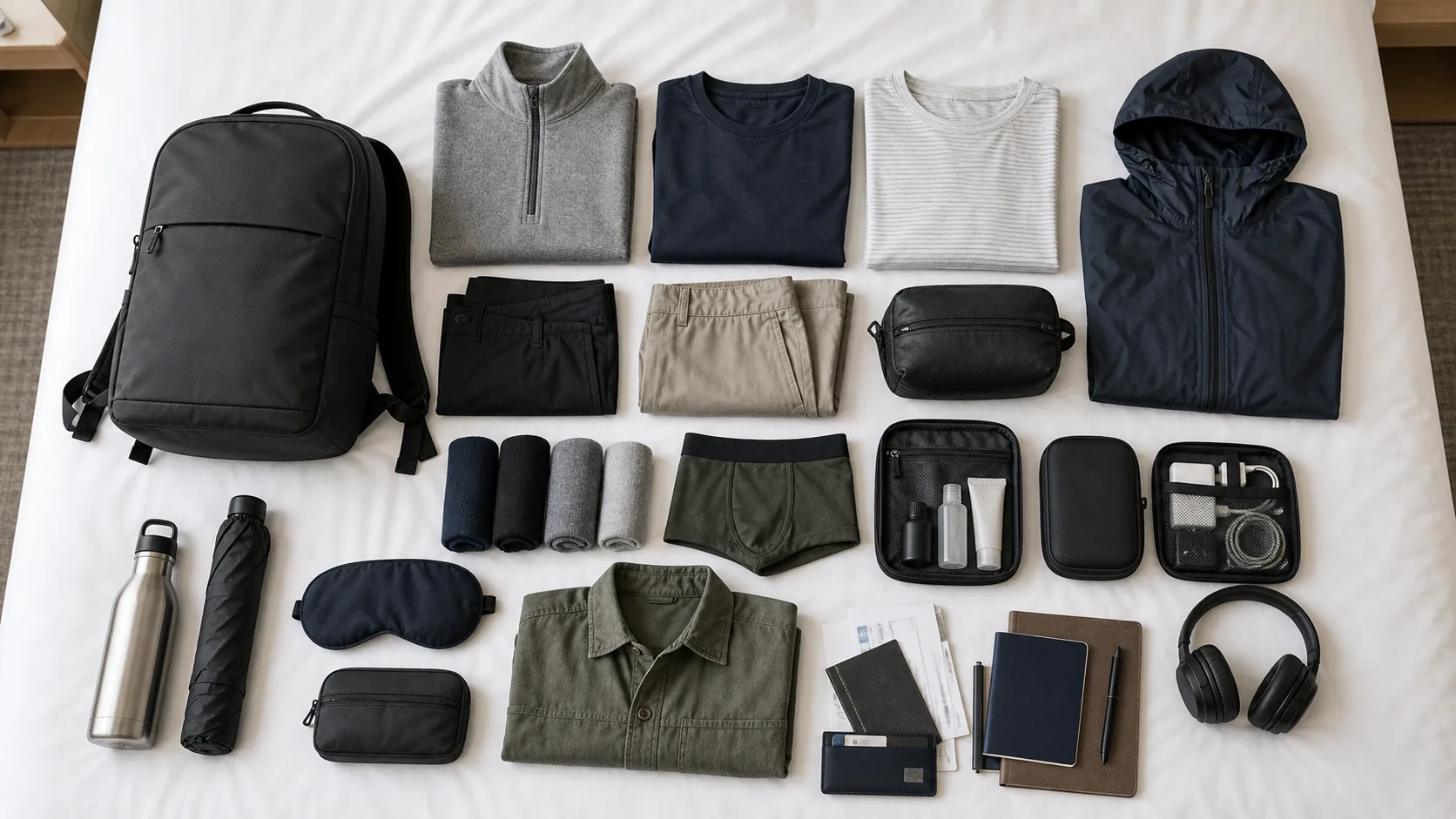
Can you travel light for a weekend?
Yes, a 25L to 30L backpack can work for a weekend or overnight trip. It is also useful as a personal item when the traveler carries only clothing, toiletries, and one small device.
- Use compact packing cubes.
- Limit shoes to the pair worn in transit.
- Choose small toiletries and simple tech.
What are the limits of compact gear?
Compact gear has limits when the trip involves winter clothing, formal outfits, camera equipment, or souvenirs. A 30L backpack leaves very little room for changes in weather or extra purchases.
Key Takeaway: A 30L backpack is best for short, light trips, not as a universal travel solution.
| Capacity | Best Use | Main Limit |
|---|---|---|
| 20L-25L | Day trips | Too little clothing space |
| 25L-30L | Weekend travel | Limited flexibility |
| 30L-35L | Light carry-on | Tight for cold weather |
Compact capacity can be valuable for secondary products, but it should be marketed honestly.
Why is 40L to 45L the best carry-on range?
The 40L to 45L range is often best because how many liters backpack for travel must account for airline bins, walking comfort, and enough packing space for several days. This range is the carry-on sweet spot for travelers who want one main backpack without checking luggage.
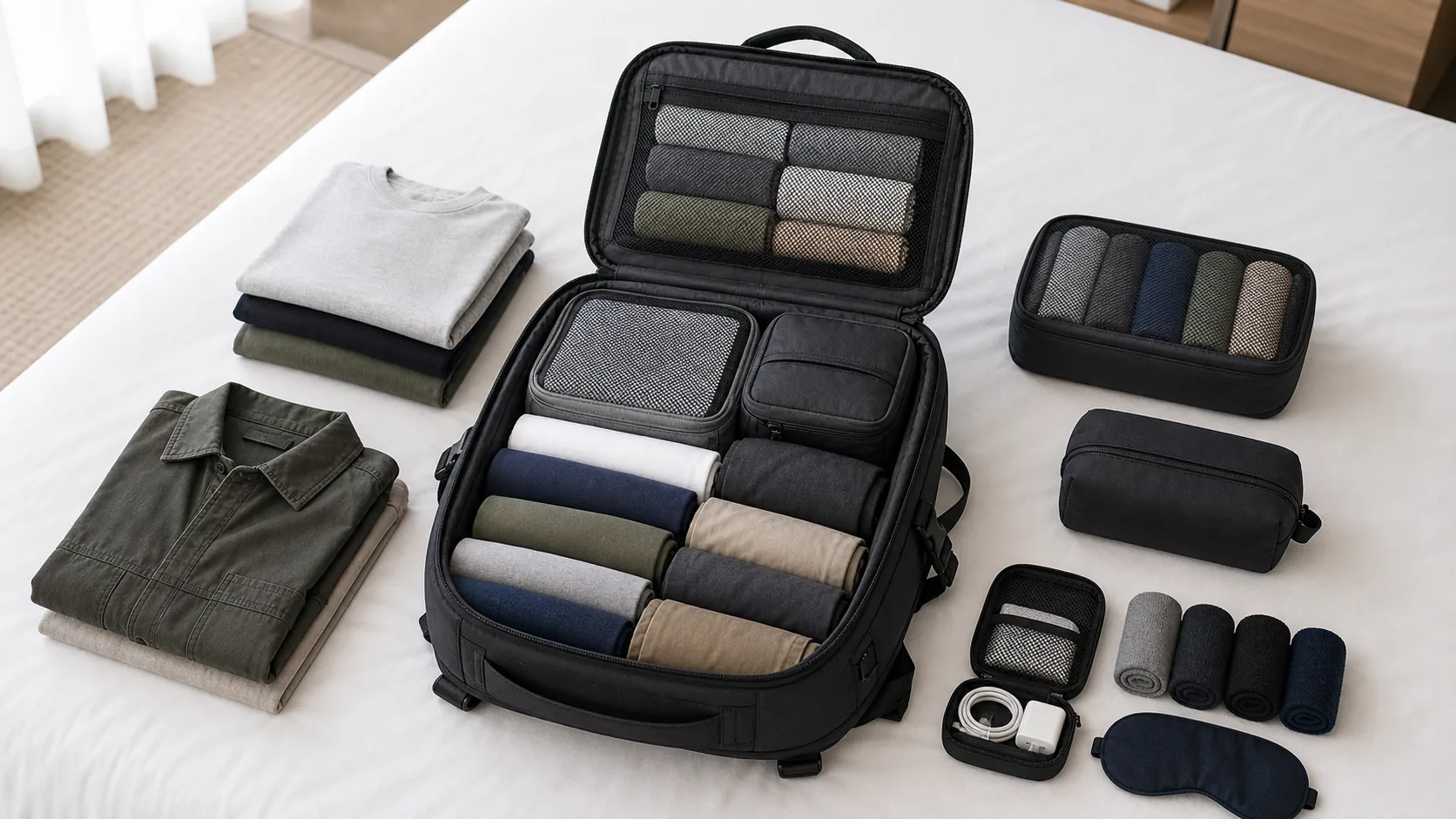
How does this size fit overhead bins?
Many 40L to 45L soft backpacks can fit overhead bins when their dimensions stay close to common airline limits. Shape matters as much as liter count because a tall, rigid 40L bag may fit worse than a soft rectangular pack.
- Keep depth controlled with compression straps.
- Avoid bulky front pockets when fully loaded.
- Measure the packed bag, not the empty shell.
Can you pack for long-term travel?
Yes, 40L to 45L can support long-term travel if the traveler packs a repeatable clothing system and does laundry. The pack does not need to hold every possible item; it needs to hold the items used every week.
Key Takeaway: A 40L to 45L backpack gives the best mix of capacity, carry-on potential, and daily mobility.
| Use Case | Why 40L-45L Works | Design Priority |
|---|---|---|
| City travel | Enough space, easy movement | Front-loading access |
| Business travel | Laptop plus clothing | Padded tech zone |
| Long trips | Laundry-based packing | Compression and cubes |
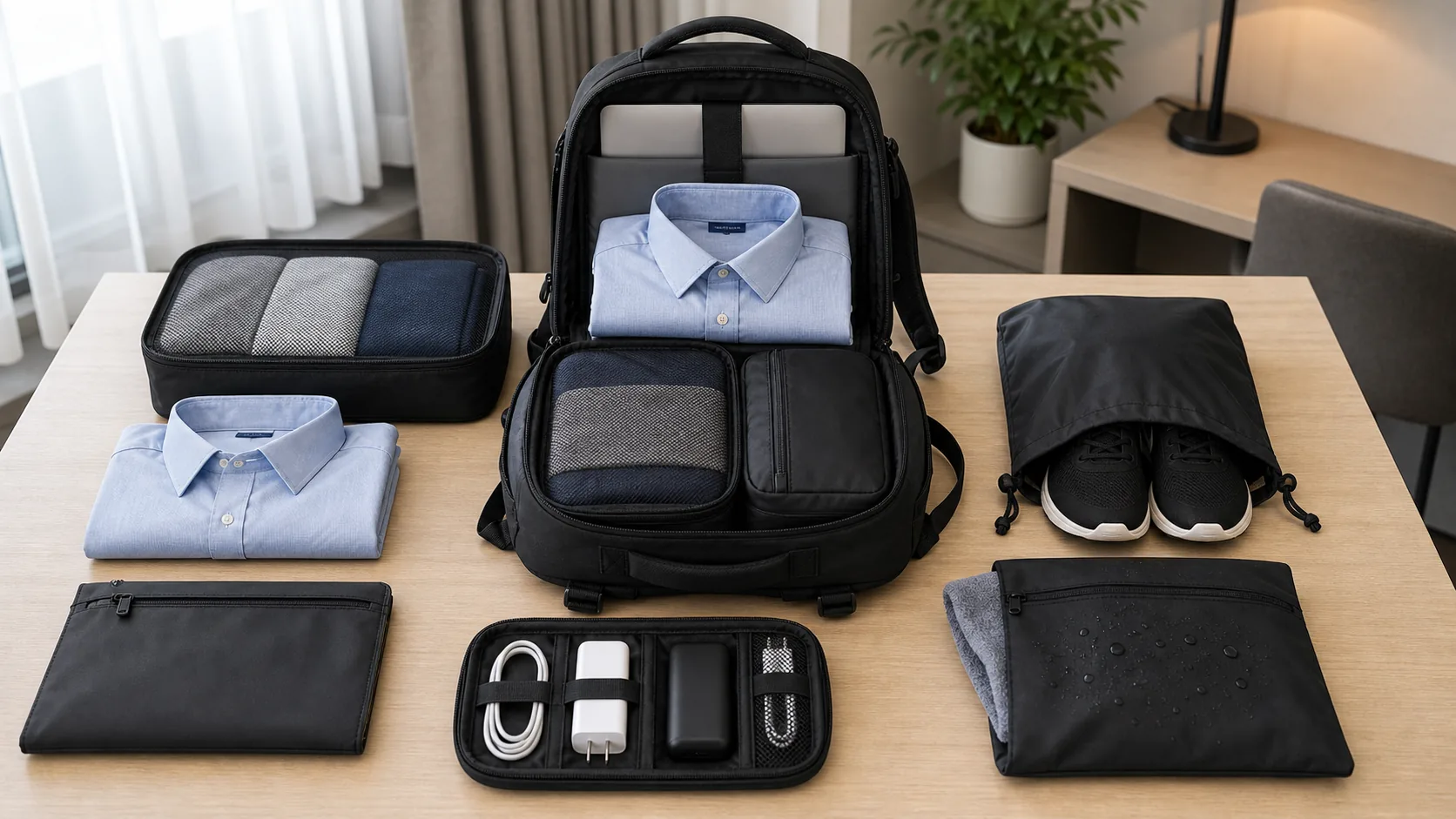
For online launches, e-commerce bag projects often benefit from clear capacity photos that show exactly what a 40L or 45L backpack can hold.
Do you need a 50L to 60L travel pack?
You need a 50L to 60L travel pack only when how many liters backpack for travel includes multiple climates, bulky gear, or checked-bag flexibility. This range can be useful, but it is usually heavier and less convenient than carry-on sizes.
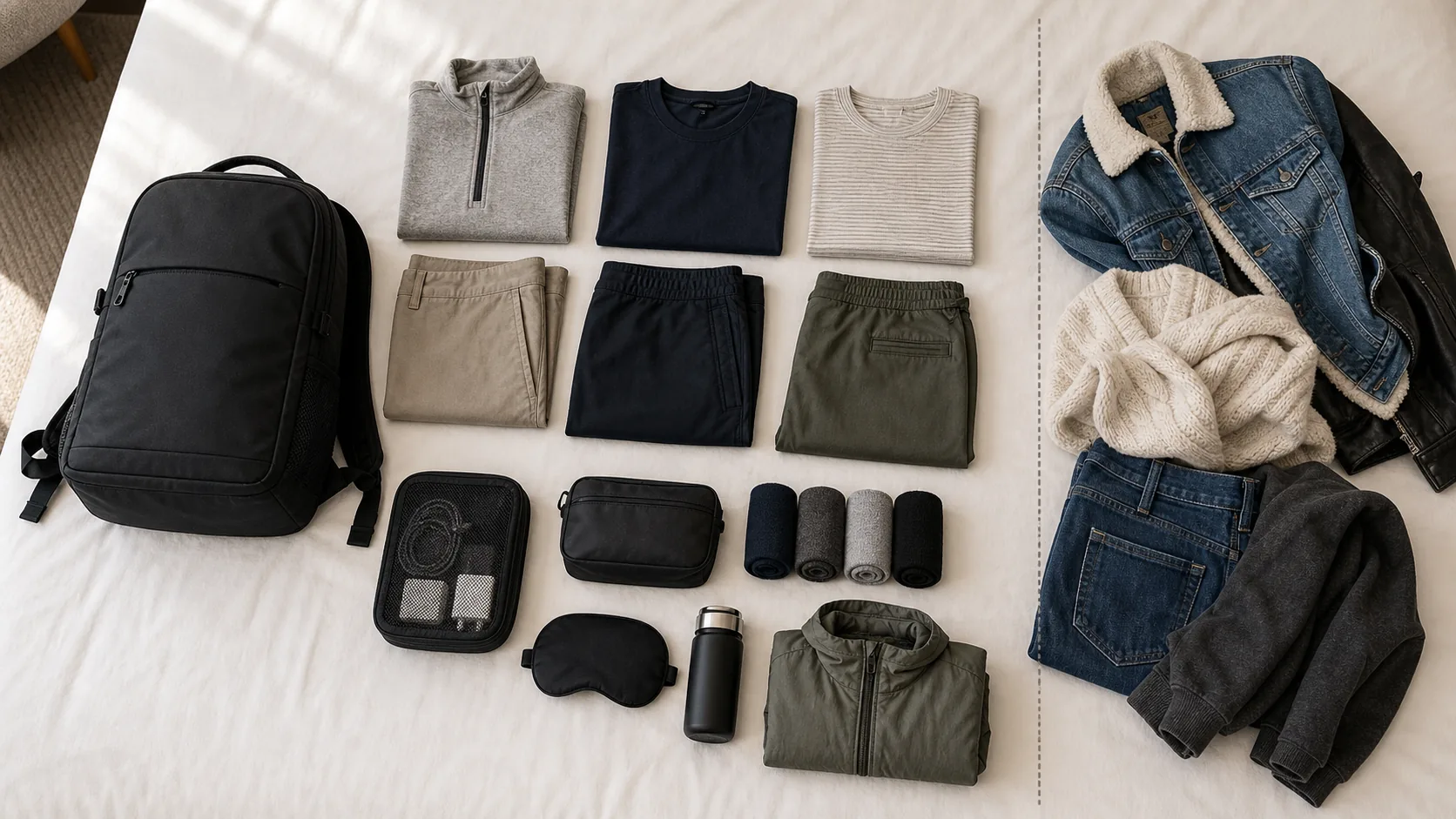
Is this range better for multiple climates?
Yes, 50L to 60L can help when a trip includes both warm and cold regions. The extra space can hold jackets, hiking shoes, thicker socks, or outdoor layers.
- Separate heavy layers from daily clothing.
- Use compression cubes to control bulk.
- Avoid filling every pocket just because space exists.
How do you manage the extra weight?
The extra weight requires a stronger frame, padded hip belt, load lifters, and stable sternum strap. A 60L backpack with weak suspension can become uncomfortable very quickly.
Key Takeaway: A 50L to 60L backpack is useful for complex packing lists, but it needs stronger load support.
| Capacity | Best For | Main Risk |
|---|---|---|
| 50L | Multi-climate trips | Borderline carry-on |
| 55L | Gear plus clothing | Heavier daily carry |
| 60L | Checked travel | Overpacking |
This range can work well for outdoor or hybrid travel products when the structure is built for the expected load.
When should you choose a 70L backpack or larger?
You should choose a 70L backpack or larger only when how many liters backpack for travel involves expedition-style use, camping gear, or self-supported outdoor routes. It is rarely efficient for city travel, business travel, or normal carry-on use.
Is this volume meant for trekking?
Yes, 70L+ backpacks are usually meant for trekking, camping, or backcountry routes. They can carry sleeping bags, tents, cooking gear, food, and cold-weather equipment.
- Adjustable harness systems are essential.
- External attachment points may be needed.
- Reinforced fabric and stitching matter more.
Why is it inefficient for cities?
Large expedition packs are difficult on buses, trains, taxis, stairs, and narrow hotel spaces. They usually need to be checked on flights and can become tiring during ordinary urban movement.
Key Takeaway: A 70L+ backpack should be reserved for outdoor-heavy trips, not standard travel.
| Size | Best Scenario | Travel Limitation |
|---|---|---|
| 65L-70L | Outdoor gear | Usually checked |
| 70L+ | Expedition routes | Bulky and heavy |
| 80L+ | Specialty use | Poor urban mobility |
For outdoor-focused lines, OEM tactical backpack projects can provide useful thinking around reinforced fabrics, load-bearing straps, and external attachment systems.
How do airline limits affect backpack liters?
Airline limits affect backpack liters because how many liters backpack for travel is never only a volume question; the packed dimensions must also fit airline rules. Two backpacks with the same liter rating can behave differently if one is tall and rigid while the other is soft and rectangular.
What dimensions should you check?
Check height, width, and depth after packing. Common international carry-on limits often sit near 55 x 35 x 20 cm, but each airline can set its own rules.
- Measure the loaded backpack.
- Include bulging pockets and handles.
- Compress before checking the final size.
How do budget airlines test bags?
Budget airlines may use a physical sizing cage. If the backpack cannot slide in smoothly, the traveler may need to check it and pay extra fees.
Key Takeaway: Liter count helps, but packed dimensions decide whether the backpack travels as carry-on.
| Factor | Why It Matters | Buyer Check |
|---|---|---|
| Height | Bin fit | Compare airline rules |
| Depth | Sizer fit | Compress front pockets |
| Frame rigidity | Flexibility | Test loaded shape |
For private-label teams, airline compliance should be tested with realistic packing, not empty samples.
Does trip style dictate backpack volume?
Trip style dictates backpack volume because how many liters backpack for travel changes when the traveler is minimalist, tech-heavy, business-focused, winter-bound, or outdoor-oriented. The same 40L backpack may be roomy for summer travel and tight for a winter work trip.
Are you a minimalist or a tech traveler?
A minimalist may need only 25L to 35L, while a tech traveler may need 40L to 50L because laptops, chargers, cameras, and adapters require padded space.
- Minimalist trips need fewer clothing options.
- Tech trips need protected compartments.
- Business trips may need wrinkle control.
How does weather change the packing list?
Warm climates use less volume because clothing is lighter. Cold climates require jackets, sweaters, boots, gloves, and thicker socks, which push many travelers into the 45L to 55L range.
Key Takeaway: Trip style and weather can matter more than trip length when choosing liters.
| Trip Style | Suggested Capacity | Reason |
|---|---|---|
| Warm weekend | 25L-30L | Light clothing |
| Digital nomad | 35L-45L | Tech and clothing |
| Winter route | 45L-55L | Bulky layers |
This is why one-size-fits-all product messaging can create poor expectations.
How does weight distribution change comfort?
Weight distribution changes comfort because how many liters backpack for travel is useful only if the loaded bag can be carried safely. A smaller well-balanced pack often feels better than a larger pack with poor suspension and heavy items placed far from the back.
Why do you need a hip belt?
A padded hip belt transfers part of the load from the shoulders to the hips. It becomes especially important once the backpack carries heavier clothing, electronics, shoes, or outdoor gear.
- Hip belt should wrap the upper hips.
- Shoulder straps should stabilize, not carry everything.
- Load lifters help keep weight close.
Where should heavy items go?
Heavy items should sit close to the spine and near the center of the backpack. Lighter soft items can fill the bottom and outer zones.
Key Takeaway: Comfort depends on both capacity and how the backpack controls weight.
| Item Weight | Best Placement | Comfort Benefit |
|---|---|---|
| Heavy tech | Back-center | Better balance |
| Clothing | Middle or top | Easy access |
| Soft layers | Bottom or outer | Cushions shape |
Good suspension can also reduce returns because customers judge capacity by how the loaded bag feels.
What custom features maximize usable capacity?
Custom features maximize usable capacity because how many liters backpack for travel can feel larger or smaller depending on the pocket system, compression, and divider layout. A well-designed 40L backpack can outperform a poorly organized 50L backpack in real use.
Do compression straps help?
Yes, compression straps help by reducing empty air space and pulling the load closer to the body. They also help a soft backpack fit airline sizing boxes more easily.
- Side straps reduce depth.
- Internal straps flatten clothing.
- Compression zippers can control expansion.
Why are modular dividers useful?
Modular dividers let travelers separate clean clothing, laundry, shoes, toiletries, and tech. They improve usable capacity by preventing items from mixing into one messy compartment.
Key Takeaway: Smart organization can increase perceived capacity without increasing the official liter rating.
| Feature | Storage Benefit | Production Note |
|---|---|---|
| Compression straps | Reduces bulk | Low complexity |
| Dividers | Separates categories | Needs accurate sewing |
| Expansion zipper | Adds flexibility | Must protect shape |
For sellers planning size-based SKUs, a fast replenishment project shows why feature clarity and inventory timing can matter as much as capacity choice.
What materials and FAQs help choose backpack liters?
Materials and FAQs help choose backpack liters because how many liters backpack for travel also depends on fabric strength, waterproofing, zipper quality, and the questions buyers ask before ordering. Larger capacities place more stress on fabric, seams, straps, and frames.
Is nylon better than polyester?
Nylon often has strong tear resistance and flexibility, while polyester can offer good color retention and controlled cost. The better choice depends on price target, durability needs, and weather expectations.
What makes a travel backpack water-resistant?
Water resistance comes from coated fabric, zipper design, seam construction, and sometimes a rain cover. TPU or PU coatings can improve protection, but construction details still matter.
If your brand needs travel backpacks sized around 30L, 40L, 45L, or larger category plans, contact us today to discuss materials, compartments, samples, and production.
Key Takeaway: Materials should match the expected volume and load so the backpack stays reliable when fully packed.
Can I customize a 40L travel backpack with detachable compartments?
Yes, detachable compartments can be customized when the structure and sewing plan support them. They are useful for laundry, tech, shoes, or wet storage.
What is the best material for a water-resistant travel backpack?
TPU-coated nylon is a strong premium option, while coated polyester can work for cost-sensitive programs. The final choice should match the target price and use case.
How do I know if a backpack design is carry-on compliant?
Measure the packed sample against airline size limits. Do not rely on the liter rating alone because shape and depth affect compliance.
Can I start with a smaller production run?
Yes, some OEM programs can start with lower MOQs depending on material availability, customization level, and production schedule.
Is 40L enough for two weeks of travel?
Yes, 40L can be enough for two weeks if the traveler packs a simple clothing system and does laundry during the trip.