
Clean a tennis bag by emptying every pocket, brushing off loose dirt, wiping the fabric with mild soap, cleaning the lining gently, then air-drying the bag fully before storage. For brands asking how to clean a tennis bag, maintenance is also a product design issue. A player may store damp towels, dusty shoes, and used grips in one bag after every match, then blame the product when odor, stains, or zipper drag appear. ZWbags helps OEM, ODM, private label, and wholesale buyers plan tennis bags with easier-clean linings, ventilated zones, stronger zippers, sample testing, logo options, and 100% pre-shipment inspection.
How to clean a tennis bag before deep cleaning?
To answer how to clean a tennis bag before deep cleaning, remove all gear, open every pocket, shake out dirt, and brush loose dust from seams and corners. This first step protects the fabric from unnecessary rubbing during wet cleaning.
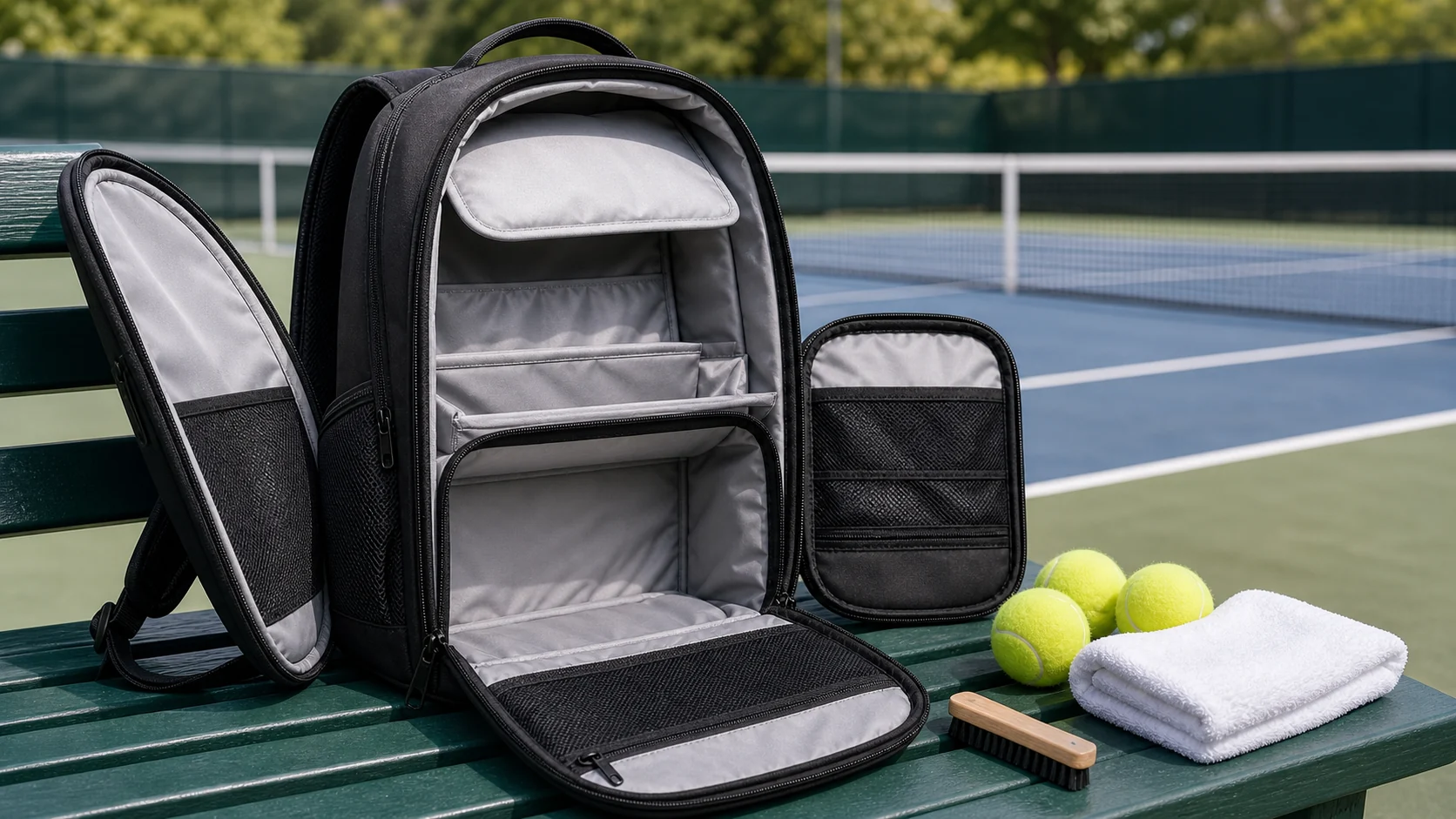
What should buyers check during the emptying step?
Here is the useful test: if debris hides in corners after shaking, the pocket shape may be hard to clean. Buyers should review pocket depth, lining color, and seam access during sampling.
- Remove rackets, balls, towels, and shoes
- Open all zipper pockets
- Shake out loose sand or court dust
- Brush seams with a soft brush
- Check whether lining traps debris
| Pre-clean check | Design signal |
|---|---|
| Corner dirt | Pocket shape may need adjustment |
| Hidden debris | Lining texture may hold dust |
| Hard access | Opening size may feel too narrow |
This turns a cleaning step into a sample-review tool. Key Takeaway: a maintenance-friendly tennis bag should be easy to empty before it is easy to wash.
How to clean a tennis bag exterior safely?
To answer how to clean a tennis bag exterior safely, use a damp microfiber cloth, mild soap, and gentle circular wiping rather than harsh scrubbing. Strong cleaners can damage coatings, color, and trim.
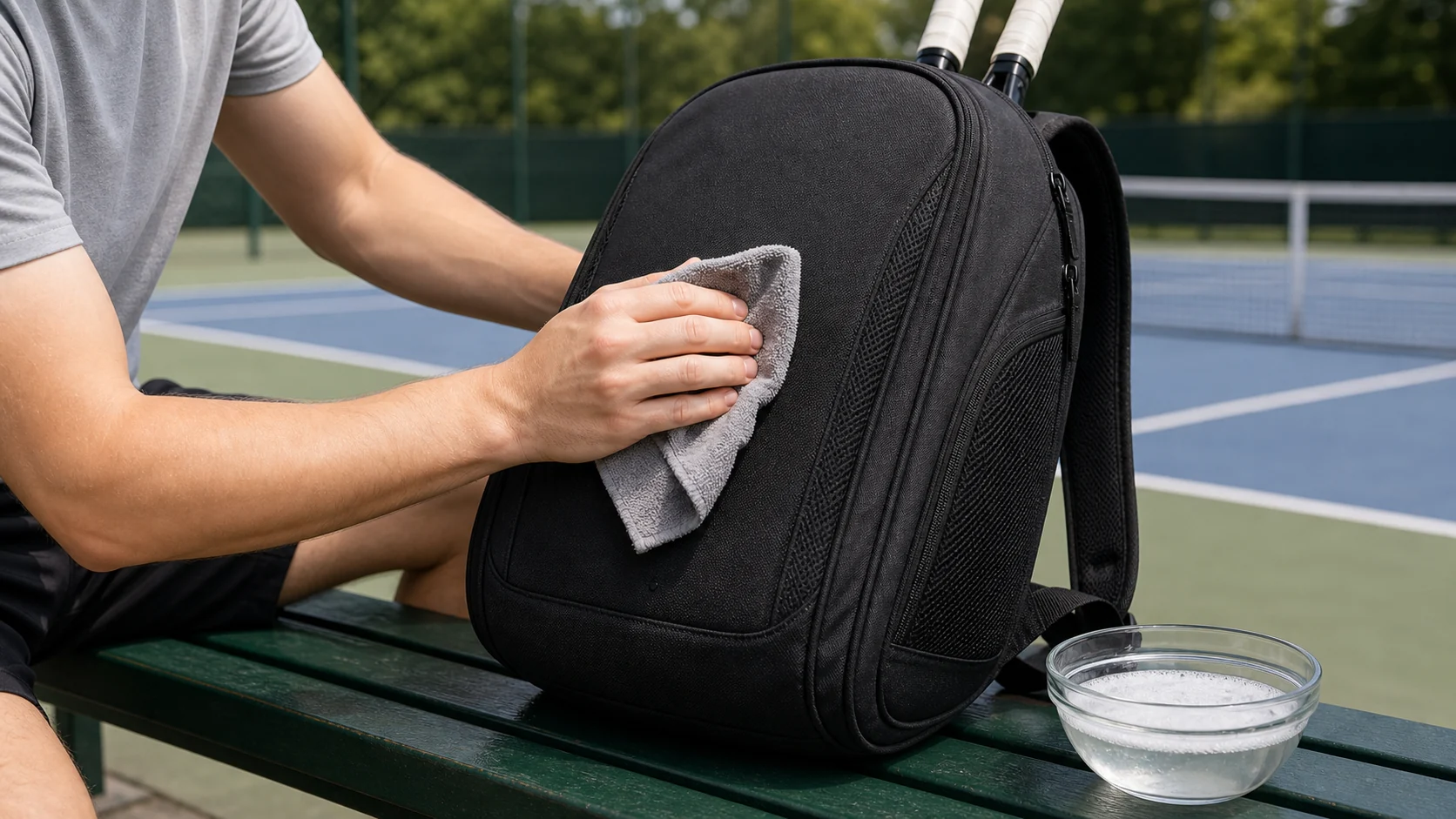
Which exterior materials need extra care?
You might be wondering: can every tennis bag be cleaned the same way? Not really. Polyester, nylon, coated fabric, and synthetic trim can react differently.
- Test mild soap on a hidden area
- Avoid bleach or abrasive cleaners
- Wipe coated fabric lightly
- Clean zipper tape with a soft cloth
- Keep printed logos away from strong rubbing
| Exterior material | Cleaning note |
|---|---|
| Polyester | Mild soap and soft cloth |
| Nylon | Light wiping, no high heat |
| Coated panel | Avoid aggressive scrubbing |
This helps private label teams choose fabric that stays presentable after use. Key Takeaway: exterior cleaning should protect color, coating, and logo finish.
How to clean a tennis bag interior after play?
To answer how to clean a tennis bag interior after play, vacuum loose dirt, wipe the lining with a lightly damp cloth, and leave pockets open until dry. Interior cleaning matters because sweaty towels, shoes, and grips create odor faster than outside dust.
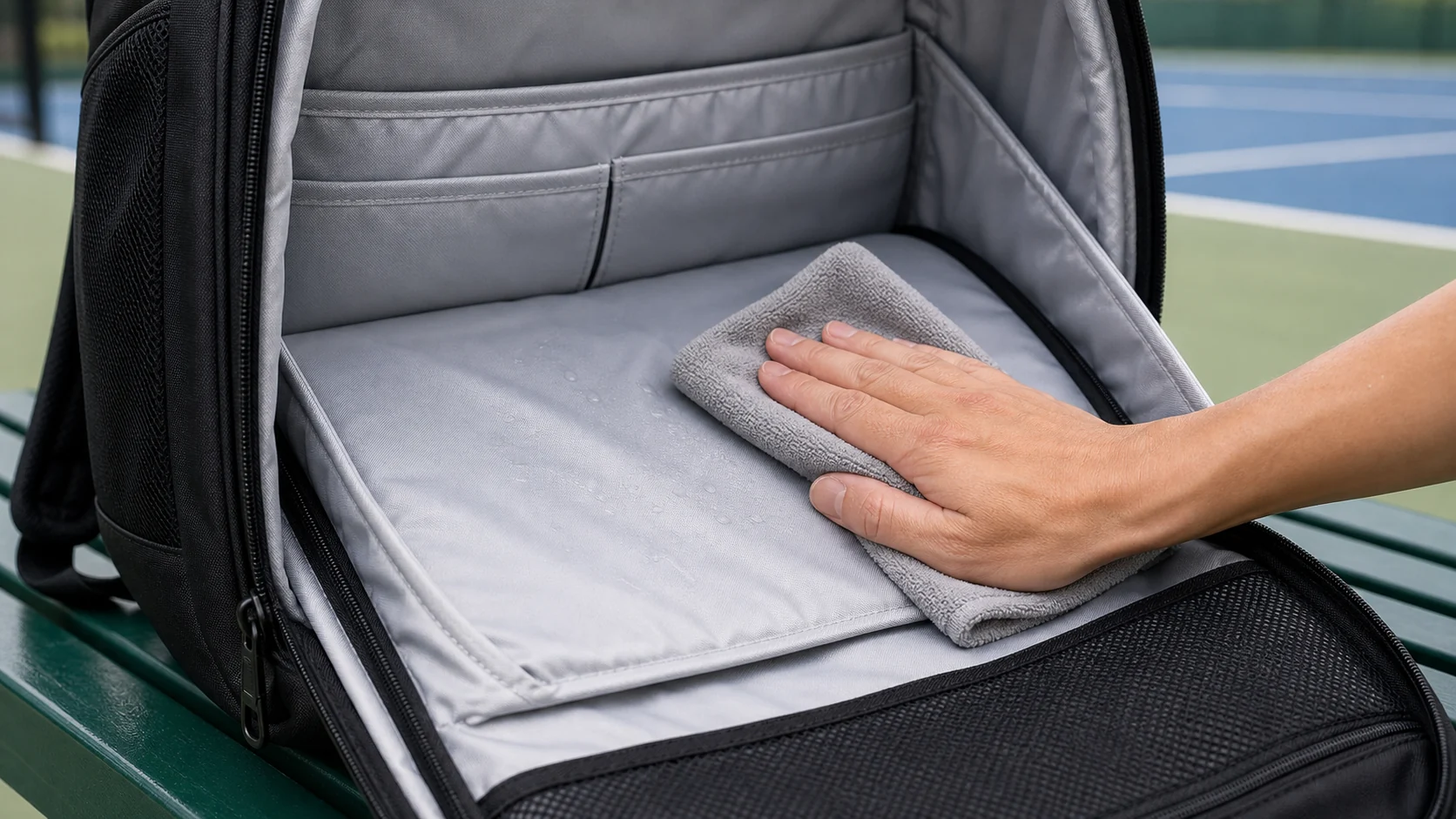
What lining details make cleaning easier?
Keep this in mind: a beautiful outer shell cannot fix a lining that traps odor. Buyers should test lining wipeability with realistic dirt and moisture.
- Smooth lining for racket zones
- Darker wipe-clean areas near shoes
- Mesh only where airflow matters
- Removable pouch for damp items
- Seams that do not trap crumbs
| Interior issue | Better construction |
|---|---|
| Sweat odor | Ventilated pocket or wet pouch |
| Dust buildup | Smooth lining surface |
| Shoe dirt | Coated lower compartment |
This gives factories clearer direction than simply asking for “easy cleaning.” Key Takeaway: interior maintenance depends on lining choice and compartment separation.
How to clean a tennis bag shoe compartment?
To answer how to clean a tennis bag shoe compartment, remove the shoes, brush out dry dirt, wipe the pocket lining, and air it out before closing the zipper. In the sports bag market context, shoe storage can become a strong feature when it also supports cleaning.
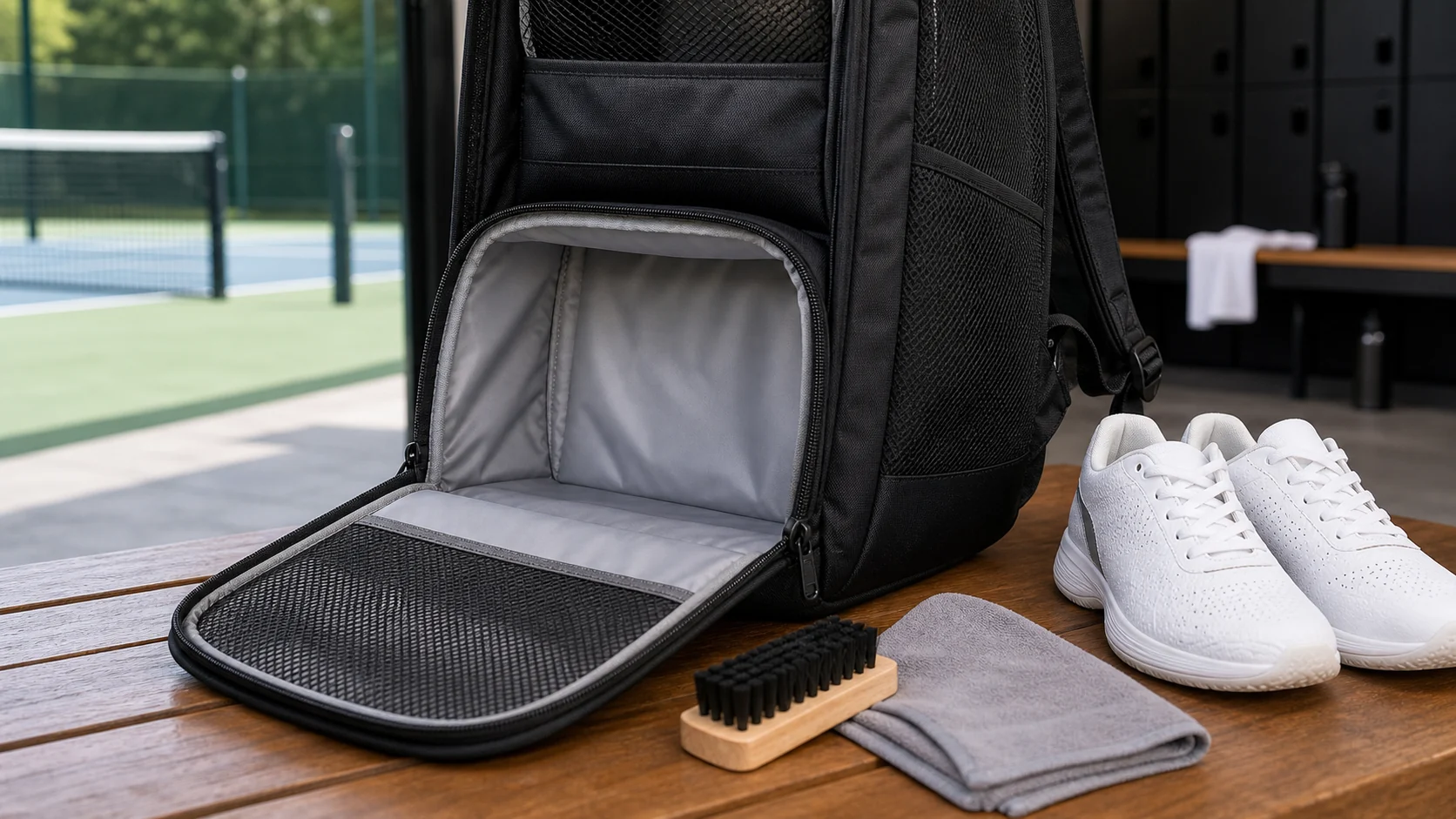
Which shoe-pocket features reduce odor?
The smart move: design the shoe zone as a maintenance area, not only a storage pocket. Dirt, sweat, and rubber smell need airflow and separation.
- Ventilation eyelets or mesh
- Wipe-clean lining
- Enough depth for real shoes
- Lower placement for stable weight
- Separation from clean clothing
| Shoe-pocket feature | Maintenance value |
|---|---|
| Ventilation | Helps moisture escape |
| Coated lining | Easier dirt removal |
| Separate tunnel | Protects clean items |
This layout helps reduce odor complaints and cleaning friction. Key Takeaway: shoe compartments should be designed for dirt before buyers discuss style.
How to clean a tennis bag zipper and straps?
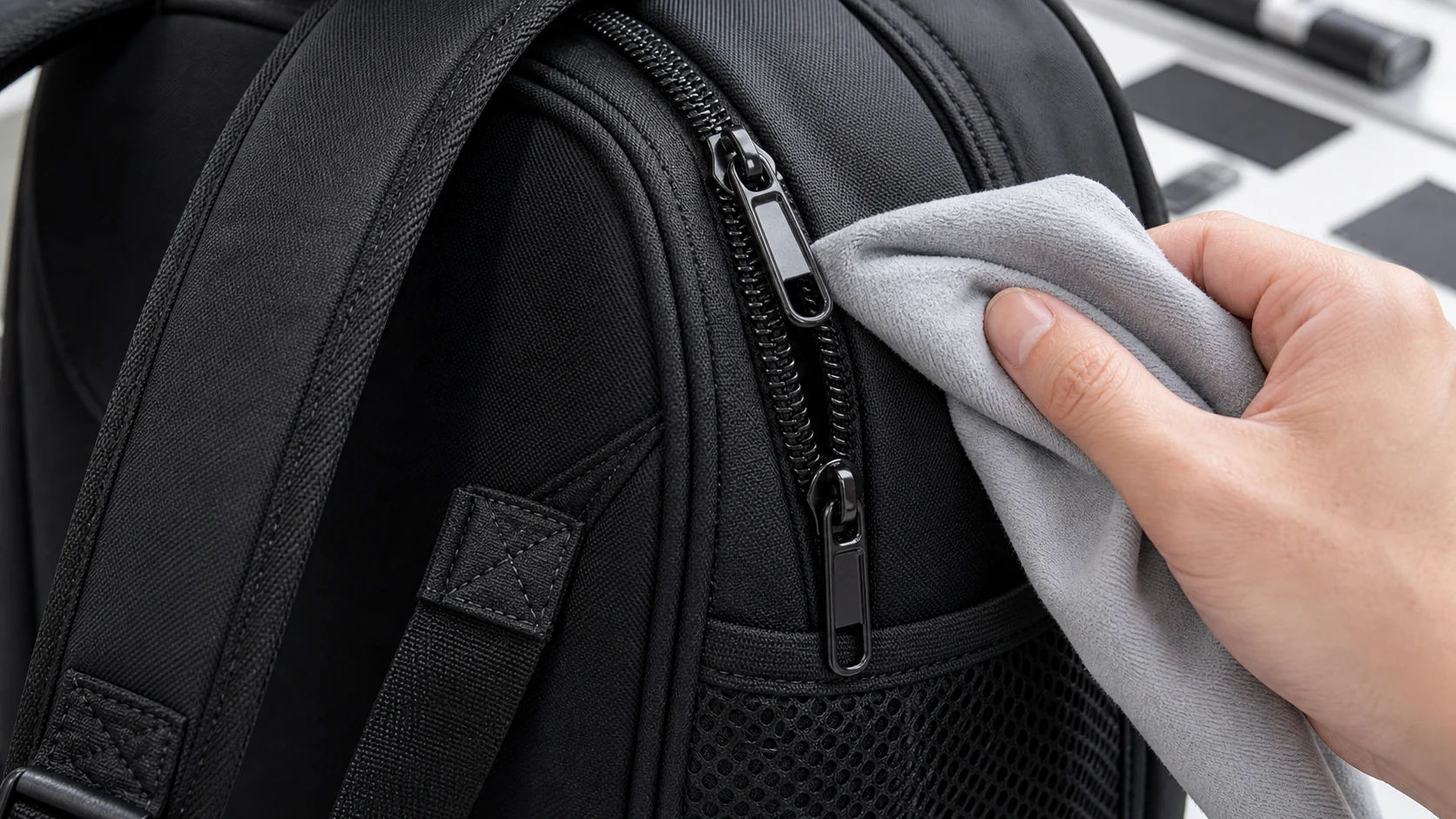
To answer how to clean a tennis bag zipper and straps, wipe dust from zipper teeth, avoid forcing stuck pulls, and clean strap surfaces with a mild damp cloth. If buyers also source fitness bags, OEM gym bags offer useful lessons for strap anchors and sweaty-use cleaning.
What hardware should be checked during maintenance?
Here is where durability shows: zippers and straps receive daily force. Cleaning gives buyers a chance to spot weak points before customers do.
- Zipper teeth and pullers
- Strap anchor stitching
- Handle wrap
- Buckles or adjusters
- Binding around stress points
| Hardware area | QC warning sign |
|---|---|
| Zipper curve | Dragging or uneven teeth |
| Strap anchor | Fraying or skipped stitches |
| Handle | Cracking or loose wrap |
This check links maintenance with production quality. Key Takeaway: easy-clean hardware still needs strong construction behind it.
How to clean a tennis bag without causing odor?
To answer how to clean a tennis bag without causing odor, dry the bag completely, keep damp gear separate, and use breathable storage after each match. Sellers planning e-commerce bag projects can turn odor control into a practical product claim.
What odor-control details should be built in?
A quick reality check: odor usually starts when moisture is trapped. A cleaner bag is often a better-ventilated bag.
- Open pockets after use
- Remove sweaty towels quickly
- Use a washable wet pouch
- Add breathable mesh in shoe zones
- Store the bag in a dry area
| Odor source | Product response |
|---|---|
| Damp towel | Coated wet pocket |
| Shoes | Ventilated compartment |
| Closed storage | Airflow and open pockets |
This maintenance routine can also guide hangtag copy and care cards. Key Takeaway: odor control begins with moisture control and good airflow.
How to clean a tennis bag after rain or travel?
To answer how to clean a tennis bag after rain or travel, wipe exterior moisture, remove dirty items, open compartments, and dry the bag away from high heat. Travel and weather can stress fabric, coatings, zipper tape, and seams.
What travel damage should buyers inspect?
Think about real use: a tennis bag may sit in a car trunk, airport bin, locker room, or damp court fence area. A maintenance-friendly sample should survive these ordinary moments.
- Wet exterior panels
- Dusty bottom fabric
- Scraped corners
- Moist shoe pockets
- Bent zipper pulls
| Travel issue | Care response |
|---|---|
| Rain moisture | Air-dry with pockets open |
| Bottom dirt | Wipe-clean base fabric |
| Scratches | More durable outer panel |
This helps buyers choose materials for real movement, not only studio photos. Key Takeaway: travel maintenance is easier when the base, corners, and zipper areas are reinforced.
How to clean a tennis bag as part of QC?
To answer how to clean a tennis bag as part of QC, include wipe tests, zipper tests, odor checks, colorfastness review, and full-load inspection before production approval. A product upgrade case can help sourcing teams think about durability and review risk.
Which cleaning tests belong in sample review?
This is where small tests save trouble: a simple wipe test can reveal color transfer, weak coating, or difficult seams before bulk order.
- Damp-cloth wipe test
- Lining odor check after drying
- Zipper cycle test after dust exposure
- Strap anchor check after full load
- Color rub test on trim
| QC test | Risk it catches |
|---|---|
| Wipe test | Weak coating or color transfer |
| Drying test | Odor-prone lining |
| Zipper cycle | Dirt-related zipper drag |
This gives buyers a maintenance-focused approval gate. Key Takeaway: cleaning performance should be part of QC, not only after-sales advice.
How to clean a tennis bag and store it properly?
To answer how to clean a tennis bag and store it properly, make sure it is dry, lightly shaped, unzipped enough for airflow, and placed away from direct heat or damp storage. Storage choices affect shape, fabric life, and odor.
What storage details help the bag last longer?
Here is a simple habit: clean, dry, shape, and store. This routine keeps the bag ready for the next season or next retail return inspection.
- Store in a cool dry place
- Keep pockets slightly open
- Avoid heavy items on top
- Use light stuffing to preserve shape
- Keep away from direct heat
| Storage choice | Result |
|---|---|
| Dry shelf | Lower odor risk |
| Light stuffing | Better shape retention |
| Open pockets | Better airflow |
This routine is also useful for care labels and product inserts. Key Takeaway: a tennis bag lasts longer when cleaning and storage are planned together.
How to clean a tennis bag before sourcing custom designs?
To answer how to clean a tennis bag before sourcing custom designs, use cleaning tests to define lining, coating, ventilation, zipper, and strap requirements. For OEM tennis bag planning, contact us today to compare maintenance-friendly materials, pocket structures, MOQ, sampling, and QC with ZWbags.
What should buyers include in the care brief?
Here is a clean path: describe the target user, likely dirt sources, cleaning routine, and required durability before asking for a sample. This helps the factory design for daily care from the start.
- Target player and sales channel
- Shoe and wet-gear storage needs
- Preferred fabric and lining
- Logo method and cleaning limits
- MOQ, sample timing, and QC checklist
| Care brief item | Factory output |
|---|---|
| Dirt source | Lining and pocket advice |
| Cleaning method | Material and coating options |
| Brand plan | Logo and trim recommendation |
This turns maintenance into a practical product-development advantage. Key Takeaway: the best custom tennis bag should be easy to use, clean, inspect, and reorder.
FAQ
Can I wash a tennis bag in a machine?
Usually no, unless the care label clearly allows it. Hand cleaning with mild soap is safer for fabric coatings, zippers, padding, and logo details.
What's the best soap for cleaning a tennis bag?
A mild soap is usually best. Harsh cleaners, bleach, and abrasive powders can damage fabric, coating, trim, and printed logos.
How do I know if my tennis bag is fully dry?
It is fully dry when the lining, shoe pocket, seams, and padded areas no longer feel cool or damp. Leave pockets open longer if any moisture remains.
Can I remove odor from a tennis bag?
Yes, if the odor comes from trapped moisture or dirty gear. Empty the bag, wipe the lining, dry it fully, and improve airflow before storage.
What's the best easy-clean feature for private label buyers?
A wipe-clean lining is often the most useful feature. It supports shoe storage, wet towel separation, and better long-term product reviews.