
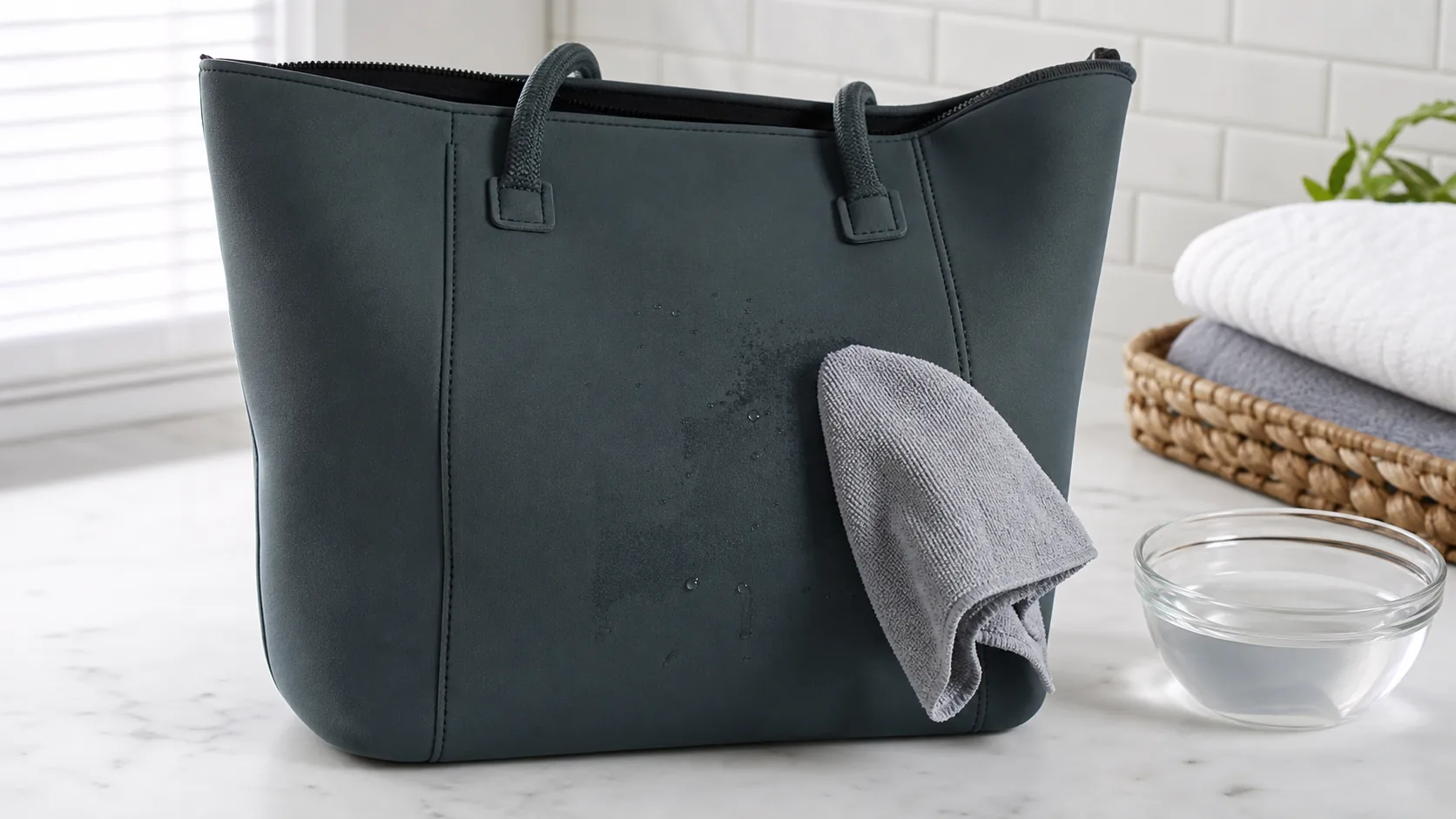
To clean a neoprene bag, empty every pocket, brush away loose dirt, hand wash with cool water and a small amount of mild soap, rinse thoroughly, and air dry it flat in the shade. Avoid bleach, hot water, tumble dryers, irons, and aggressive scrubbing because heat and harsh chemicals can damage the rubber-like structure, laminated fabric, seams, and hardware.
Neoprene is durable, flexible, and forgiving for daily use, but it still needs a careful routine. A commuter tote, gym pouch, beach bag, lunch bag, or retail sample can collect skin oil, sunscreen, crumbs, rainwater, coffee, and odor in places that are easy to miss. The right method removes grime without stretching panels, fading color, or leaving a soap film behind.
For brands and sourcing teams, cleaning guidance also affects product reviews and repeat sales. If a customer understands how to maintain a neoprene bag, the product is more likely to look good after real use. That is why care instructions should be part of material selection, sample testing, and packaging copy for custom bag programs.
Why Gentle Cleaning Matters for Neoprene Bags
Neoprene is a synthetic rubber material often laminated with fabric on one or both sides. That gives a bag soft structure, stretch, cushioning, and a smooth hand feel, but it also means the cleaning method should be gentler than the method used for canvas or cotton.

Daily use exposes the bag to dust, body oils, sunscreen, food residue, salt, sweat, and accidental spills. If those residues sit too long, they can dull the surface, create odor, and make stains harder to remove. Regular light cleaning is easier than trying to rescue a heavily soiled bag later.
The goal is not to scrub the bag as hard as possible. The goal is to loosen dirt, lift residue, protect elasticity, and let the material dry evenly.
| Cleaning Choice | Effect on Neoprene | Better Option |
|---|---|---|
| Hot water | Can affect shape and bonding | Cool water |
| Bleach | Can weaken and discolor material | Mild soap |
| Hard scrubbing | Can roughen the surface | Soft cloth or fingertips |
| Tumble drying | Can warp panels and seams | Flat air drying |
If you are developing neoprene tote bags for retail, gifts, sports, or lifestyle use, care testing should happen before bulk production. A simple wash test can reveal whether color, trims, printed panels, zipper tape, and edge binding hold up under normal customer maintenance.
What to Do Before Washing a Neoprene Bag
Preparation prevents small mistakes from becoming permanent stains. Before water or soap touches the bag, empty every pocket and remove anything detachable, including straps, charms, organizers, pouches, and loose inserts.

Shake the bag upside down over a trash bin to remove crumbs and grit. Then use a soft brush, lint roller, or dry microfiber cloth to lift surface dust. This step matters because dry dirt can turn into muddy residue once it mixes with water.
Check these areas carefully:
- Interior zip pockets where pens, makeup, or receipts may hide.
- Bottle pockets where sugar, juice, or protein drinks may have leaked.
- Bottom corners where sand, dust, or food crumbs settle.
- Zipper teeth and pullers where grit can block movement.
- Seams and binding where loose threads may need repair before washing.
If the bag has a care label, read it first. Some bags include mixed materials, printed panels, leather-like trims, metal hardware, foam inserts, or bonded construction that changes what is safe.
For e-commerce sellers, this preparation step can become a short care card or product-page note. Clear care guidance is especially useful in e-commerce bag projects because buyers cannot inspect the material in person before purchase.
How to Hand Wash a Neoprene Bag Safely
Hand washing is the safest default method for most neoprene bags. Fill a basin or sink with cool water, add a small amount of mild detergent, baby shampoo, or wetsuit shampoo, and mix until the soap is evenly diluted.

Place the bag in the water and gently press the material so soapy water reaches the stained areas. Use your fingertips or a soft microfiber cloth to massage marks in small circles. Do not twist, wring, scrape, or pull the panels out of shape.
A simple hand-wash routine works well:
- Empty and dry-brush the bag.
- Mix cool water with a small amount of mild soap.
- Spot treat visible stains first.
- Submerge or wipe the bag depending on construction.
- Gently massage stained areas.
- Rinse with cool clean water until no soap remains.
- Press with a towel to remove excess water.
- Lay flat to air dry in shade.
Rinsing is just as important as washing. Soap left in the material can attract more dirt and make the surface feel stiff. If the water still feels slippery or bubbles remain, rinse again.
Can You Machine Wash a Neoprene Bag?
Machine washing is not the best choice unless the care label clearly says it is allowed. Agitation, spin cycles, hot water, and contact with the drum can stretch seams, crease panels, damage zipper pulls, or weaken laminated surfaces.

If the label allows machine washing, use the lowest-risk setup: cold water, gentle cycle, mild detergent, and a protective mesh laundry bag. Remove detachable parts first and wash the bag alone or with soft items only. Never use bleach, fabric softener, or heavy-duty laundry pods.
Even when machine washing is technically permitted, avoid it for bags with:
- Metal chains, plated buckles, or decorative hardware.
- Leather, suede, cork, or paper-based trim.
- Heat-transfer logos, metallic prints, or raised decorations.
- Structured foam panels or reinforced bases.
- Open seams, loose binding, or weak zipper stitching.
For most owners, hand washing takes only a few extra minutes and gives better control. For brands, machine-wash claims should be supported by real sample testing, not assumed from the base material alone.
Which Soap Works Best for Neoprene Bags?
Choose a mild cleaner that removes residue without attacking the material. A small amount of gentle laundry detergent, baby shampoo, dish soap for greasy spots, or wetsuit shampoo is usually enough. More soap does not mean a cleaner bag; it often just creates more residue to rinse out.

Avoid bleach, strong stain removers, solvent cleaners, acetone, alcohol-heavy sprays, and abrasive powders. These can fade color, dry out the material, mark fabric lamination, or damage coating and trim.
Use this quick guide:
| Cleaning Need | Good Choice | Avoid |
|---|---|---|
| General dirt | Mild detergent or baby shampoo | Bleach |
| Greasy spot | One drop of gentle dish soap | Solvent cleaner |
| Sweat odor | Baking soda paste or diluted vinegar wipe | Heavy perfume |
| Salt or chlorine residue | Wetsuit shampoo | Hot water |
Always test the cleaner on a hidden area first, especially on bright colors, printed panels, or custom trims. Let the test spot dry before cleaning the full bag.
For sourcing teams, cleaning tests are useful during sampling. A pilot order case can help a brand confirm whether material, printing, stitching, and trims still look right after realistic consumer care.
How to Remove Oil, Coffee, and Everyday Stains
Fresh stains are easier to remove than old stains. Blot first, then clean. Rubbing too quickly can push oil, pigment, or food residue deeper into the fabric surface.
For oil or grease, place a dry paper towel or clean cloth over the stain and press gently. Apply one drop of mild dish soap to a damp microfiber cloth, dab the spot, let it sit for a few minutes, then rinse with cool water. Repeat lightly if needed.
For coffee, tea, juice, or sports drinks, blot the liquid immediately. Then wipe with cool water and mild soap. Avoid hot water because heat can help some stains set.
For makeup or sunscreen, use a gentle detergent solution and work slowly. These stains often contain oils, pigments, or minerals, so they may need repeated light treatment instead of one aggressive scrub.
| Stain Type | First Action | Follow-Up |
|---|---|---|
| Oil | Blot with dry cloth | Dab with diluted dish soap |
| Coffee | Blot immediately | Rinse with cool mild soap |
| Mud | Let dry, brush off | Wipe with soapy cloth |
| Sunscreen | Lift residue gently | Wash with mild detergent |
Do not use sharp tools to scrape stains. If residue is stuck, soften it with a damp cloth first, then lift it gradually.
How to Deodorize the Inside of a Neoprene Bag
Odor usually comes from trapped moisture, sweat, food residue, damp towels, or poor airflow. Cleaning the surface helps, but the inside of the bag also needs ventilation.
Start by emptying the bag and letting it air out fully. If the smell remains, wipe the lining with a cloth dampened in cool water and a little mild soap. For stubborn odor, use a light baking soda paste on the affected area, wait briefly, then wipe clean with a damp cloth.
Diluted white vinegar can also help neutralize odor, but use it carefully. Apply it to a cloth rather than pouring it into the bag, test a hidden area first, and let the bag dry completely afterward.
Avoid covering odor with heavy perfume. Fragrance may hide the smell for a short time, but it does not remove sweat, bacteria, or food residue. It can also leave a new scent that customers or users may dislike.
For long-term odor control, do these three things:
- Remove damp clothing, lunch containers, and towels as soon as possible.
- Leave pockets open after use so trapped moisture escapes.
- Store the bag only after it is fully dry.
What Is the Best Way to Dry a Neoprene Bag?
The safest drying method is flat air drying in a shaded, well-ventilated place. After rinsing, press the bag gently between clean towels to remove excess water. Then reshape it by hand and lay it flat on a dry towel.
Do not hang a soaked neoprene bag by its straps. Water weight can stretch handles, distort side panels, or pull seams. If the bag needs more airflow, turn it once or place it over a clean drying rack in a supported position.
Avoid these drying methods:
- Tumble dryer.
- Hair dryer.
- Direct radiator heat.
- Ironing.
- Long exposure to harsh sunlight.
Direct sun may seem useful for odor, but too much UV exposure can fade colors and dry out surfaces over time. A short period of fresh air is fine; prolonged heat is not.
Drying may take several hours depending on thickness, lining, pocket structure, and humidity. Do not store the bag while it is still damp inside.
How to Care for Zippers, Hardware, and Storage
Zippers, buckles, sliders, and snap hooks need separate attention because metal and plated parts can corrode or scratch. Wipe hardware with a damp cloth, then dry it immediately with a soft towel.
If a zipper feels gritty, brush away dirt with a soft toothbrush and open and close it slowly. For a metal zipper that still sticks, a very small amount of zipper wax or beeswax can help. Do not overapply wax, and keep it away from fabric areas where it could leave residue.
Storage matters after the bag is clean. Keep the bag in a cool, dry place away from direct sunlight. If it has soft side panels, stuff it lightly with acid-free tissue paper, clean cotton fabric, or soft packing material to help maintain shape.
Avoid newspaper because ink can transfer to light linings. Avoid damp basements, sealed plastic bags, and compressed storage under heavy items. Breathable dust bags are better because they protect the surface while allowing moisture to escape.
For retail programs and sample rooms, consistent storage reduces avoidable defects before photography, customer shipment, or trade-show display. This is one reason care and packing standards matter in retail buyer scenarios.
Care Tips for Brands Selling Custom Neoprene Bags
If you sell or source neoprene bags, cleaning performance should be part of product development. The end user may wash the bag after gym use, beach trips, food spills, or daily commuting. A bag that cleans easily creates fewer complaints and stronger repeat-buy potential.
Brands should review:
- Whether the care label is accurate and easy to understand.
- Whether colorfastness holds up after mild hand washing.
- Whether prints, patches, and labels survive spot cleaning.
- Whether hardware dries easily without rust or discoloration.
- Whether packaging includes simple care instructions.
Care guidance should be specific but not overcomplicated. Customers need to know what to do, what to avoid, and how to dry the bag safely. A short care card can prevent most misuse.
For custom programs, ZWbags can help align material choice, sample testing, trim selection, and packaging notes so the final bag performs well after daily use. To discuss a neoprene bag project, contact us today and share your target use case, size, trim requirements, and order plan.
FAQ
Can I bleach a neoprene bag for tough stains?
No. Bleach is too harsh for neoprene and can cause discoloration, brittleness, and material damage. Use mild soap and cool water instead.
Can I put a neoprene bag in the dryer?
No. Heat can warp panels, damage seams, and affect the rubber-like structure. Press out excess water with towels and air dry the bag flat in the shade.
How often should I clean a neoprene bag?
Wipe small marks as soon as they appear. Do a deeper hand wash when the bag has visible dirt, odor, spills, or heavy sweat exposure.
Can baking soda remove odor from a neoprene bag?
Yes, baking soda can help absorb odor when used carefully. Apply a light paste or sprinkle, let it sit briefly, then wipe or brush it away and dry the bag fully.
Should I store a neoprene bag folded or stuffed?
Stuffed is usually better. Light stuffing helps the bag keep its shape and prevents hard creases, especially during long-term storage.