
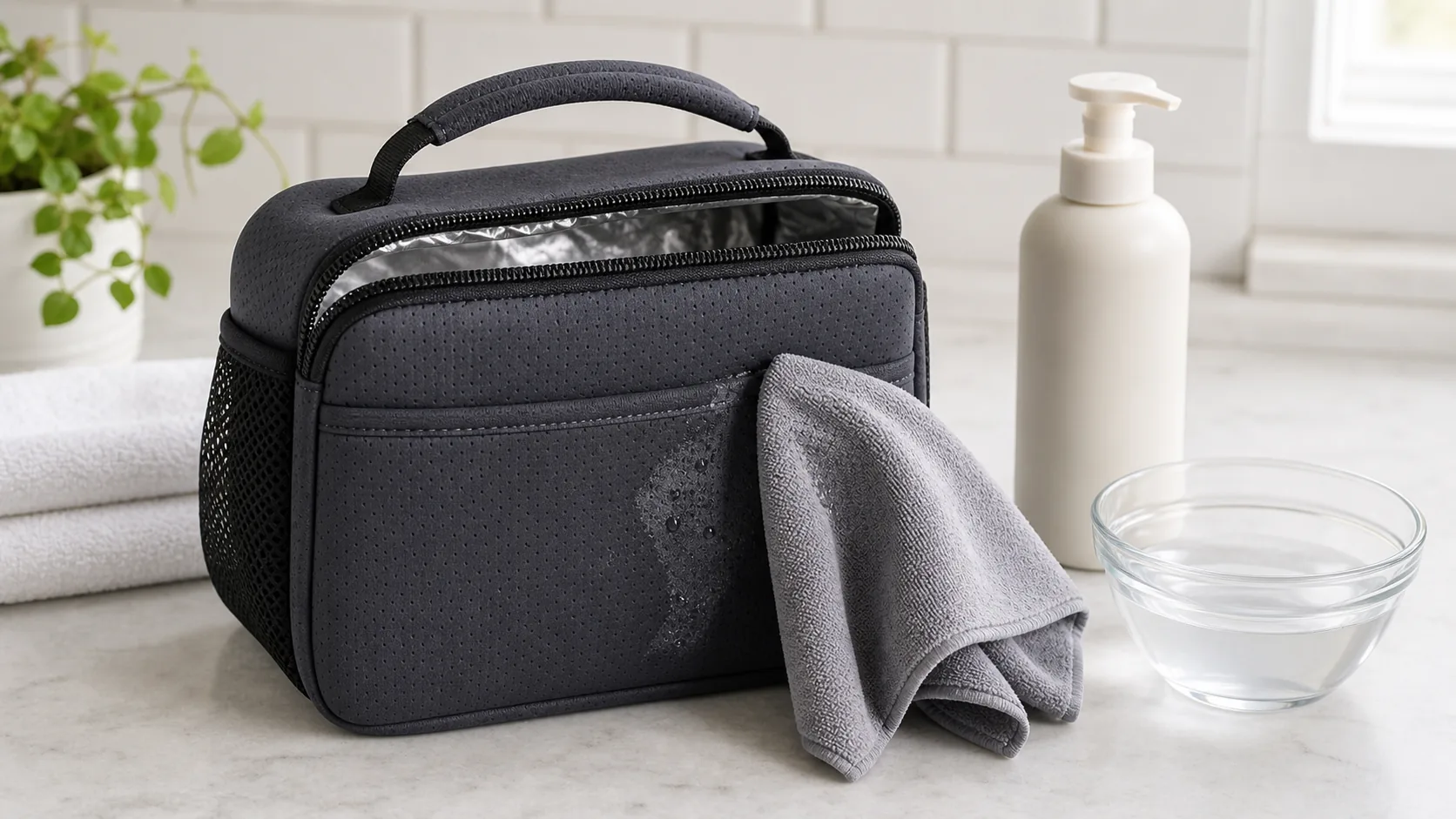
To wash a neoprene lunch bag, empty it completely, shake out crumbs, wipe fresh spills first, hand wash with cool water and mild soap, rinse well, press out excess water with a towel, and air dry it in the shade. If the care label clearly allows machine washing, use cold water, a delicate cycle, and a mesh laundry bag. Never use bleach, hot water, a tumble dryer, an iron, or harsh solvent cleaners.
Neoprene lunch bags are popular because they are soft, flexible, lightweight, and easy to carry to work, school, gym sessions, or weekend outings. They also face messy real-life use: salad dressing leaks, fruit juice spills, sauce residue, condensation from cold drinks, and food smells that build up inside corners. A good washing routine keeps the bag clean without damaging the fabric, seams, zipper, insulation, or printed panels.
For brands and buyers, clear care instructions are part of the product experience. A lunch bag that customers can clean confidently is more likely to stay in daily use, look good in reviews, and support repeat purchases.
Why Safe Washing Matters for a Neoprene Lunch Bag
Neoprene is a synthetic rubber material often laminated with fabric. It handles daily use well, but it should still be cleaned gently because heat, bleach, and aggressive scrubbing can affect elasticity, color, bonding, and trim.

Food residue makes lunch bags different from ordinary totes. A small leak from soup, yogurt, fruit, oil, or dressing can sit in the bottom seam all afternoon. If it is ignored, the stain becomes harder to remove and the odor becomes stronger.
Safe washing helps prevent:
- Lingering food smell inside the bag.
- Greasy marks from sauces and dressings.
- Sticky residue from juice, soda, or fruit.
- Bacteria growth from damp crumbs and spills.
- Early wear caused by repeated harsh cleaning.
The main rule is simple: clean early and gently. A quick wipe after a small spill is better than waiting until the bag needs heavy scrubbing.
If you are sourcing custom lunch bags for retail, school, corporate gifts, or subscription programs, care performance should be reviewed during sampling. The material, lining, zipper, binding, print, and label should all tolerate realistic consumer cleaning.
What to Do Before You Wash It
Preparation makes the cleaning process safer and faster. Start by removing every food container, napkin, utensil, ice pack, condiment packet, and loose crumb. Then open every pocket so hidden residue does not stay trapped during washing.

Turn the bag upside down over a trash bin and shake it gently. Use a soft brush, dry cloth, or lint roller to remove crumbs from seams and corners. If the bag has a removable base insert, divider, strap, tag, or organizer, take it out and clean it separately according to its material.
Before adding water, check the care label. Some neoprene lunch bags include insulation foam, foil lining, printed panels, leather-like trim, or bonded details. These parts can change whether full soaking or machine washing is safe.
Use this quick prep checklist:
| Step | Why It Matters |
|---|---|
| Empty every pocket | Prevents hidden items from staining the bag |
| Shake out crumbs | Stops food residue from turning into paste |
| Check seams and corners | Finds trapped sauces or sticky spots |
| Read the care label | Confirms whether soaking or machine washing is allowed |
| Remove detachable parts | Protects straps, inserts, and trims |
For e-commerce bag projects, this kind of simple care sequence can also become product-page copy, packaging guidance, or an after-sale email. Clear instructions reduce misuse and make the bag feel easier to own.
How to Spot Clean Fresh Food Stains
Spot cleaning is the best first response for most lunch bag spills. It works quickly, uses less water, and reduces stress on the whole bag.

Blot wet spills with a clean cloth or paper towel. Do not rub immediately, because rubbing can spread oil or push pigment deeper into the fabric surface. After blotting, mix cool water with a small amount of mild soap and dab the stain with a microfiber cloth.
For oily dressing or sauce, use one small drop of gentle dish soap on a damp cloth. Work from the outside of the stain toward the center so it does not spread. Rinse the area with another clean damp cloth until soap residue is gone.
For coffee, tea, juice, or fruit stains, act as soon as possible. Cool water is safer than hot water because heat can help some stains set. Repeat gentle dabbing instead of scrubbing hard.
| Stain Type | First Action | Best Follow-Up |
|---|---|---|
| Salad dressing | Blot oil first | Dab with diluted dish soap |
| Coffee or tea | Blot immediately | Rinse with cool mild soap |
| Yogurt or sauce | Lift solids gently | Wipe with mild detergent solution |
| Fruit juice | Absorb liquid | Rinse before it dries sticky |
Ink stains are more sensitive. Do not pour rubbing alcohol directly onto the bag. Test any stain remover on a hidden area first, use the smallest amount possible, and stop if color transfers to the cloth.
How to Remove Odor From a Neoprene Lunch Bag
Odor usually comes from trapped moisture, food residue, or a closed bag that did not dry fully. Washing helps, but ventilation is just as important.

After each use, remove food containers and leave the bag open for a while. If a smell is already present, wipe the interior with cool water and mild soap, then rinse with a damp cloth. Let the bag dry fully before closing it again.
For stronger odor, sprinkle a little baking soda inside the dry bag and let it sit for a short period, then shake and brush it out. You can also use a cloth lightly dampened with diluted white vinegar, but test first and avoid soaking the seams.
Avoid heavy perfume sprays. They may cover the smell briefly, but they do not remove the source. They can also mix with food odor and create a stronger unpleasant scent.
Helpful odor habits include:
- Remove lunch containers as soon as possible after use.
- Wipe spills before they dry.
- Air out the bag with the zipper open.
- Dry the bottom corners completely.
- Store the bag only when it is fully dry.
Good ventilation keeps the lunch bag fresher and reduces the need for deep cleaning.
Can You Machine Wash a Neoprene Lunch Bag?
Some neoprene lunch bags can be machine washed, but not all of them. The care label should decide. If the label does not clearly allow machine washing, hand washing is the safer default.

Machine washing can create problems when a bag has insulation layers, rigid inserts, decorative hardware, printed logos, bonded seams, leather-like trim, or delicate zipper pulls. A hard spin cycle can also distort the shape.
If machine washing is allowed, use the lowest-risk setup:
- Empty the bag completely.
- Close zippers and secure loose straps.
- Place the bag in a mesh laundry bag.
- Use cold water.
- Select delicate or hand-wash cycle.
- Use a small amount of mild detergent.
- Skip bleach and fabric softener.
- Remove the bag promptly and air dry.
Do not wash a neoprene lunch bag with heavy jeans, towels, shoes, or items with hooks. Friction can roughen the surface and stress the seams.
For brands, do not claim machine-wash safety unless sample testing supports it. A pilot order case can help confirm whether the chosen fabric, lining, zipper, print, and trim survive realistic wash conditions.
Which Soap Is Safe for Neoprene Lunch Bags?
Use mild soap. A gentle laundry detergent, baby shampoo, mild dish soap for greasy stains, or wetsuit shampoo can clean neoprene without being too harsh.
The cleaner should be diluted. Too much detergent leaves residue, and residue can attract more dirt or make the fabric feel stiff. A small amount is enough for most lunch bag stains.
Avoid:
- Bleach.
- Strong degreasers.
- Solvent cleaners.
- Acetone or nail-polish remover.
- Abrasive powders.
- Heavy fragrance sprays.
- Fabric softener.
If the bag has a printed design, bright color, or special lining, test the cleaner on a hidden area first. Wait until the test area dries, then check for fading, texture change, or color transfer.
For food-contact use, rinse carefully. The soap should not leave a strong scent inside the lunch bag.
What Is the Best Drying Method?
Air drying is the best drying method for a neoprene lunch bag. After washing, press the bag between clean towels to remove excess water. Do not twist or wring it, because twisting can distort the shape.
Open the bag fully and place it in a shaded, ventilated area. If the interior is damp, prop it open with a clean towel or a small drying rack so air reaches the corners. Turn the bag once if needed.
Avoid all direct heat:
- No tumble dryer.
- No hair dryer.
- No iron.
- No radiator.
- No long exposure to harsh sun.
Heat can warp neoprene, weaken adhesive layers, shrink trim, and fade color. Even if the outside feels dry, check the inside seams and bottom corners before storage.
Most lunch bags dry within several hours depending on thickness, lining, room airflow, and humidity. If it still smells damp, give it more time.
What Should You Never Use on a Neoprene Lunch Bag?
The biggest cleaning mistakes are bleach, high heat, hard scrubbing, and strong solvents. These may look like fast fixes, but they can cause permanent damage.
Bleach can discolor dark fabric, weaken fibers, create brittle areas, and leave a strong smell. Hot water and dryers can affect shape and bonding. Abrasive pads can roughen the surface and make the bag look older.
Use this simple rule:
| Avoid | Why |
|---|---|
| Bleach | Can discolor and weaken material |
| Hot water | Can affect shape and bonding |
| Dryer heat | Can warp panels and seams |
| Rough brushes | Can damage the surface |
| Strong solvents | Can mark fabric, lining, or print |
If a stain seems difficult, repeat a gentle process instead of jumping to a harsh chemical. Slow cleaning is usually safer than aggressive cleaning.
Why Proper Care Matters for Users and Brands
For daily users, a clean lunch bag protects food storage, keeps the commute more pleasant, and helps the bag look professional at work or school. A few minutes of care can extend the life of an item used every weekday.
For brands, proper care guidance reduces customer confusion. If the care label, product page, insert card, and after-sale support all explain the same safe cleaning method, buyers are less likely to damage the product by accident.
Care also affects sourcing decisions. A lunch bag meant for office meals may need a different lining, zipper, seam finish, and print method than a lunch bag meant for kids, outdoor events, supermarket promotions, or subscription boxes. These choices influence how easy the bag is to clean after real use.
ZWbags helps brands review fabric, lining, structure, labeling, and packaging so cleaning instructions match the actual product. If you need washable neoprene lunch bags for retail or promotional programs, contact us today with your size, capacity, trim, and target-use requirements.
FAQ
Can I wash a neoprene lunch bag every week?
Yes, if it is used daily and gets food residue or odor. For light use, spot cleaning between deeper washes is usually enough.
Can I put a neoprene lunch bag in the dryer?
No. Dryer heat can warp the material, damage seams, and affect bonded layers. Air dry it in the shade instead.
Can I use vinegar to remove lunch bag odor?
Yes, diluted white vinegar can help with odor, but apply it with a cloth, test a hidden area first, and avoid soaking the bag.
Is warm water safe for neoprene?
Cool water is safer. Warm water may be tolerated by some bags, but hot water should be avoided because it can affect shape, bonding, and trim.
How do I remove an ink stain from a neoprene lunch bag?
Blot first, test any cleaner on a hidden area, and use the smallest amount possible. If color transfers or the fabric changes texture, stop and use professional cleaning advice.