
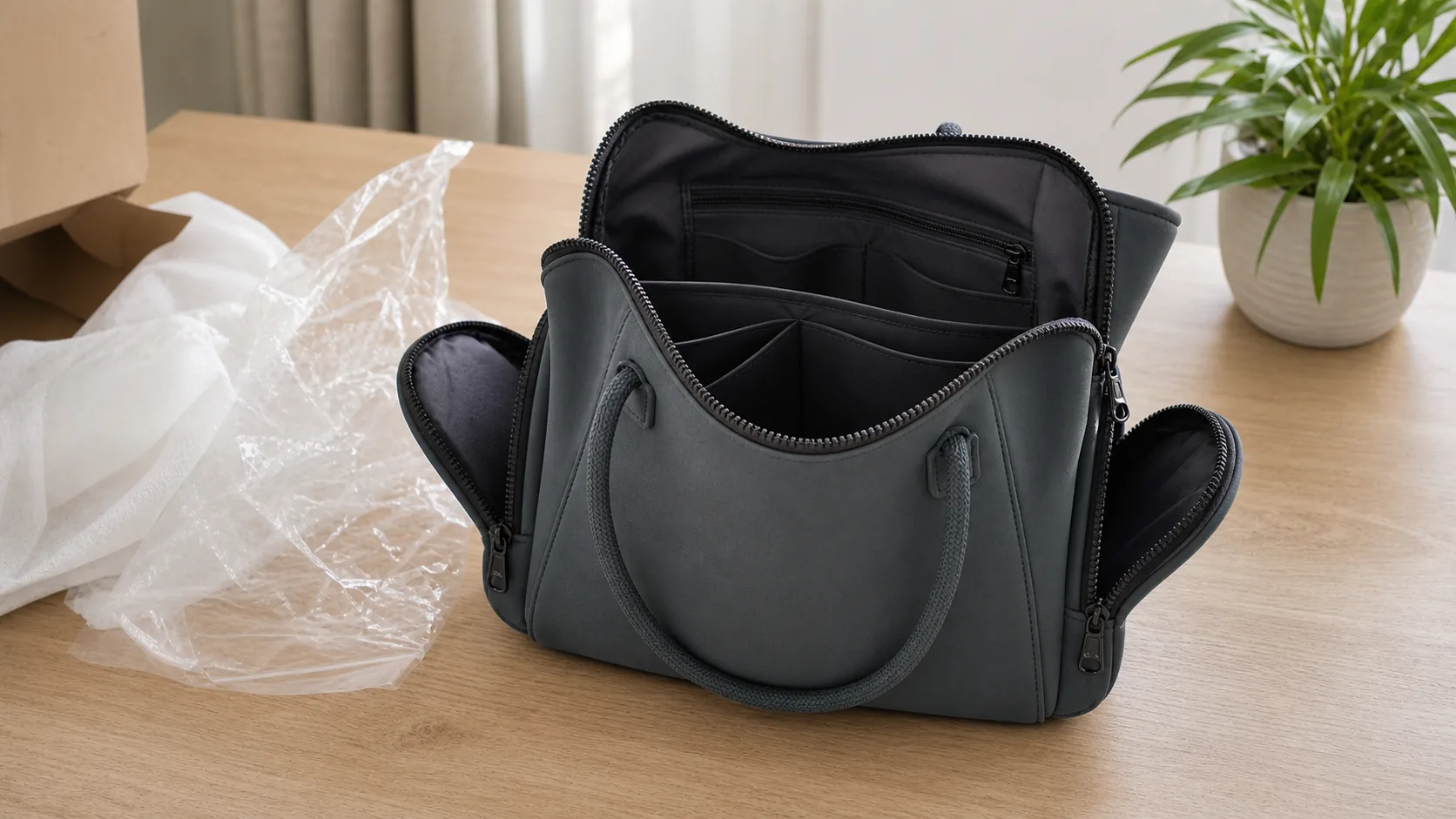
To get rid of neoprene bag smell, open every compartment, air the bag in a shaded, ventilated place, use baking soda or activated charcoal to absorb odor, wipe the interior with mild soap or diluted white vinegar when needed, and let the bag dry fully before storage. Avoid bleach, hot water, tumble dryers, heavy perfume, and long direct sun exposure because those shortcuts can damage the material, trims, adhesive layers, or color.
A neoprene bag can smell odd for two different reasons. A new bag may have a rubber-like manufacturing odor from material curing, adhesive residue, or sealed packaging. A used bag may smell from sweat, damp clothing, food residue, sunscreen, or moisture trapped in pockets. The fix depends on the source, but the safest approach is always ventilation first, then gentle odor absorption, then mild cleaning only if needed.
For brands and buyers, odor control is also part of product quality. Material selection, curing time, packaging, storage, and care instructions all influence how a bag smells when customers open the package.
Why Neoprene Bags Can Smell at First
Neoprene is a synthetic rubber material, and many neoprene bags also include laminated fabric, foam structure, lining, adhesive layers, zipper tape, binding, and packaging. A mild rubber-like smell can appear when a new bag is sealed soon after production or stored inside plastic packaging for a long time.

This first-use scent is usually temporary. It does not automatically mean the bag is defective. However, strong odor should still be handled carefully, especially for bags used around food, gym clothing, kids’ items, or retail display samples.
Common odor sources include:
- Synthetic rubber curing residue.
- Adhesives used for bonding layers.
- Ink, coating, or laminated fabric smell.
- Sealed plastic packaging with limited airflow.
- Damp warehouse or shipping conditions.
If you are sourcing neoprene tote bags for retail or e-commerce, ask how samples are aired, packed, and stored before shipment. A simple odor check after opening the package can catch issues before bulk products reach customers.
Start With Fresh Air and Open Compartments
Fresh air is the safest first step for removing new neoprene smell. Open every zipper, pocket, pouch, and divider. Remove paper stuffing, plastic wrap, tags, and removable inserts. Then place the bag in a shaded, ventilated area.

Choose airflow, not heat. A covered balcony, shaded patio, open window, or ventilated laundry room is better than direct sun, a heater, or a hot car. Heat may speed odor release, but it can also stress the rubber-like material and affect trims.
Use this airing routine:
- Remove all packaging and inserts.
- Open every compartment.
- Place the bag upright so air reaches the interior.
- Leave it in moving air for 24 to 72 hours.
- Turn the bag once or twice so all sides air evenly.
For mild new-bag odor, this may be enough. For stronger odor, continue with baking soda or activated charcoal rather than jumping straight to harsh cleaners.
Use Baking Soda to Absorb Trapped Odors
Baking soda is a low-risk way to absorb odor inside a neoprene bag. It is especially useful when the smell is trapped inside a closed compartment or lining.

The cleanest method is to place baking soda in an open bowl, breathable sachet, or coffee filter pouch inside the bag. Close the zipper and leave it for 24 to 48 hours. This avoids loose powder getting into seams or zipper teeth.
Direct sprinkling can work, but it is messier. If you sprinkle baking soda directly inside, use a light amount and remove it fully with a soft brush or vacuum nozzle on low suction.
| Method | Best Use | Mess Level |
|---|---|---|
| Open bowl | Large main compartment | Very low |
| Breathable sachet | Pockets and small sections | Low |
| Light sprinkle | Fabric lining odor | Medium |
Baking soda should not replace washing when the smell comes from food residue, sweat, or damp gear. In those cases, clean the source first, then use baking soda for remaining odor.
Hand Wash When Odor Comes From Use
If the bag smells after gym use, commuting, lunch spills, beach trips, or damp storage, airflow alone may not solve the problem. The odor source may be on the fabric surface or inside the lining, so a gentle hand wash is safer and more effective.

Mix cool water with a small amount of mild detergent, baby shampoo, or wetsuit shampoo. Wipe the interior and exterior with a soft cloth. For washable bags without sensitive trims, you can gently immerse the bag and massage stained areas with your fingertips.
Use these rules:
- Use cool water, not hot water.
- Use mild soap, not bleach or harsh detergent.
- Do not wring or twist the bag.
- Rinse until no soap residue remains.
- Press water out with towels.
- Air dry fully in shade.
This is also the safest method for bags that carry sweaty clothing. If your product line targets gyms, travel, or sports, include simple cleaning instructions in packaging and product pages for e-commerce bag projects.
Try Activated Charcoal for Persistent Smell
Activated charcoal pouches are helpful for persistent rubber, moisture, or storage odors. They absorb odor without adding fragrance, liquid, or powder to the bag.

Place one or two activated charcoal pouches inside the main compartment and close the zipper. Leave them inside for two to three days. For larger bags, add one pouch to each major compartment.
Activated charcoal works best after the bag has already been aired out. It is not a substitute for cleaning visible dirt or spills, but it can reduce odor that remains after ventilation and mild washing.
Avoid using barbecue charcoal briquettes. They are dusty, messy, and may contain additives. Choose odor-absorbing pouches made for closets, shoes, bags, or small enclosed spaces.
For brands, this method is also useful for sample rooms and photo inventory. Clean, odor-controlled storage helps keep samples ready for buyer review, pilot order case evaluations, and retail presentations.
Use Diluted White Vinegar Carefully
Diluted white vinegar can help neutralize some musty or sweat-related odors, but it should be used lightly. Do not soak the bag in vinegar, and do not use it undiluted on colored fabric, printed panels, metallic trims, or sensitive linings.
Mix one part white vinegar with one to three parts water. Dampen a microfiber cloth with the mixture and wipe the affected interior area. Then wipe again with a clean damp cloth and air dry fully.
Test a hidden area first. If color transfers, texture changes, or the lining reacts poorly, stop using vinegar and switch to mild soap and ventilation.
Vinegar has its own sharp smell while wet, but it usually fades as it dries. Proper drying matters. If the bag is zipped shut while damp, odor may return.
Be Careful With Sunlight, Heat, and Fragrance
Light and warmth can help air movement, but direct heat is risky for neoprene. Long sun exposure may fade color, dry out materials, or weaken bonded areas. A short period in bright indirect light is safer than hours under strong sun.
Avoid:
- Tumble dryers.
- Hair dryers.
- Radiators.
- Hot cars.
- Long direct sun exposure.
- Steamers or irons.
Heavy fragrance is also a poor first fix. Perfume, strong essential oils, and scented sprays can mask odor briefly, but they do not remove the source. They may also irritate users or transfer scent to clothing, towels, or food containers.
If you use a light fabric-safe deodorizing spray, test first and use very little. The bag should smell clean, not perfumed.
Avoid Newspaper Ink and Messy Shortcuts
Paper can help absorb moisture, but newspaper is not always safe. Ink can transfer to light linings, and printed pages can leave residue if the bag is damp. Clean, unprinted packing paper or acid-free tissue is safer for most bags.
If you use paper for odor control, keep it dry and loose. Do not pack it tightly into wet compartments. The goal is to absorb moisture and support airflow, not trap damp paper against the lining.
Better low-mess options include:
- Baking soda in a bowl or sachet.
- Activated charcoal pouches.
- Clean unprinted packing paper.
- A dry microfiber towel during storage.
Skip aggressive shortcuts such as bleach wipes, solvent sprays, alcohol soaking, or strong disinfectant fogging. Those methods can damage finishes, color, stitching, zippers, and bonded materials.
Prevent Neoprene Bag Smell From Coming Back
Prevention is easier than odor removal. Most recurring smells come from damp items, closed compartments, food residue, or storing the bag before it is fully dry.
Build a simple routine:
- Remove damp gym clothes, towels, or lunch containers quickly.
- Wipe spills before they dry.
- Leave zippers open overnight after heavy use.
- Dry the bag fully before storage.
- Store it in a cool, dry, ventilated place.
- Use a charcoal pouch during long storage.
For retail and supermarket programs, odor prevention also belongs in product design. Lining choice, zipper opening size, washable trim, and packaging materials all affect how customers experience the bag after purchase. Care guidance can support retail buyer scenarios where products sit in warehouses, stores, or display rooms before use.
When Brands Should Review Materials and Packaging
If a neoprene bag has a strong odor that does not improve after airing, gentle washing, and odor absorption, the issue may be material, adhesive, packaging, or storage related. For brands, this is a product-development signal, not just a customer-service issue.
Review these areas:
- Whether the material had enough curing and airing time.
- Whether adhesive or coating selection creates strong odor.
- Whether plastic packaging traps odor too tightly.
- Whether warehouse humidity affects stored products.
- Whether care labels explain safe odor removal.
- Whether sample testing includes first-open odor checks.
ZWbags can help brands review material selection, lining, trims, packaging, and care instructions for custom neoprene bag programs. If you want bags that arrive cleaner, fresher, and easier for customers to maintain, contact us today to discuss your target use case and product requirements.
FAQ
Is neoprene bag smell dangerous?
A mild rubber-like smell in a new bag is often temporary, but strong or irritating odor should be aired out before use. If the smell causes discomfort, stop using the bag until it improves.
How long does new neoprene smell last?
Many new-bag odors improve within 24 to 72 hours of ventilation. Stronger odors may need several days plus baking soda or activated charcoal.
Can I machine wash a smelly neoprene bag?
Only if the care label clearly allows it. Otherwise, hand washing with cool water and mild soap is safer for seams, zippers, trims, and bonded layers.
Can I use bleach to remove neoprene odor?
No. Bleach can discolor fabric, weaken materials, and leave a harsh smell. Use ventilation, baking soda, activated charcoal, mild soap, or diluted vinegar instead.
Why does my bag smell worse after gym use?
Sweat, damp clothing, towels, and closed compartments can create musty odor. Remove damp items quickly, wipe the interior, and leave the bag open to dry after use.