
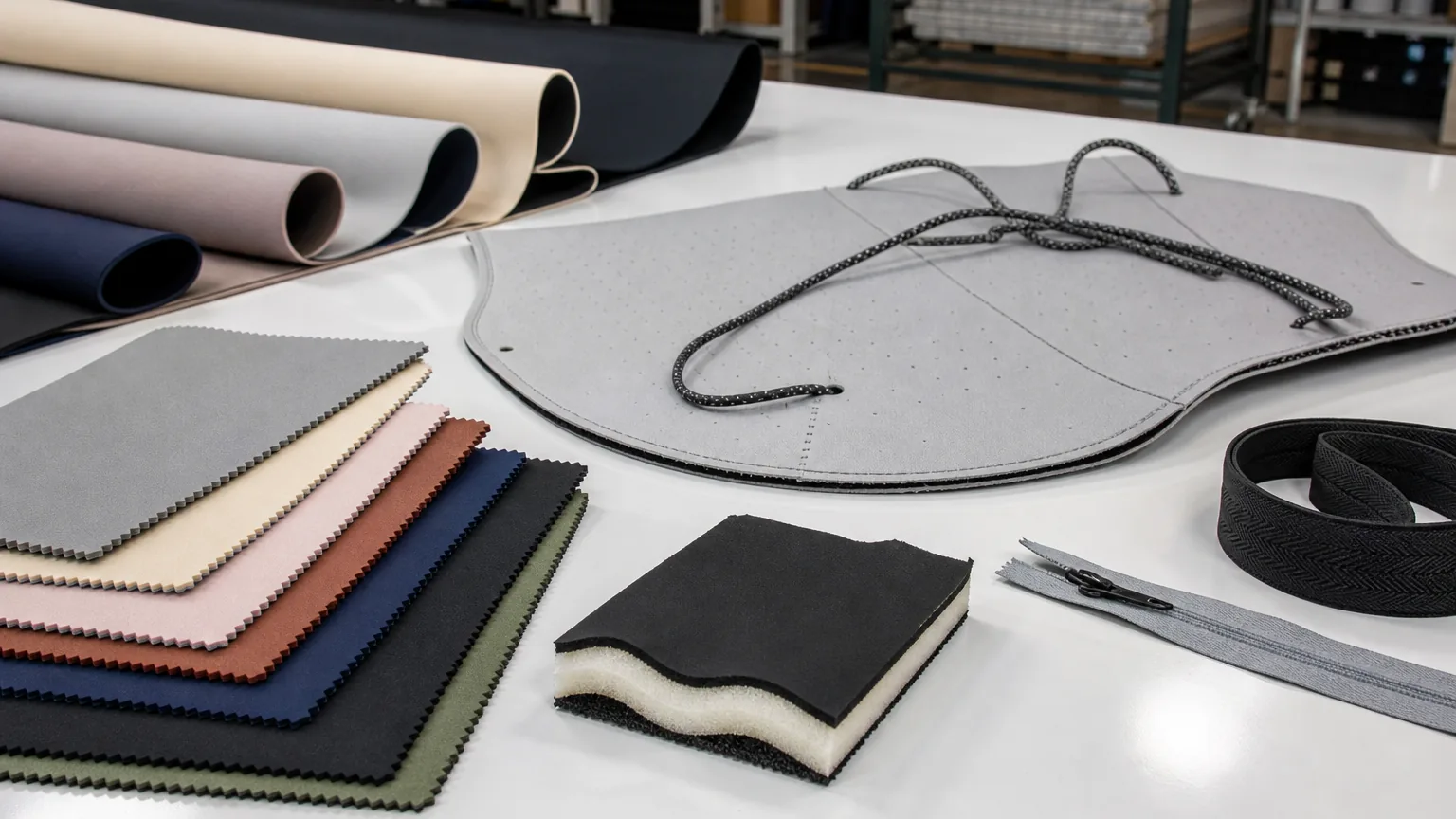
A neoprene bag is a soft, flexible bag made from neoprene, a synthetic rubber material also known as polychloroprene. It is valued for cushioning, stretch, light water resistance, insulation, and a smooth modern look. Brands use it for tote bags, lunch bags, laptop sleeves, cosmetic pouches, beach bags, sports bags, and promotional products because it feels premium while staying practical for daily use.
Unlike plain canvas or thin nylon, neoprene has a foam-like structure that gives the bag body and protection without a hard frame. It can help guard small electronics, bottles, cosmetics, lunch containers, and sports accessories from bumps, moisture, and ordinary handling. For buyers and sourcing teams, the real question is not only what neoprene is, but whether its performance fits the target product, price point, and end user.
What Is a Neoprene Bag Made Of?
A neoprene bag is usually made from a neoprene foam core laminated with fabric. The foam core gives the bag softness, flexibility, cushioning, and structure. The outer fabric, often polyester or nylon, gives the bag color, texture, printability, abrasion resistance, and a cleaner hand feel.

Neoprene itself is a synthetic rubber. In bag manufacturing, it is commonly formed into sheets, sliced to the required thickness, laminated with textile faces, then cut and sewn into the final product. Some bags also include lining, binding, zipper tape, webbing, handles, hardware, or internal dividers.
Common construction layers include:
- A neoprene foam core for cushioning and shape.
- Outer laminated fabric for color, touch, and print surface.
- Inner lining for a clean interior finish.
- Binding or seam finishing for durability.
- Zippers, pulls, webbing, and hardware for function.
| Component | Function | Buyer Benefit |
|---|---|---|
| Neoprene foam | Cushioning and structure | Protects contents from light bumps |
| Laminated fabric | Color, texture, printing | Supports retail styling and branding |
| Lining and trims | Interior finish and utility | Improves usability and perceived quality |
If you are sourcing neoprene tote bags, sample review should include material thickness, lamination quality, odor, stitching, handle strength, zipper movement, and color consistency.
How Does Neoprene Feel and Perform?
Neoprene feels soft, slightly springy, and smooth compared with rough canvas or rigid plastic. That tactile quality is one reason it is popular in lifestyle, sports, travel, and promotional products.

The material has what buyers often describe as “body”. A neoprene pouch can hold shape better than a thin fabric pouch while still bending easily inside luggage or a larger tote. This balance makes it useful when the product needs both softness and protection.
Thickness matters. Thin neoprene works well for cosmetic pouches, bottle sleeves, and lightweight organizers. Thicker neoprene is better for laptop sleeves, lunch totes, camera pouches, or sports accessories where cushioning matters more.
| Neoprene Thickness | Typical Use | Main Benefit |
|---|---|---|
| Thin sheet | Small pouches and sleeves | Flexibility and low bulk |
| Medium sheet | Totes and lunch bags | Balance of structure and softness |
| Thicker sheet | Protective sleeves | Better cushioning |
Neoprene does not replace leather, canvas, or hard-shell cases in every situation. It is best when the design needs a soft modern surface, light protection, low weight, and easy cleaning.
Why Is Neoprene Used for Insulated Bags?
Neoprene is often used in lunch bags, bottle sleeves, wine totes, and small coolers because its foam structure slows heat transfer. The tiny pockets inside the material help create a barrier between the outside environment and the contents inside.

This does not make every neoprene bag a true cooler. Insulation depends on material thickness, lining, zipper closure, seam construction, and whether the bag includes reflective foil or other thermal layers. Still, neoprene can help keep drinks cool or meals warmer for short daily use.
Products that benefit from neoprene insulation include:
- Lunch bags for work and school.
- Bottle sleeves for water, wine, or sports drinks.
- Small cooler totes for picnics or outdoor events.
- Meal prep carriers for short commutes.
For stronger temperature control, manufacturers may combine neoprene with foil lining, thicker foam, tight closures, and better seam coverage. Buyers should test real use cases rather than relying on material claims alone.
How Water Resistant Is a Neoprene Bag?
Neoprene has useful water resistance, but most neoprene bags are not fully waterproof. The foam material can resist splashes and light moisture, while laminated fabric can make the surface easier to wipe. However, sewn seams, zippers, openings, and untreated fabric edges can still let water enter.

This makes neoprene suitable for everyday situations such as light rain, gym locker rooms, beach trips, damp towels, and accidental small spills. It is not the right material to promise full submersion protection unless the whole bag is engineered with waterproof zippers, sealed seams, and tested construction.
| Construction | Water Protection | Best Use |
|---|---|---|
| Standard sewn seams | Splash resistance | Daily carry and casual use |
| Bound or reinforced seams | Better moisture control | Gym, beach, and sports use |
| Sealed seams and waterproof zippers | Higher protection | Specialty outdoor applications |
For B2B buyers, the safe product claim is important. “Water resistant” is usually more accurate than “waterproof” for standard neoprene bags.
What Types of Neoprene Bags Are Common?
Neoprene is used across many product categories because it is soft, protective, printable, and lightweight. The same base material can become a fashion tote, insulated lunch bag, bottle sleeve, laptop pouch, makeup bag, or sports accessory.

Common product types include:
- Neoprene tote bags for daily carry, beach, retail, or work.
- Neoprene lunch bags for meals and drinks.
- Neoprene laptop sleeves for light impact protection.
- Neoprene cosmetic bags for travel and beauty products.
- Neoprene bottle sleeves and wine totes.
- Neoprene sports pouches for tennis, pickleball, gym, or outdoor use.
Different markets use different strengths. Tech brands focus on cushioning. Food and beverage brands focus on insulation. Sports brands focus on flexibility and moisture resistance. Retail and fashion brands often focus on texture, color, and shape.
For online sellers, neoprene can work well in e-commerce bag projects because soft bags can often ship lighter and flatter than rigid alternatives.
Why Do Brands Like Neoprene for Custom Designs?
Brands like neoprene because it gives them a strong mix of design flexibility and practical performance. The laminated fabric surface can support color matching, patterns, printing, embroidery, patches, silicone labels, and custom zipper pulls.
Neoprene also photographs well. Its soft structure and smooth texture can make a product look modern and substantial in retail listings, catalog shots, and social media content. This matters for lifestyle, sports, promotional, and DTC brands.
Common customization options include:
- Custom colors and fabric textures.
- Sublimation or screen printing.
- Heat-transfer logos.
- Woven labels or silicone patches.
- Custom lining, zipper pulls, and binding colors.
- Different thicknesses and structures by product use.
The best decoration method depends on artwork, fabric color, quantity, budget, and durability requirements. For example, sublimation can work well on light polyester faces, while patches or labels may be better for darker or more textured surfaces.
Is a Neoprene Bag Eco-Friendly?
Neoprene is durable, but it is still a synthetic rubber material. Standard neoprene is not biodegradable in normal landfill conditions, so it should not be presented as automatically eco-friendly. A more accurate sustainability discussion looks at durability, material alternatives, recycled fabrics, manufacturing scrap control, and product lifespan.
Some manufacturers use limestone-based neoprene alternatives or recycled polyester fabric lamination. Others focus on reducing cutting waste, reusing scrap, improving quality control, and extending product life so fewer bags are replaced quickly.
For buyers, useful sustainability questions include:
- Is recycled polyester available for the laminated fabric?
- How is factory scrap handled?
- Can the bag be designed to last longer?
- Can packaging be reduced or made recyclable?
- Are odor and material quality controlled before shipping?
Durability can reduce waste when the bag replaces low-quality disposable products, but the material still needs honest positioning. Avoid broad environmental promises unless the product has verified materials, testing, or certifications.
How Does Neoprene Affect Shipping and Retail Margins?
Neoprene is lightweight and flexible, which can help with shipping, warehousing, and retail handling. Many neoprene bags can be compressed more easily than rigid plastic boxes or hard coolers. That can reduce carton volume, storage pressure, and delivery damage when packaging is planned correctly.
This matters for wholesale and e-commerce brands because logistics can decide whether a product remains profitable. Lightweight bags may reduce postage, improve carton efficiency, and make fulfillment easier.
However, compression should be tested. Some designs recover shape better than others. Thick panels, structured bases, padded handles, and special trims may need packaging support so the bag arrives with the right shape.
For new product launches, a pilot order case can help check whether the final bag survives packing, shipping, storage, and customer unboxing without shape loss or quality issues.
How Do You Clean and Maintain a Neoprene Bag?
Neoprene bags are usually easy to clean, but gentle care is important. For most standard bags, hand washing with cool water and mild soap is safer than hot machine washing. Harsh agitation, bleach, strong solvents, and tumble drying can damage bonded layers, colors, zippers, and seams.
Basic care steps include:
- Empty every pocket.
- Shake out crumbs and dust.
- Spot clean fresh marks quickly.
- Use cool water and mild soap.
- Rinse away soap residue.
- Press with a towel instead of wringing.
- Air dry flat or supported in shade.
Odor can be managed with ventilation, baking soda, activated charcoal, and proper drying. For deeper cleaning, always check the care label first. If a bag has leather-like trim, decorative hardware, special printing, or a structured base, avoid full soaking unless the manufacturer allows it.
For brands, care labels and product pages should explain cleaning in simple terms. This reduces customer misuse and protects long-term product reviews.
How Should Buyers Choose a Neoprene Bag Manufacturer?
A good neoprene bag manufacturer should understand material selection, lamination, thickness, stitching, odor control, printing, sampling, quality inspection, and packaging. The same material can produce very different results depending on the factory process.
Buyers should review:
- Material thickness and density.
- Lamination bonding strength.
- Colorfastness and print durability.
- Zipper and hardware quality.
- Odor after opening sealed packaging.
- Stitching, binding, and seam strength.
- Packaging method and shape recovery.
- Care label accuracy.
For retail, promotional, sports, and lifestyle programs, ZWbags can help develop neoprene bag designs that match your size, color, function, printing, and packaging needs. If you are planning a custom neoprene bag project, contact us today with your product type, target users, expected order volume, and design requirements.
FAQ
What is a neoprene bag best used for?
A neoprene bag is best for lightweight protection, soft structure, splash resistance, insulation, and daily carry. It works well for totes, lunch bags, sleeves, pouches, and sports accessories.
Is a neoprene bag waterproof?
Most neoprene bags are water resistant, not fully waterproof. The material resists splashes, but seams, zippers, and openings may still let water in.
Can a neoprene bag keep food cold?
It can help slow temperature change, especially when the bag has enough thickness and an insulated lining. For long cooling times, test the full construction with ice packs.
Is neoprene better than canvas?
It depends on the use. Neoprene offers better cushioning, stretch, and moisture resistance. Canvas may be more breathable, natural-looking, and suitable for structured fashion styles.
Can neoprene bags be customized?
Yes. Neoprene bags can use custom colors, prints, labels, zipper pulls, linings, and sizes. The best method depends on artwork, material face, quantity, and durability goals.