
Neoprene bags are soft, flexible bags made from laminated synthetic rubber material. They are useful when a product needs cushioning, stretch, light water resistance, insulation, and a smooth modern hand feel without the bulk of a hard case. Brands use them for electronics sleeves, medical device pouches, bottle carriers, lunch bags, utility kits, retail packaging, and reusable promotional bags.
The main reason to choose neoprene is balance. It protects better than thin fabric, packs flatter than many rigid cases, and gives buyers a premium tactile experience. For sourcing teams, the important question is not whether neoprene is “good” in general, but whether its thickness, structure, lining, seams, and decoration method fit the actual product and end user.
What Are Neoprene Bags Made From?
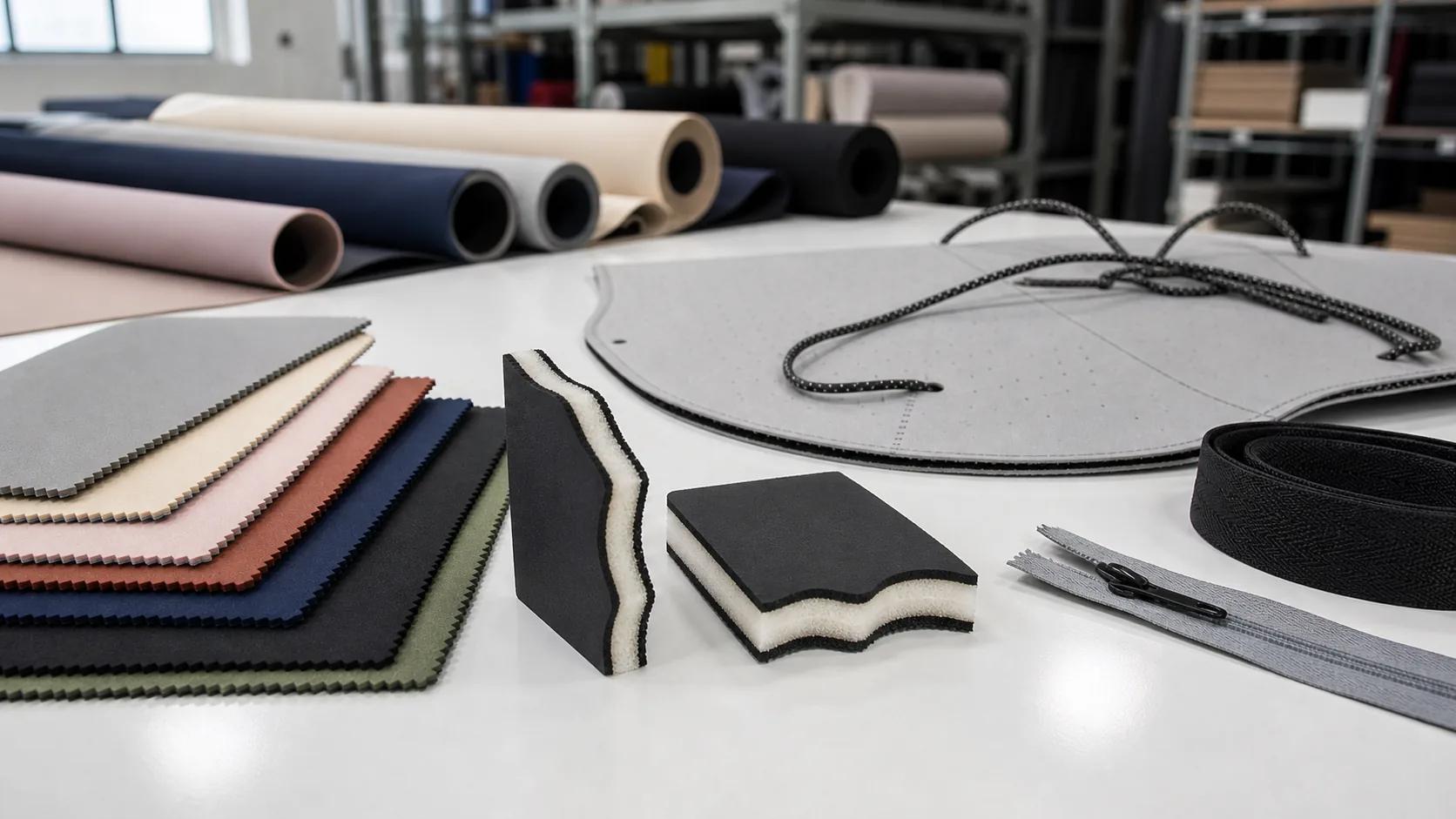
Neoprene bags are usually made from a neoprene foam core laminated with textile surfaces such as polyester or nylon. The foam core gives cushioning and flexibility, while the fabric faces provide color, printability, abrasion resistance, and a cleaner touch.

In production, neoprene sheets are cut into panels, matched with trims, then sewn or bound into the final bag. Depending on the use, the design may also include lining, zipper tape, webbing handles, elastic loops, mesh panels, molded pulls, or reinforced bases.
Common construction elements include:
- Neoprene foam for cushioning and shape.
- Laminated fabric for color and surface finish.
- Binding to protect edges and seams.
- Zippers, pulls, webbing, and handles for usability.
- Optional lining or dividers for organization.
| Component | Function | Buyer Check |
|---|---|---|
| Foam core | Adds padding and flexibility | Thickness, density, odor |
| Fabric face | Supports color and decoration | Print quality, abrasion resistance |
| Seam finish | Holds panels together | Stitch consistency, edge durability |
If you are sourcing neoprene tote bags, review both the material sheet and the finished sample. A nice fabric swatch does not always guarantee strong seams, stable handles, or clean shape recovery after packing.
Why Choose Neoprene Bags for Protective Carry?
Neoprene bags are chosen for protective carry because the material absorbs light bumps while staying flexible. A neoprene pouch can hug irregular shapes more closely than a rigid box, which helps reduce movement inside the bag.

This makes neoprene useful for items that need everyday protection rather than heavy-duty impact certification. Examples include portable electronics, meters, accessories, lenses, bottles, chargers, cosmetics, and small tools. The bag can help reduce scratches, rattling, and minor collision damage during normal use.
Thickness should match the risk level:
- Thin neoprene works for scratch protection and low-bulk sleeves.
- Medium neoprene suits lunch bags, bottle carriers, and daily pouches.
- Thicker panels are better for electronics sleeves and field kits.
Neoprene should not be positioned as a replacement for a hard protective case when the product faces crush loads, sharp punctures, or certified drop-test requirements. It performs best as a soft protective layer with a premium look and comfortable carry.
When Do Neoprene Bags Work Best for Electronics?
Neoprene bags work well for electronics when the product needs light cushioning, scratch resistance, and a snug fit. Tablets, small laptops, portable monitors, chargers, cables, meters, and handheld devices can all benefit from a soft sleeve or organizer.

The material’s flexibility helps it fit slightly different device shapes, while the cushioned surface reduces friction from keys, tools, and other items in a larger backpack or tote. For business travel and e-commerce shipping, the low-bulk profile is also useful because the bag can slide inside cartons or luggage more easily than a molded case.
Good electronics designs often include:
- A soft lining or smooth laminated interior.
- Extra padding at corners and zipper zones.
- Pull tabs that do not scratch screens.
- Cable pockets that keep accessories separated.
- A closure that does not press directly into fragile edges.
For online sellers, neoprene sleeves and organizers can fit naturally into e-commerce bag projects because they photograph well, ship compactly, and can be customized for specific device dimensions.
Can Neoprene Bags Support Medical or Field Equipment?
Neoprene bags can support medical, testing, and field equipment when the product needs organized soft protection rather than a hard transit case. Portable monitors, diagnostic accessories, cables, sensors, and handheld instruments may benefit from snug elastic compartments.

For these applications, the value is control. Custom pockets reduce loose movement, soft panels protect surfaces, and lightweight construction makes the kit easier to carry during repeated daily use. The design should still be reviewed against hygiene, cleaning, labeling, and regulatory requirements for the intended market.
Field and professional kits may need:
- Dedicated sleeves for fragile parts.
- Elastic loops for cables or small tools.
- Mesh zones for visibility and ventilation.
- Reinforced handles for repeated carrying.
- Clear labeling or color coding where appropriate.
For sensitive equipment, sample testing matters more than broad material claims. Buyers should test fit, zipper clearance, seam strength, odor, wipeability, and whether accessories stay in place when the bag is moved quickly.
Are Neoprene Bags Useful for Bottles, Baby Gear, and Food Items?
Neoprene bags are useful for bottles, baby gear, and food items because the material is soft, wipeable, and insulating. Bottle sleeves, lunch bags, milk bottle carriers, and snack pouches often use neoprene to slow temperature change and reduce bumps during daily carry.

The material is not a substitute for a professional cooler unless the full bag is designed and tested for that purpose. However, for commutes, school use, short errands, and promotional food packaging, neoprene can provide a practical mix of comfort, softness, and light moisture resistance.
Useful design details include:
- A base that keeps bottles upright.
- A zipper or hook-and-loop closure for better containment.
- Interior lining that can be wiped clean.
- Handles that are comfortable when the bag is full.
- Ventilation or drying guidance to reduce odor.
For baby and food-related products, avoid vague safety claims. Confirm material specifications, odor control, cleaning instructions, and any required testing before using strong language on retail packaging or product pages.
How Do Hybrid Neoprene Bags Improve Utility Kits?
Hybrid neoprene bags combine soft neoprene panels with stronger structural elements such as molded bases, webbing, EVA inserts, mesh, or plastic reinforcement. This helps solve a common problem: tools and accessories may need organization and cushioning, but the bag also needs enough structure to carry weight.
For electricians, technicians, outdoor users, and repair teams, a fully soft pouch may collapse or allow metal tools to shift. A hybrid design can use neoprene where flexibility and protection matter, then add stronger materials where puncture resistance, load support, or shape retention is required.
Hybrid utility features may include:
- Elastic loops for meters, tools, or small accessories.
- Reinforced corners and bound seams.
- Structured bottoms to reduce sagging.
- Mesh pockets for visibility and airflow.
- Removable dividers for different kits.
This approach is especially useful when one product line needs several size options. A small pouch can stay mostly soft, while a larger kit can add reinforcement without losing the neoprene feel.
What Design Choices Matter Before Production?
Before producing neoprene bags, buyers should decide the required thickness, structure, closure, ventilation, decoration method, and packing method. These choices affect cost, usability, durability, and customer reviews.
Material thickness is one of the first decisions. Thinner neoprene reduces bulk and cost, while thicker neoprene improves cushioning but can make seams harder to sew. Ventilation also matters because dense neoprene does not breathe like open-weave fabric. Wet towels, gym gear, food containers, and baby items may need mesh panels, drying instructions, or easy-open designs.
Important pre-production checks include:
- Is the bag protecting against scratches, light bumps, moisture, or temperature change?
- Does the product need to stand upright or pack flat?
- Will the user carry it by hand, shoulder, or inside another bag?
- Does the decoration method suit the fabric face and artwork?
- Can the sample recover shape after compression in a carton?
For new launches, a pilot order case can help test material thickness, packaging, shipping, and customer handling before the buyer commits to a larger production run.
How Are Custom Neoprene Bags Manufactured?
Custom neoprene bags are manufactured through material selection, pattern making, cutting, printing or decoration, sewing, trimming, inspection, and packing. The process looks simple from the outside, but elastic foam requires experienced handling.
Neoprene stretches under pressure, so cutting and sewing must be controlled. If panels are pulled unevenly, seams can ripple, zippers can twist, and the final bag may lose shape. Industrial sewing equipment, correct needle choice, edge binding, and operator experience all affect the result.
Typical production steps include:
- Confirm material thickness, color, and lamination.
- Build a pattern based on the target item or use case.
- Cut panels cleanly with accurate tolerance.
- Apply printing, labels, patches, or embroidery.
- Sew panels with suitable thread and seam allowance.
- Inspect odor, stitching, shape, zipper movement, and packing.
Decoration should be confirmed during sampling. Screen printing, sublimation, heat transfer, patches, and embossed details all behave differently on laminated neoprene surfaces.
How Can Neoprene Bags Upgrade Reusable Packaging?
Neoprene bags can upgrade packaging when a brand wants the package to become part of the product experience. Instead of a disposable sleeve or plain polybag, a reusable neoprene pouch can protect the item, carry the logo, and remain useful after purchase.
This is common for electronics, drinkware, beauty tools, sports accessories, corporate gifts, and retail bundles. The customer receives both the product and a practical storage item, which can improve perceived value when the bag is well designed.
For retail buyer scenarios, reusable packaging should still be cost-controlled. The bag needs the right balance of material thickness, decoration, carton efficiency, and finish quality. A premium pouch that is too bulky or expensive can hurt margins, while a thin pouch with weak stitching can damage brand perception.
Buyers should compare:
- Unit cost against perceived product value.
- Packing volume and shipping cost.
- Print durability and color consistency.
- Long-term usefulness for the end customer.
- Whether the product can be displayed or bundled neatly.
ZWbags can help develop neoprene bags for retail, promotional, e-commerce, equipment, and lifestyle programs. If you are planning a custom neoprene bag project, contact us today with your product type, size target, artwork, expected order volume, and packaging requirements.
FAQ
Can neoprene bags be washed?
Many neoprene bags can be spot cleaned with cool water and mild soap. Avoid bleach, high heat, harsh solvents, and tumble drying unless the care label specifically allows it.
What thickness should a neoprene bag use?
It depends on the product. Thin neoprene works for lightweight sleeves, while thicker neoprene is better for cushioning. Buyers should confirm thickness through samples instead of relying only on a specification sheet.
Are neoprene bags waterproof?
Most neoprene bags are water resistant, not fully waterproof. The material can resist splashes, but seams, zippers, openings, and untreated edges may still allow water to enter.
Can neoprene bags be customized with logos?
Yes. Common options include screen printing, sublimation, heat transfer, woven labels, silicone patches, zipper pulls, and custom colors. The best choice depends on artwork, quantity, fabric face, and durability goals.
How can brands reduce odor in neoprene bags?
Odor control starts with material selection, proper curing, ventilation, and clean packing. For end users, airing the bag out and keeping it dry after use can help reduce trapped smells.