
Take a backpack with visible or suspected mold out of use while you decide what to do. Identify its materials and care instructions, consider the location of the growth and the water history, then ask whether manufacturer-guided assessment, specialist help, or replacement is appropriate.
How to remove mold from a backpack depends on more than the shell fabric. The EPA and CDC pages reviewed here do not provide a backpack-specific treatment. This guide therefore offers a decision framework, not a cleaning recipe or a promise that treatment will make the bag safe.
What Should You Do First With a Moldy Backpack?
Pause ordinary use and avoid handling the bag unnecessarily while you obtain appropriate advice. If anyone involved has health concerns, EPA recommends consulting a health professional before cleanup.
Do not select a chemical or start a cleaning procedure from a general online recipe. Keep a note of the model, visible findings, and how the bag became wet. These details make a question to the manufacturer or a specialist more useful.
For cleaning moldy areas, EPA discusses a properly fitting N-95 respirator, gloves, and goggles without ventilation holes. It also advises against touching moldy items with bare hands. Read the EPA protective-equipment guidance and the equipment instructions; mentioning protection here does not authorize a backpack-cleaning method.
Temporary containment, transport, and ventilation should follow advice appropriate to the situation. This article does not prescribe sealing the bag in plastic, opening every compartment, brushing, or vacuuming as a universal handling rule.
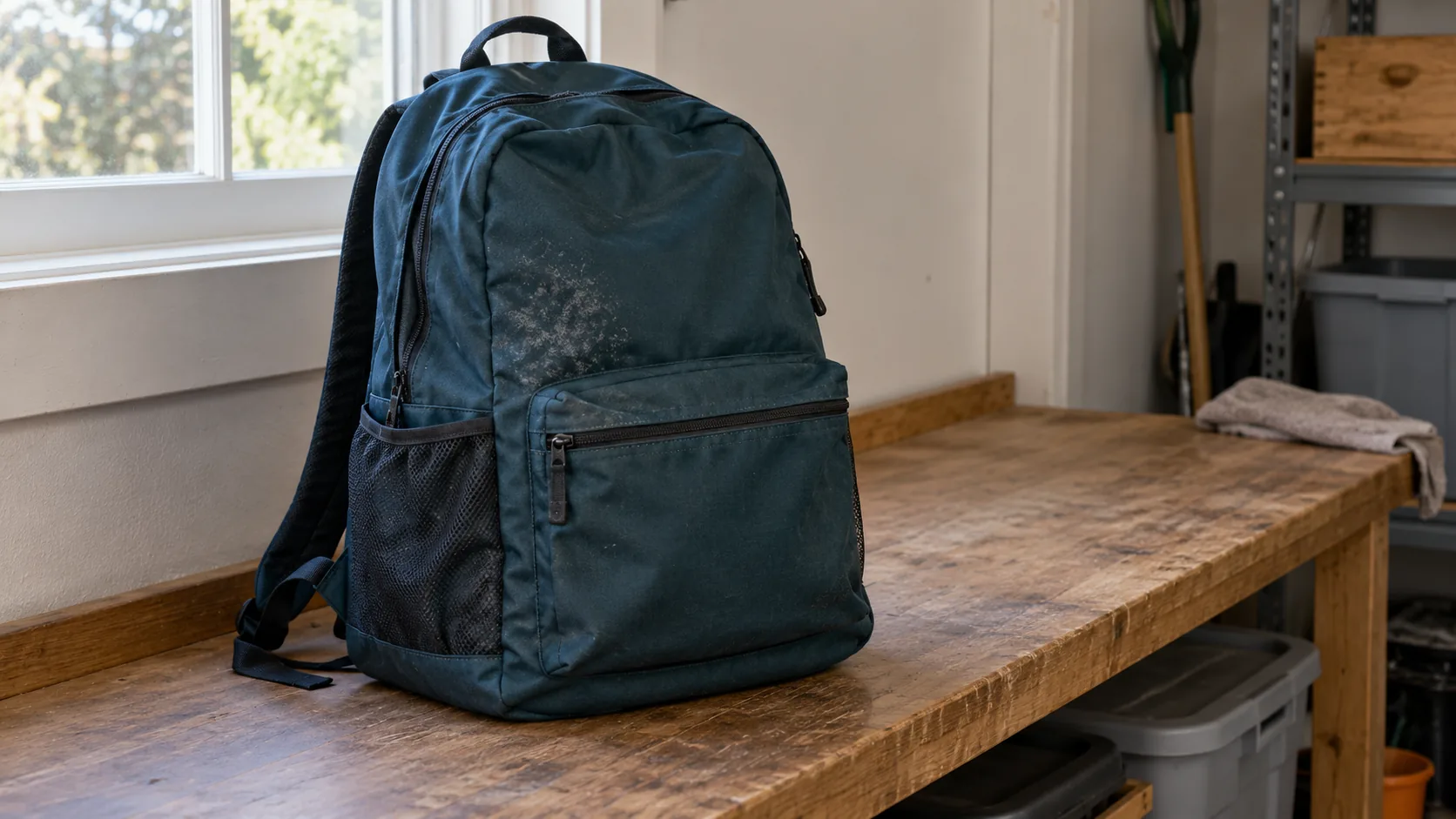
What Are You Actually Assessing?
Record what you already know or can observe without unnecessary disturbance. Do not cut open padding or dismantle a suspect bag to complete a checklist.
| Assessment field | What to record | What it does not establish |
|---|---|---|
| Visible findings | Location and extent of spots or growth | Mold type, viability, or health risk |
| Odor | Musty smell and where it seems noticeable | Proof that the source is on the shell |
| Water history | Rain, washing, a leak, or contaminated water | Whether ordinary washing is an appropriate response |
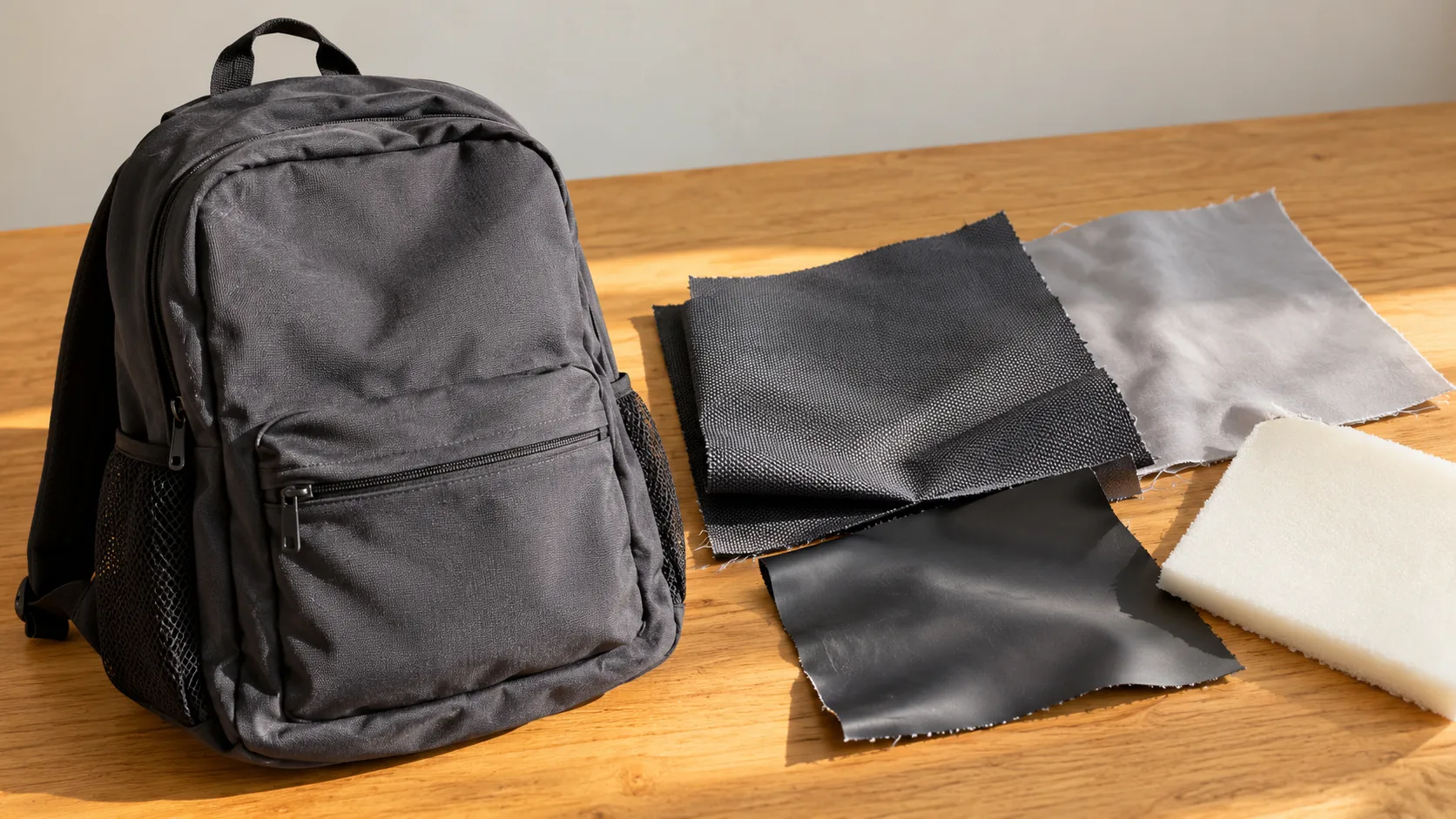
| Construction | Shell, coating, lining, padding, stiffeners, trim | Compatibility of every layer with one treatment |
| Documentation | Model, care label, manual, support advice | A mold-removal procedure unless one is specifically supplied |
CDC’s mold overview treats visible mold or a moldy smell as a reason to address the problem without first identifying the mold type. It also recognizes growth on fabric and upholstery. Treat the finding as an unresolved contamination concern, not a diagnosis.
Do not use color, texture, or odor to infer whether growth is living. EPA notes that dead mold can still cause allergic reactions in some people; killing it is not equivalent to removing it.
Location matters to this guide’s decision framework. A surface-only treatment does not verify what happened behind a lining or inside padding. A material description such as nylon fabric for bags explains part of the construction, not how to remediate the complete backpack.
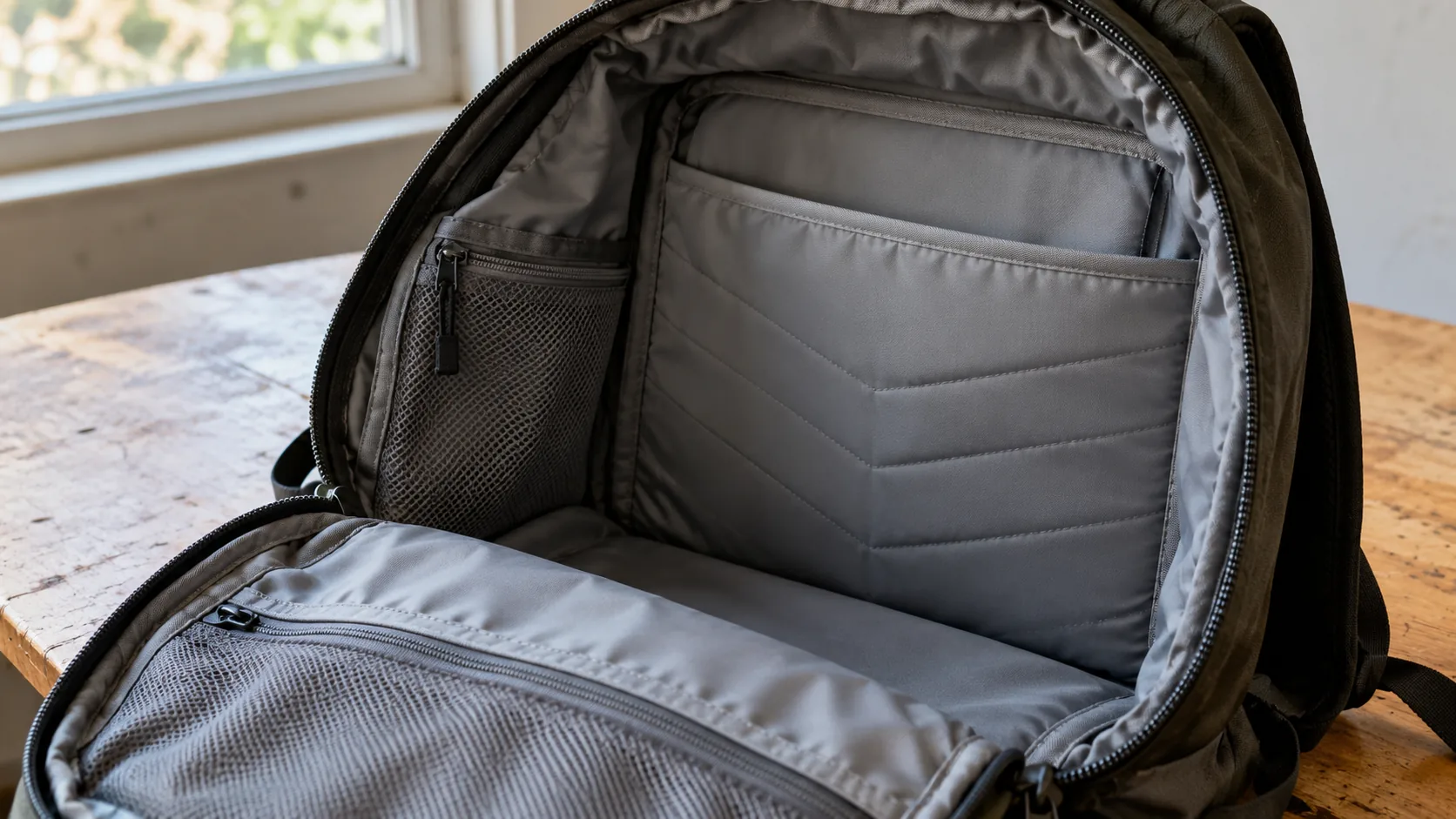
Why Can’t Building Mold Guides Be Copied Onto a Backpack?
A backpack combines materials and connections that need different compatibility checks. A coated shell over foam and lining is not the hard surface described in a household-cleaning instruction.
The reviewed official sources make several distinctions:
- EPA’s detergent-and-water instruction and CDC’s household-product or bleach instruction concern hard surfaces. Neither instruction, by itself, supplies a treatment for a layered bag.
- EPA’s roughly 10-square-foot decision boundary concerns moldy areas in a home. It is not a square-inch allowance for backpacks.
- EPA warns that some porous materials may need replacement, naming ceiling tiles and carpet. This supports caution about removal limits; it does not prove that every backpack foam is impossible to clean.
Read the scope in EPA’s home-cleanup page. The practical consequence is to seek guidance for the item and its construction, rather than shrinking a building rule or transferring a chemical recipe.
This boundary is limited to the sources reviewed. It is not a claim that no agency, specialist, or manufacturer has ever issued instructions for a particular item.
What Role Do the Manufacturer’s Instructions Play?
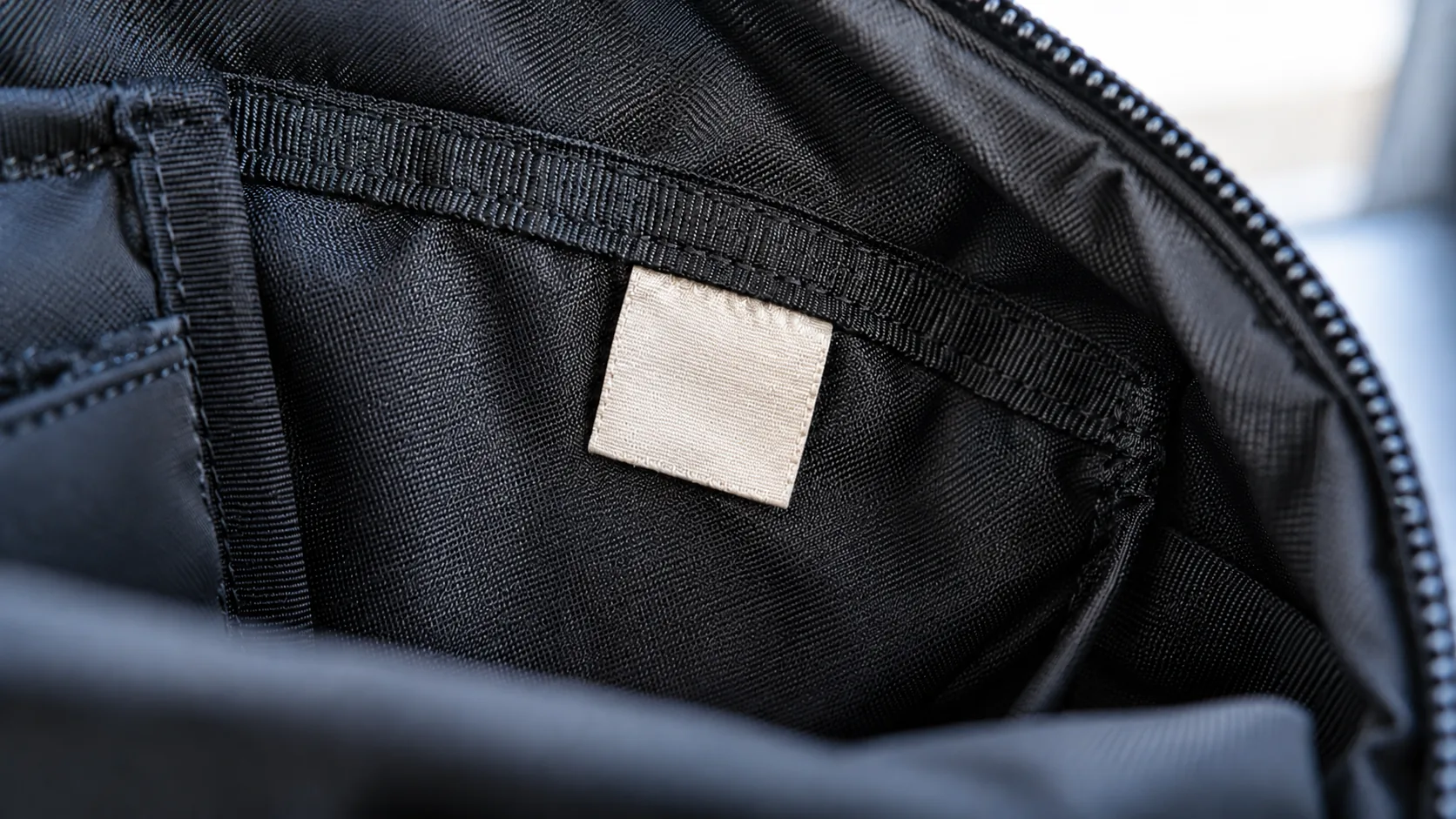
Start with the care label, model manual, and manufacturer support. Routine-care instructions may be relevant to material compatibility without addressing established mold.
Ask a specific question: “This model has suspected mold at these locations after this water exposure. Do you have item-specific handling or treatment guidance, and when do you recommend specialist assessment or replacement?”
The manufacturer is the appropriate party to ask about the model’s construction and care limits. Do not assume that a generic response covers every lining, adhesive, coating, or accessory in your particular bag.
Two sets of instructions may be involved:
- The bag documentation describes permitted care for the item.
- Any cleaning-product label describes that product’s intended uses and precautions.
A product label naming nylon or canvas does not establish compatibility with the whole assembly. Agreement between routine-care instructions and a cleaner label also does not, by itself, establish that a mold problem has been resolved.
For ordinary dirt, the site’s backpack-washing guide addresses a different task. Its routine washing or odor advice should not be treated as authorization to handle suspected mold.
When Should You Escalate or Discard Instead?
Use the following as an editorial decision aid, not an EPA or CDC threshold table. It does not determine whether a particular bag is medically safe.
| Situation | Next decision |
|---|---|
| Limited visible shell findings with usable model documentation | Ask whether the maker has guidance for this specific problem before treatment |
| Musty odor with no visible source | Seek advice if the source cannot be identified without disturbing hidden layers |
| Findings behind lining, in padding, or deep in seams | Seek specialist assessment; a surface-only result does not verify those layers |
| Widespread or recurring findings | Reassess the moisture history and whether retaining the bag is practical |
| Sewage or other contaminated-water exposure | Obtain qualified advice rather than treating it as ordinary dirt washing |
| Health concerns about handling or use | Consult a health professional before cleanup |
| An expensive or sentimental item with an uncertain method | Consult an appropriate restoration specialist and check references |
EPA’s contaminated-water direction concerns damaged buildings; the backpack row above is a conservative editorial boundary, not an agency rule about luggage. EPA does directly suggest specialist advice for an item whose cleaning is uncertain or whose value matters.
Replacement may be the practical choice when an appropriate treatment cannot be established, affected layers cannot be assessed adequately, or the problem persists. That is a decision for the circumstances, not a universal disposal threshold based on spot count.
What Safety Rules Apply to Any Cleaning Attempt?
If an appropriate item-specific procedure is supplied, follow it and the relevant product and equipment instructions. Do not add another cleaner or increase a concentration because a stain remains.
CDC warns against mixing bleach with ammonia or other cleaners because poisonous gas can result. Its guidance also calls for following product directions and providing fresh air. These are chemical-safety limits, not a recommendation to use bleach on a backpack.
EPA does not recommend biocides as routine mold-cleanup practice; professional judgment may differ in particular circumstances. A claim that a product kills mold does not establish complete removal from a bag or compatibility with its hidden layers.
A visible result has limits too. EPA notes that staining may remain after cleaning. Conversely, a cleaner-looking shell does not establish that hidden contamination has been removed. Do not use appearance or the absence of odor as a health-safety certificate.
This guide supplies no product selection, dilution, contact time, or mold-removal sequence for a backpack.
How Do You Keep Mold From Coming Back?
Address the source of moisture as well as the item. Consider a storage leak, damp contents, wet-weather use, or a bag put away before it dried.
EPA’s prevention guidance includes drying water-damaged areas and items within 24-48 hours and keeping indoor relative humidity below 60 percent, ideally 30-50 percent. These are household prevention guidelines, not a cure for established mold or a guaranteed drying time for backpack padding.
For routine care once the mold-specific decision has been addressed:
- Follow the permitted drying method for the model.
- Check compartments, seams, folds, and removable parts before storage.
- Remove damp towels, clothing, and other contents rather than leaving them packed.
- Correct the wet storage location or leak.
- Seek advice if visible findings or a musty smell recur.
The guide to travel-backpack care and storage provides routine-care context only. Recurrence is a reason to reassess the item and moisture source, not automatically to choose a stronger chemical.
What Should Brands Request in a Cleanability Specification?
A complaint about mold can reveal questions that the product specification never answered. It does not automatically identify a material defect or validate a proposed cleaning method.
Keep ordinary-care compatibility separate from mold-remediation effectiveness. Scantarp’s maintenance guidance, for example, concerns its PVC and PVC/PU industrial coated fabrics. That material scope cannot be extended automatically to TPU, foam composites, trim, or a finished backpack, and is not a backpack mold-treatment procedure.
For development, request a construction-specific record rather than “easy to clean” on its own:
| Specification question | Record to request |
|---|---|
| Which parts are removable or accessible? | Actual component and assembly details |
| Which routine-care method is permitted? | Applicable material instructions and final-item limitations |
| What is being checked after care? | Defined condition, method, measured fields, and appearance references |
| Which sample is the reference? | Sample identity, revision, date, and the scope of approval |
| What happens when a component changes? | A decision on which compatibility or performance checks need repeating |
Define nominal targets and measurement tolerances separately from an appearance reference. A sample that looks acceptable after routine care does not establish mold-remediation effectiveness.
An approved sample is a comparison reference, not proof that every later production lot will match it. Later-lot conclusions need their own relevant records. These are buyer questions, not claims about ZWbags’ testing or a mandatory sampling system.
Brands planning custom backpack development can raise those questions before finalizing materials, construction, and care labeling.
Frequently Asked Questions
Can you wash mold out of a backpack?
A routine wash does not establish that hidden contamination has been removed. Ask for guidance appropriate to the model and problem; do not treat a washable care label as a mold-removal claim.
Does vinegar kill mold on backpacks?
The EPA and CDC pages reviewed here do not provide a backpack vinegar treatment. This guide does not recommend one. A kill claim would still leave removal and material compatibility unresolved.
How much mold is too much to clean yourself?
The reviewed home-area threshold does not translate into a backpack limit. Use this guide’s conservative assessment of location, water history, documentation, and user concerns to decide when to seek advice.
Can you tell whether mold is alive from its color or smell?
Do not use those observations to infer viability. Record them as findings for assessment, rather than as proof that the problem is inactive.
Is the backpack safe after cleaning, or should it be replaced?
Appearance alone cannot answer that question. Seek item-specific advice, and consult a health professional about health concerns. Replacement is an option when an appropriate treatment or adequate assessment cannot be established.