
Messenger bag dimensions describe different things: the outside body, the opening, the interior, or a laptop sleeve. Choose a size by comparing those measurements with your actual contents, then check access, closure, and carrying position on a loaded sample. A size label alone cannot confirm fit.
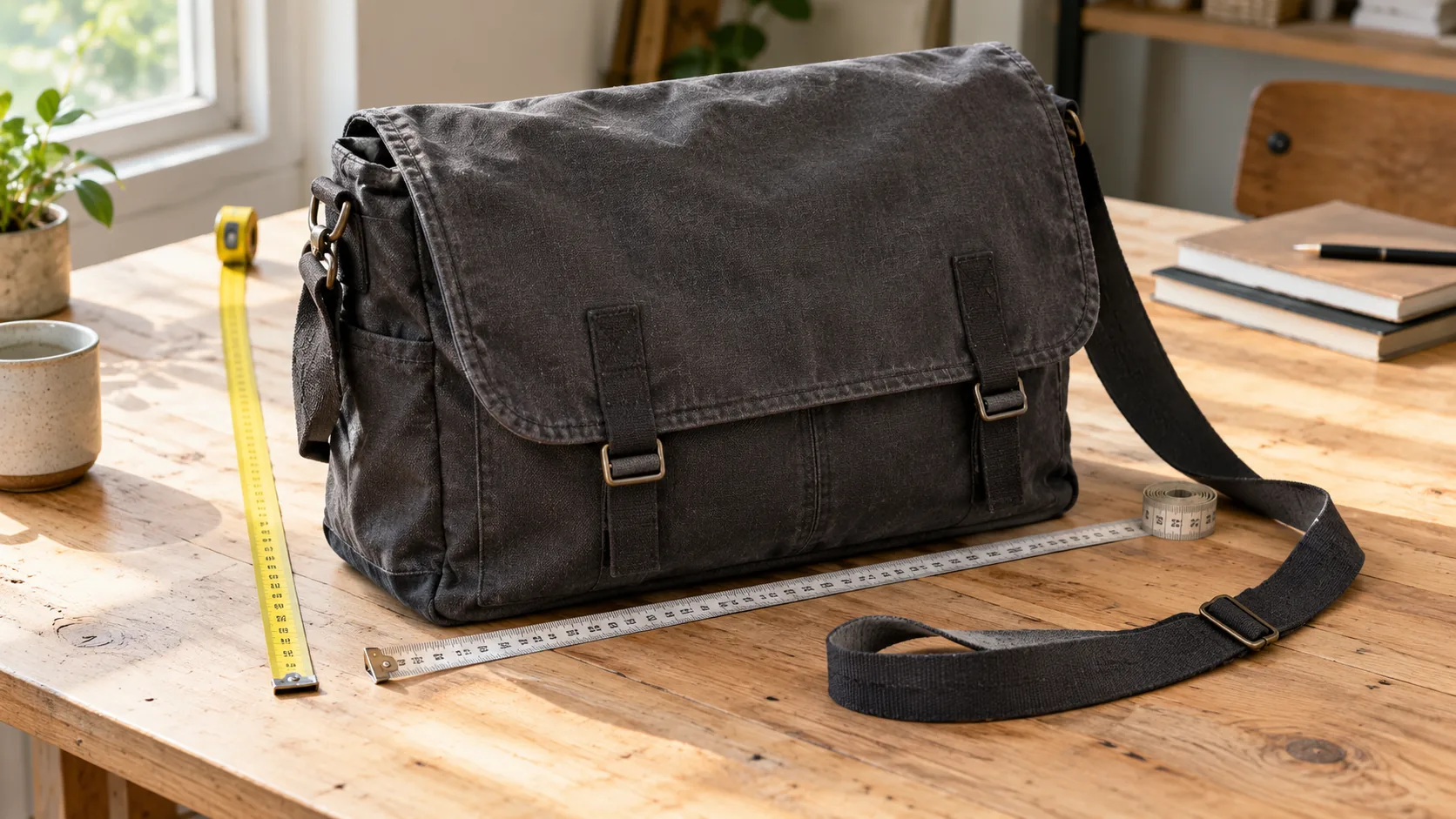
How Are Messenger Bag Dimensions Measured?
Two bags with the same listed numbers can hold different loads if their publishers measure different parts of the bag.
Start by identifying what each number describes. Width, height, and depth need named measurement points and a stated condition, such as empty, laid flat, or packed. Check the order of the figures instead of assuming every listing uses width × height × depth.
| Measurement | What to record | What to clarify |
|---|---|---|
| Exterior body | Side-to-side width, body height, and front-to-back depth | Empty or packed; handles and flap included or excluded |
| Opening | The entry path with the closure open | Shape, obstructions, and any narrow point |
| Usable interior | The compartment and measurement points used | Whether the figures describe the whole cavity or one section |
| Laptop sleeve | Internal dimensions and entry clearance | Device orientation, corners, padding, and closure |
| Strap | Length or drop under a defined condition | Adjustment range, attachment points, and whether the bag is loaded |
Use the same points when comparing samples. A flap can extend beyond the body, but its extra coverage does not establish extra compartment height. A depth figure may describe a sewn base, an expanded gusset, or a packed profile; ask which one.
Keep units consistent too: NIST’s official unit tables give 1 inch as exactly 2.54 centimeters. Converting a number changes the unit, not its measurement basis.
Which Measurements Matter for Usable Space?
Exterior dimensions help you judge the bag’s footprint and shortlist products. They do not, by themselves, confirm what will pass through the opening or fit inside.
Padding, seams, dividers, pockets, taper, and closure placement can affect the available space. The amount depends on the particular bag. Do not subtract a fixed percentage from the exterior, or assign the difference to padding when the publisher has not explained its measurement.
For a useful comparison, put each shortlisted model on the same worksheet:
| Field | Model A | Model B |
|---|---|---|
| Exterior dimensions and stated condition | Copy the listing; mark missing information | Copy the listing; mark missing information |
| Main compartment dimensions and points | Record or request | Record or request |
| Sleeve dimensions and orientation | Record or mark not applicable | Record or mark not applicable |
| Opening shape and clearance | Check on the sample | Check on the sample |
| Stated volume and method | Record method, or mark unconfirmed | Record method, or mark unconfirmed |
| Actual load and closure check | Pass, issue, or not checked | Pass, issue, or not checked |
These are comparison fields, not industry size tiers. They avoid grouping unrelated products under an assumed small, medium, or large standard.
A width × height × depth calculation gives the volume of a rectangular box. It represents usable bag capacity only if the measured interior and the calculation’s shape assumptions support that use. Curves, partitions, and soft-wall behavior need separate consideration. Published liter figures can be compared more confidently when their measurement methods and included compartments are known.
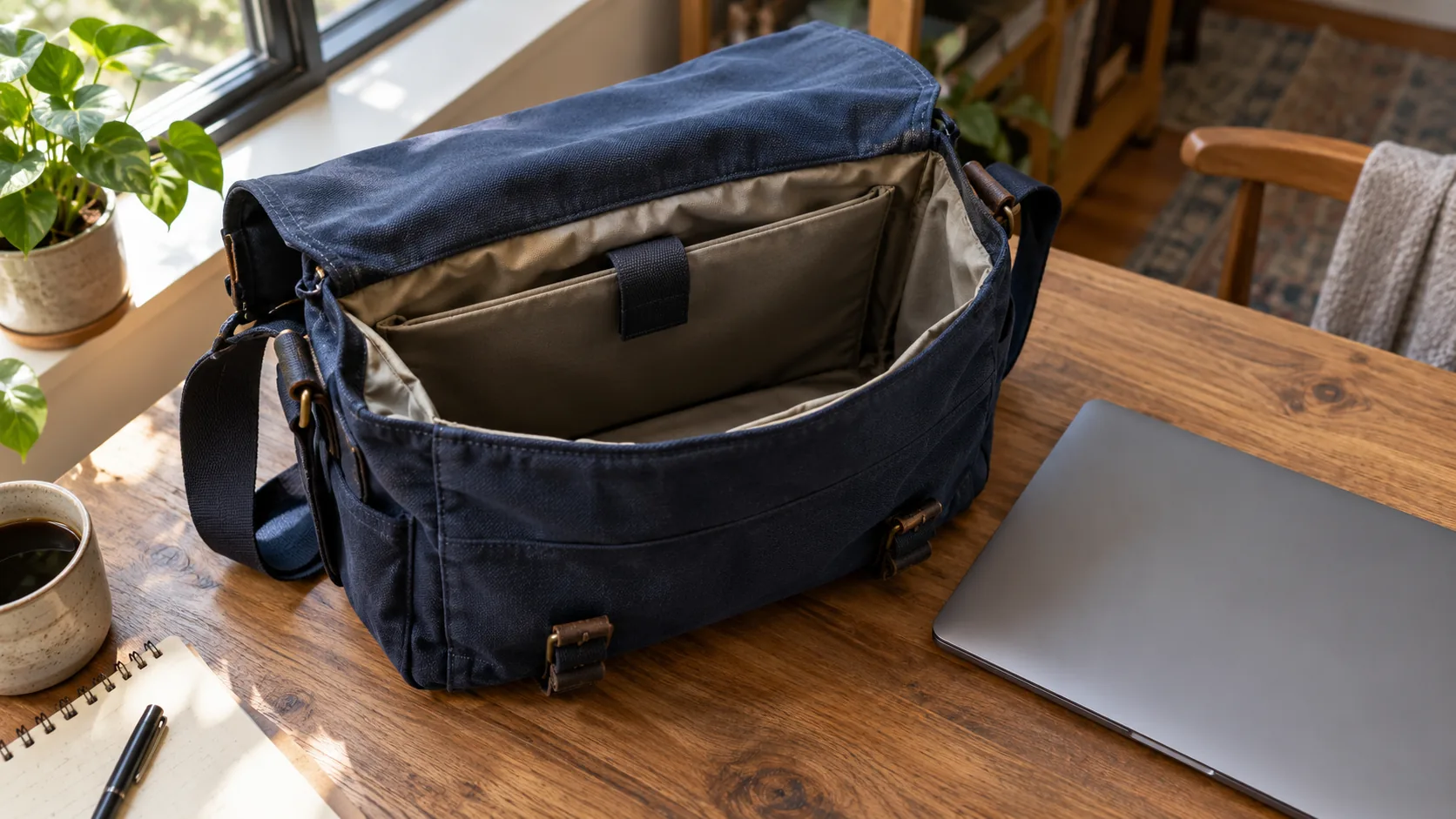
How Do You Choose a Messenger Bag Size From the Contents?
Measure your largest item and arrange the rest of your daily load as you intend to carry it. Include cases, chargers, cables, and document folders rather than checking the laptop alone.
- List the items that need to travel together.
- Measure the largest rigid item in its carrying orientation, including its case if you use one.
- Arrange the contents around the intended compartment layout. Record the occupied width, height, and depth as a starting point.
- Compare those measurements with the bag’s stated internal figures. Note pockets or dividers that interrupt the space.
- Try inserting and removing the largest item through the actual opening. Check the approach angle, corners, and zipper path without forcing it.
- Load the remaining contents and close the bag as intended.
Do not use a formula that adds item width to an assumed approach-depth allowance. The opening’s shape and flexibility can change the insertion path. A physical check answers whether that particular item passes through.
A larger exterior can bring extra bulk without giving you the compartment layout you need. If internal figures are unavailable, request a sample or check the seller’s return terms before relying on the fit claim.
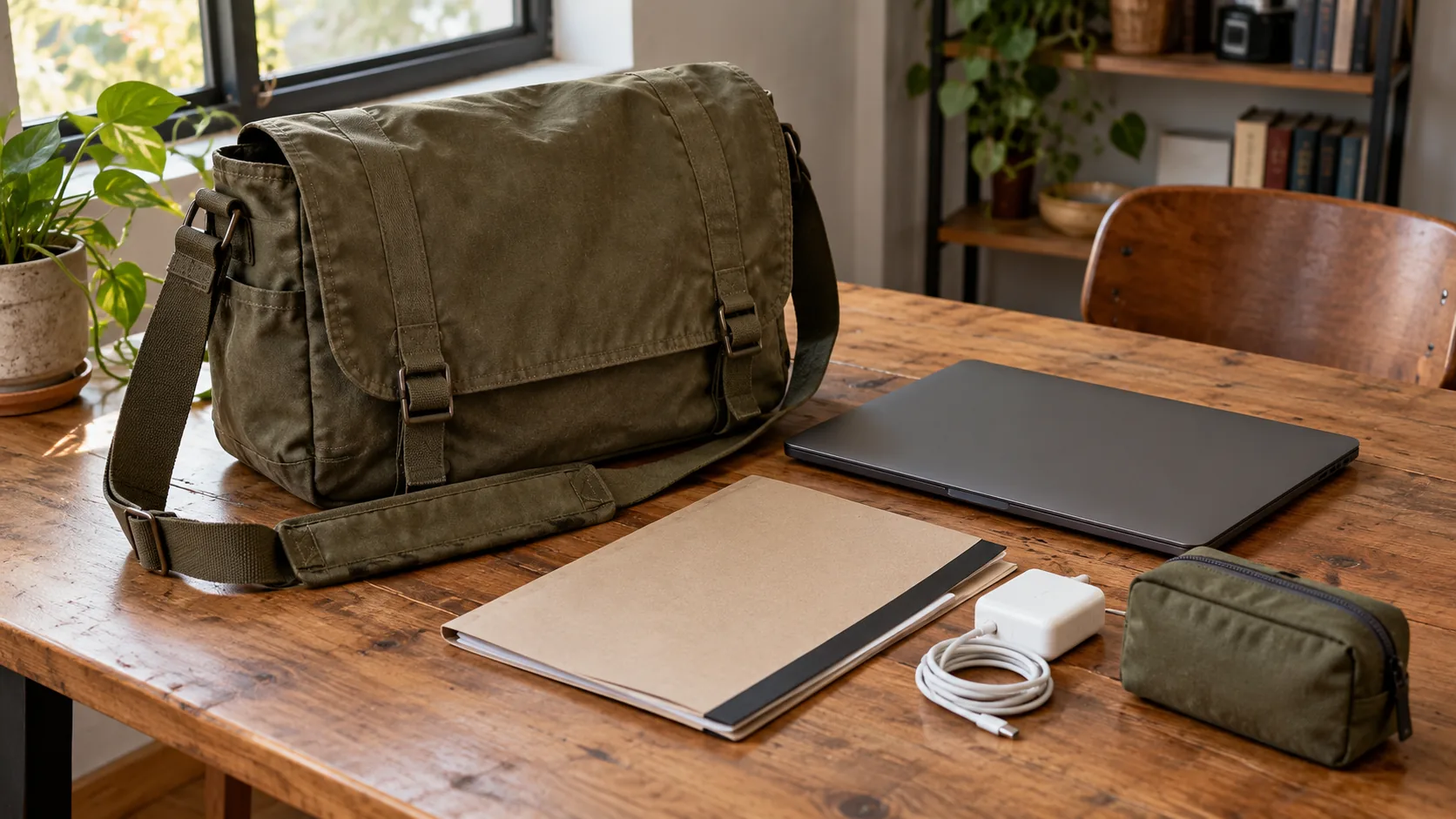
How Should Laptop Fit Be Checked?
Screen size describes the display’s diagonal. The laptop body has its own width, depth, and thickness, which determine the space it occupies.
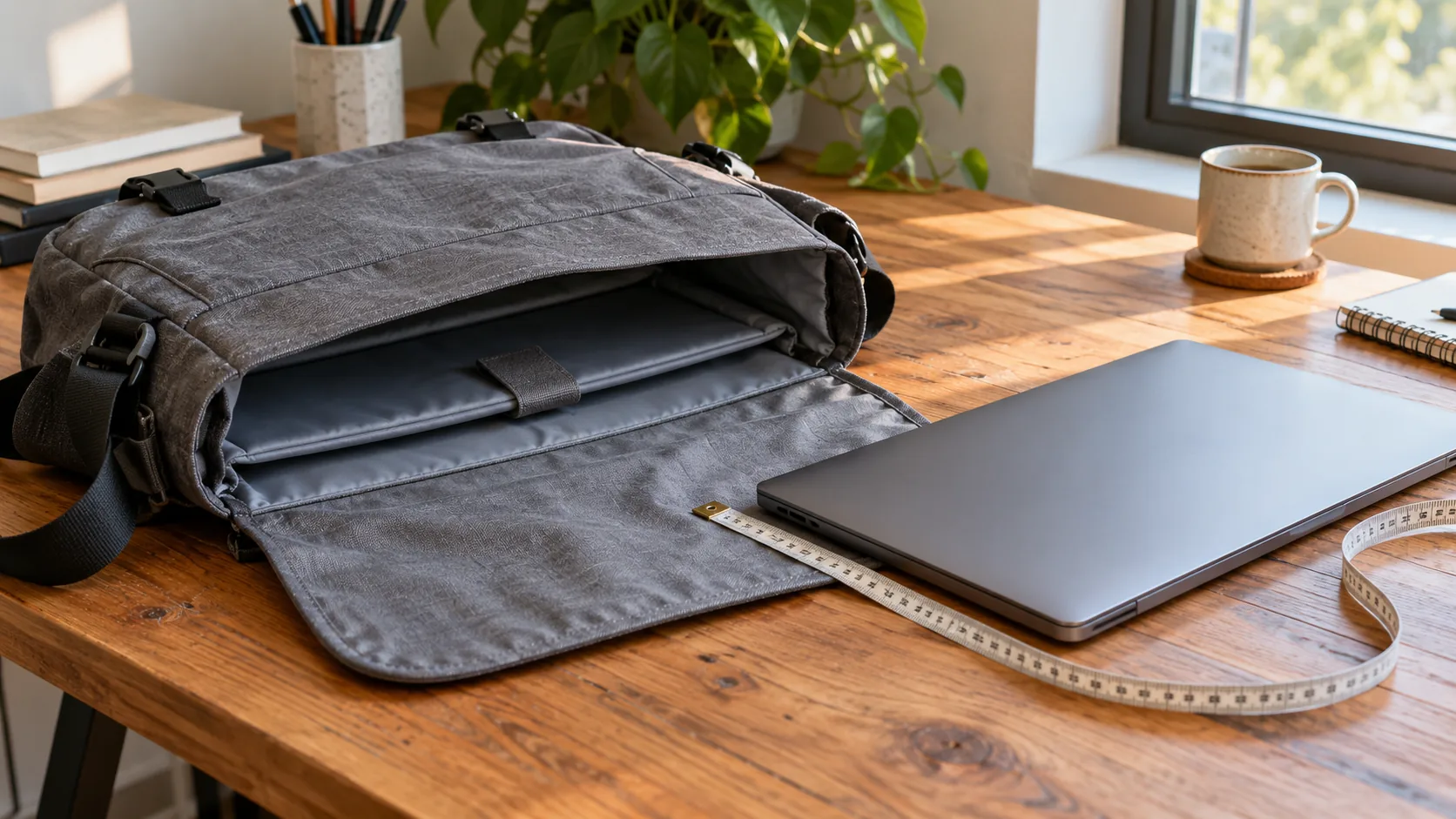
Use the device manufacturer’s body dimensions, then include any protective case or sleeve you intend to keep on the device. Match the bag compartment’s dimensions to the same orientation. A marketed “15-inch laptop bag” does not identify its internal measurement points or establish clearance for every device in that screen class.
Check these details on the sample:
- The device enters and leaves the sleeve without forced bending or pushing.
- The sleeve’s corners and taper accommodate the device body.
- The closure works with the device and the rest of the planned load inside.
- Nearby pockets do not obstruct the entry path when filled.
- The device stays in the intended position during ordinary handling.
Space for a laptop does not establish impact protection. Padding layout, retention, and any protection claim need their own product evidence.
How Do Flat and Gusseted Messenger Bags Differ?
A gusset adds a sewn section that can provide depth. A flatter construction may form a different packed shape, but neither construction name establishes capacity, stability, or an exact empty-to-loaded change.
Soft fabric can bend around contents without its fibers stretching. A flat bag may therefore become deeper when packed. A gusseted bag may also bulge beyond a nominal depth, depending on its panels, material, and load.
| Construction question | What to check |
|---|---|
| Is the depth measured empty, expanded, or packed? | Repeat the stated condition before comparing numbers |
| Does the bag have a separate base or side gusset? | Inspect the actual sewn construction |
| How does it accommodate the planned load? | Check the filled profile and closure |
| Is standing on a base part of the intended use? | Check resting behavior only where that use requires it |
Material and reinforcement also affect how the body moves. The canvas bag material guide provides material-selection context; “canvas” alone does not define the behavior of the whole assembly.
Compare each bag both empty and with your load. An expanded gusset reading is a dimension under a stated condition, rather than proof that every part of the cavity is usable.
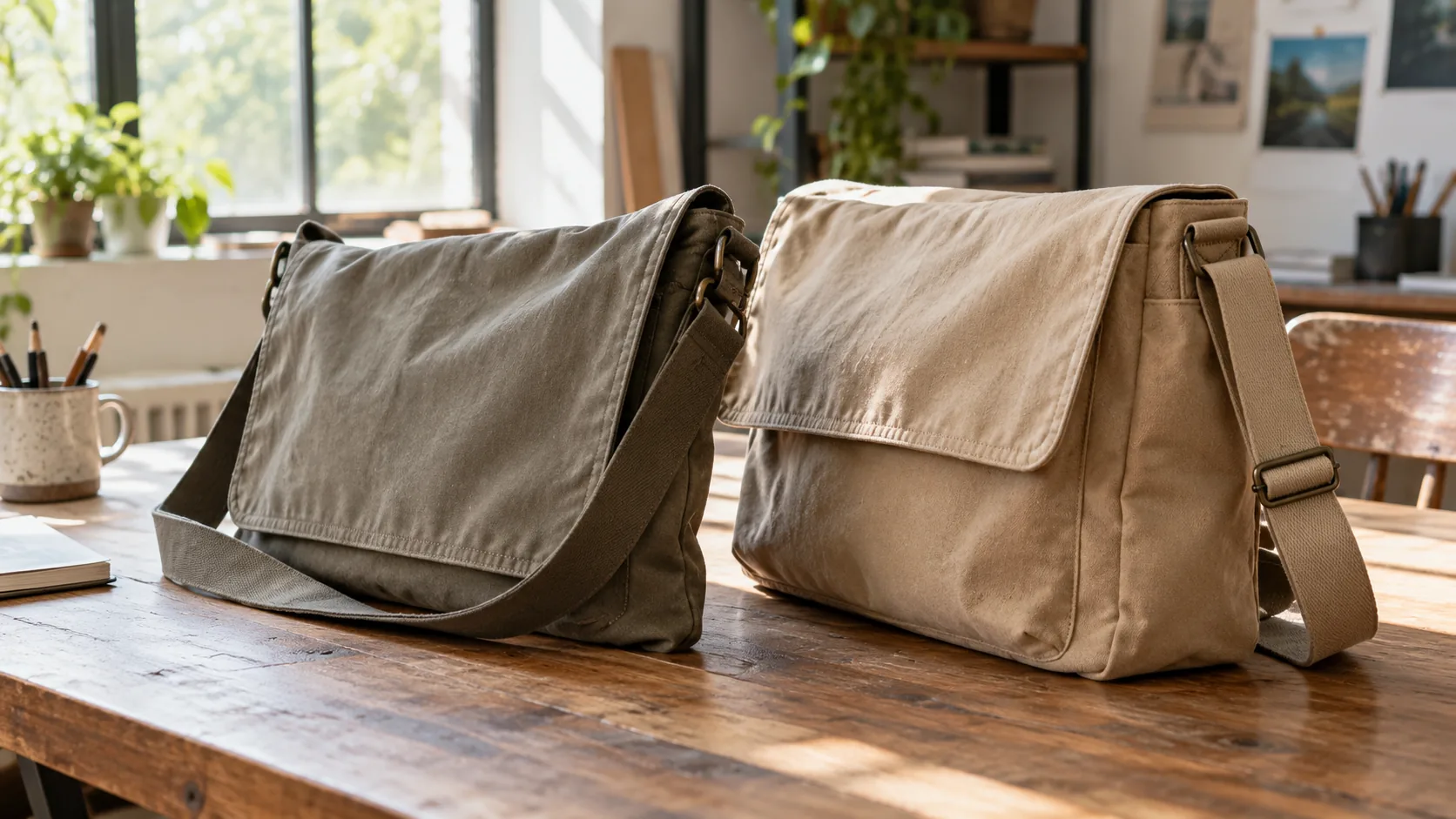
What Changes When the Bag Is Packed and Worn?
The loaded profile can differ from the empty listing. Check it with the contents you expect to carry, including filled outside pockets.
An overfilled bag may fail to close, or may place tension on the flap, zipper, or fasteners. Avoid diagnosing a seam or hardware failure from that observation alone. Reduce or rearrange the load and check the intended closure again.
Strap adjustment, attachment geometry, your body, and the packed shape affect where the bag rests. Check access while standing and walking, how the body contacts your side, and whether the position interferes with movement. A strap-length figure needs a defined measurement condition; it does not describe the whole carrying experience.
For custom specifications, record the actual strap assembly’s components and interfaces: webbing, adjusters, fasteners, sewn anchors, and reinforcement where they exist. A report for one component does not establish the carrying performance of the assembled bag.
If an external size limit matters for a locker or other space, measure the packed profile in the condition that limit requires. Do not rely on the empty body dimensions.
What Should Buyers Check on a Finished Sample?
Load the sample with the intended contents, then check access, closure, carry position, and shape. If the bag is meant to stand, test that behavior on the intended surface; a soft shoulder bag need not stand by itself.
Keep three forms of acceptance separate. A target dimension states design intent. A tolerance applies to named measurement points, a method, and a condition. A reference sample records appearance or feel under agreed conditions. None supplies the other two automatically.
| Sample check | What to record |
|---|---|
| Measurements | Points, units, empty or packed condition, and agreed tolerance |
| Load and access | Item list, arrangement, insertion path, and any obstruction |
| Closure | Whether the intended fastening works with that load |
| Carrying position | Strap setting, body contact, access, and movement |
| Appearance reference | Identified sample, version, date, and agreed scope |
| Open issues | Missing measurements, changes needed, and the next check |
Sample approval records what was checked on that version; it does not guarantee every production unit will match.
For a performance claim, request evidence for the relevant assembly and conditions. SATRA’s public luggage-method catalogue distinguishes static loading, repeated lifting, snatch loading, and fitting-attachment tests. Choose an applicable method or controlled project protocol rather than treating those tests as interchangeable. Record the sample configuration, load, setup, and endpoint that the chosen method requires.
If you are moving into a custom project, include the measurement worksheet and unresolved fit checks in the brief for custom bag development.
Frequently Asked Questions
Is a 15-inch messenger bag big enough for a 15-inch laptop?
The label alone cannot confirm it. Compare the laptop body’s dimensions, including any case, with the sleeve and opening. Then check insertion and closure with the rest of your load.
Are messenger bag dimensions external or internal?
Read the listing’s stated basis. If it does not identify the exterior, interior, sleeve, or packed condition, ask the publisher. Do not treat an unspecified figure as an internal measurement.
How much smaller is the interior than the exterior?
There is no fixed deduction you can apply to every bag. Compartments, padding, seams, taper, and closure placement vary. Request the relevant internal dimensions and check the sample rather than subtracting a percentage.
Can I convert width × height × depth into liters?
You can calculate a rectangular box’s volume, but that result is not automatically a bag’s usable capacity. Record the measurement points, shape assumptions, method, and included compartments before comparing a calculated result with published liters.
Do messenger bag dimensions include the strap?
Check the publisher’s definition. Request body dimensions and strap length or drop separately, with their measurement conditions. Confirm the carrying position on the loaded bag.