
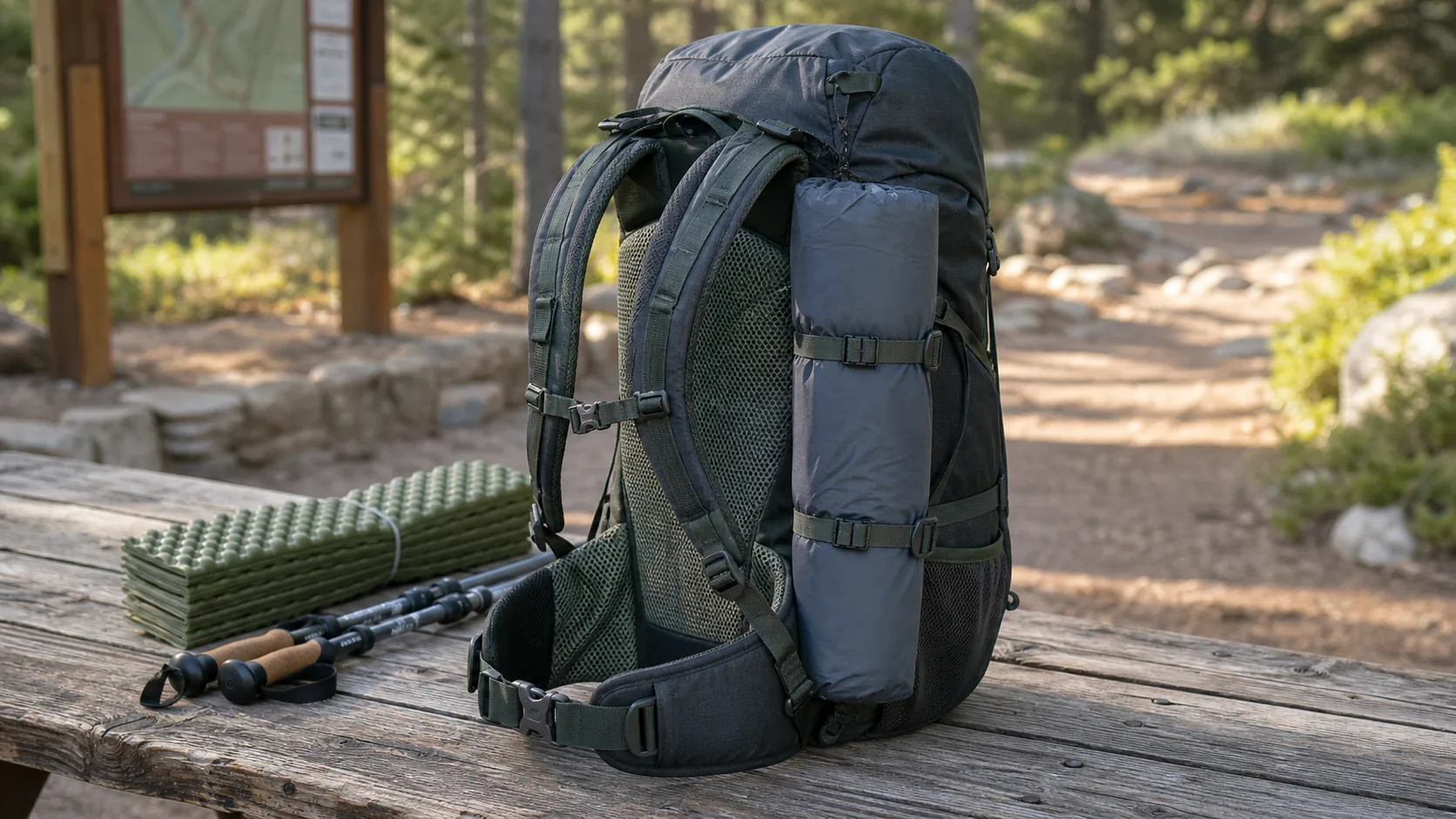
To learn how to use backpack loops, first identify the loop type, attach only suitable lightweight or awkwardly shaped gear, and secure every item against the pack so it cannot swing. Exterior attachment points can free internal space and improve access, but they are not a substitute for balanced packing. The guidance below applies to hiking packs, travel packs, and MOLLE tactical backpacks with reinforced attachment systems.
What Is the Basic Method for Using Backpack Loops?

The basic method is to identify what each loop is designed to hold, keep dense items inside the pack near your back, and use exterior loops for secure, weather-resistant gear. Check stitching and reinforcement before adding a load. Poorly positioned exterior gear can pull the pack sideways and increase shoulder fatigue on a long walk.
What Are Core Loop Mechanics?
Loops are most useful for equipment that is awkward to place in the main compartment, such as trekking poles, a compressed foam pad, or a wet rainfly. They also keep damp or dirty items away from clean clothing and electronics.
- Inspect stitching strength before loading.
- Use locking clips only for suitable accessories, not as life-safety hardware.
- Balance weight on both sides equally.
Key takeaway: Keep exterior items compact, close to the pack, and balanced from side to side.
| Loop Type | Ideal Gear | Weight Limit |
|---|---|---|
| Top | Foam pads or a light rainfly | Light |
| Bottom | Compressed tent body | Moderate |
| Side | Poles | Medium |
If the manufacturer does not publish a load rating, treat the loops as organization points rather than heavy-load anchors.
How Do You Use Backpack Loops for Tents and Sleeping Bags?

A compact tent can be carried horizontally through reinforced lower loops or dedicated bottom straps. Keep poles separate in a side pocket when that produces a narrower load, and place especially dense tent components inside the pack. Tighten the attachment until the bundle cannot sway, but do not crush buckles or overstress the stitching.
How To Secure Your Tent?
Compress the tent into a tidy bundle before attaching it. A compact profile reduces movement and is less likely to catch branches or strong wind.
- Position tents horizontally at base levels.
- Thread nylon straps through reinforced rings.
- Cinch straps tightly, compressing tent bodies.
Key takeaway: A tent carried outside should be compact, weather protected, and held at two points so it cannot rotate.
| Step | Action Required | Benefit |
|---|---|---|
| 1 | Roll tent tightly | Reduces bulk |
| 2 | Thread base rings | Provides support |
| 3 | Cinch straps firmly | Prevents swaying |
After fastening it, lift and shake the pack. Repack the shelter if it shifts or pulls the load noticeably backward.
How Do You Attach a Sleeping Bag?
Use lower straps only when the sleeping bag is inside a durable waterproof dry bag. Thread the straps through the appropriate loops, support the bundle at two points, and keep it clear of the ground. This approach is common in outdoor gear applications, where weather protection matters as much as attachment strength.
Keeping Your Bedding Dry
Moisture can make a sleeping system unusable when temperatures drop. Cover the entire bundle and mount it horizontally so it does not strike the backs of your legs.
- Compress bedding into small stuff sacks.
- Apply waterproof covers immediately.
- Tie bags horizontally using strong cords.
Key takeaway: Waterproof the sleeping bag before attaching it outside; compression alone does not protect insulation from rain or ground moisture.
| Gear Category | Attachment Location | Protection Method |
|---|---|---|
| Down Bags | Bottom rings | Dry sacks |
| Synthetic Bags | Lower straps | Rain covers |
| Foam Pads | Top rings | None needed |
Selecting appropriate locations prevents bulky bedding from snagging on low branches.
How Do You Use Backpack Loops for Hiking Tools?

Trekking poles and ice axes require purpose-built tool loops plus an upper retaining strap. For an ice axe, pass the head through the lower loop, rotate the shaft upward against the pack, and secure the shaft near the top. Retract trekking poles and capture both the handles and tips so neither end can swing.
Managing Pointy Equipment
Dedicated attachment points are safer than improvised cords because they control both ends of a tool. Cover sharp points when moving through crowded areas or when the pack is being transported in a vehicle.
- Pass an ice-axe head through its designated lower loop.
- Rotate the shaft upward against the pack body.
- Lock shafts using upper bungee cords.
Key takeaway: A pointed tool must be restrained at both ends and positioned so it cannot contact the wearer or another person.
| Tool Type | Fastening Method | Safety Tip |
|---|---|---|
| Ice Axes | Bottom woven rings | Point blades inward |
| Trekking Poles | Side compression | Retract fully |
| Shovels | Front panel straps | Remove handles |
Implementing correct tool storage methods drastically reduces accident risks on steep trails.
How Do You Use Daisy Chains and Bungee Cords?

Weaving shock cord between vertical daisy chains creates flexible storage for light, soft gear. Small accessory clips can also connect to individual chain sections, provided the item remains close to the pack and within the stitching’s intended load. This arrangement is useful for equipment that needs to be reached quickly during changing weather.
Building Custom Webs
An elastic cord woven across a daisy chain can create a useful temporary storage area for a rain jacket or wet layer. Use cord locks or secure knots, and leave enough tension to hold the item without deforming the pack panel.
- Thread elastic lines through top chain holes.
- Crisscross cords downward evenly.
- Tie off ends securely with strong knots.
Key takeaway: Daisy chains provide routing points; the cord, webbing, clip, and stitching still determine how much weight the system can safely hold.
| Cord Type | Best Application | Durability |
|---|---|---|
| Paracord | Small accessory retention | High |
| Bungee | Light clothing | Medium |
| Nylon Strap | Rigid tools | Very High |
The finished web should retain gear without blocking zippers or pulling the front panel out of shape.
How Do You Use Backpack Loops for Water Bottles?

A bottle should sit in a side pocket or bottle sleeve, with a loop or carabiner acting only as secondary retention. Hanging a full bottle from one clip lets it swing, concentrates stress on a small attachment point, and can pull the pack off balance. Field testing in an outdoor durability project should include pocket retention, strap tension, and access while the pack is worn.
Maintaining Hydration Access
Keeping water outside the main compartment reduces leak exposure for electronics. Place bottles where they are reachable without compromising the sternum strap or shoulder-harness adjustment.
- Seat the bottle fully in a side pocket or sleeve.
- Secure bases using side compression straps.
- Check carabiner gates regularly.
Key takeaway: Support the bottle from below and use a loop only to prevent it from falling out.
| Bottle Material | Attachment Gear | Noise Level |
|---|---|---|
| Stainless Steel | Locking carabiners | High |
| Soft Plastic | Bungee ties | Low |
| Bladders | Internal sleeves | Zero |
Managing liquid storage efficiently prevents dehydration during grueling summer expeditions.
How Do You Use Backpack Loops with Bungee Cords?
Threading elastic cord through exterior loops creates flexible storage for bulky but lightweight layers. A jacket can slide beneath the cord while both hands remain free, but the cord should never obstruct the main zipper or trail behind the pack.
Creating Flexible Storage
Weather changes can require quick clothing adjustments. A front bungee provides temporary storage for a wet rainfly or recently removed layer without opening the main compartment.
- Measure stretch lines carefully.
- Hook plastic ends onto rigid rings.
- Slide garments beneath stretched lines.
Key takeaway: Bungee storage is best for light, soft gear. Do not rely on it for dense tools, bottles, or valuable electronics.
| Item | Cord Tension Needed | Access Speed |
|---|---|---|
| Rain Jacket | Medium | Fast |
| Wet Tarp | High | Medium |
| Sun Hat | Low | Very Fast |
A properly tensioned cord makes it easier to stow or retrieve a layer when conditions change.
How Do Backpack Loops Affect Load Balance?
Load balance starts inside the pack: place dense items close to the back panel and around the middle of the torso. Exterior loops should carry lighter equipment. When side attachments are necessary, distribute them evenly and keep both sides close to the pack rather than trying to counterweight one heavy object with another.
Achieving Symmetrical Weight
An uneven pack can change walking posture and create pressure points over time. Adjust paired side straps to similar tension and take a short test walk before committing to a long route.
- Compare the size and weight of gear on both sides.
- Move dense items inside instead of adding an exterior counterweight.
- Tighten straps evenly.
Key takeaway: Balance is not just equal weight; exterior items must also stay close to the pack’s centerline.
| Side A Gear | Side B Counterweight | Balance Quality |
|---|---|---|
| Two similar water bottles | Equal side-pocket support | Good |
| Tent poles | Collapsible trekking poles | Acceptable when secured |
| Full bottle | Loose cook set | Poor; repack the cook set inside |
Recheck the distribution whenever water is consumed or exterior equipment is moved.
How Do You Use Backpack Loops Safely Outdoors?
Safe exterior packing means eliminating long dangling straps, covering sharp points, and keeping attached gear within the pack’s profile. Tuck away loose ends and check every buckle, knot, and carabiner before entering rough terrain or crossing water.
Preventing Trail Snags
Loose gear can snag branches or strike nearby people. Roll excess webbing and secure it with elastic keepers or hook-and-loop tabs. Recheck attachments after the first few minutes of walking because compressed bundles often settle.
- Tuck loose nylon ends securely.
- Verify carabiner locks are engaged.
- Shake packs testing item stability.
Key takeaway: Perform a shake test before departure and repeat the check whenever you remove or adjust exterior gear.
| Hazard Type | Prevention Strategy | Risk Level |
|---|---|---|
| Loose Straps | Rubber band ties | High |
| Swinging Gear | Extra compression | Medium |
| Open Clips | Locking mechanisms | Severe |
A compact exterior profile reduces snagging in brush, narrow passages, and crowded transport areas.
How Do You Use Backpack Loops for Extra Gear?
Combining daisy chains, lower loops, and side compression straps can add limited carrying capacity, but it should not turn a small daypack into an expedition pack. Added gear must remain within the pack’s structural and comfort limits. When the exterior becomes crowded or the load pulls backward, use a larger pack.
How To Expand Carry Capacity?
Attach the largest light item first, then use remaining loops for smaller accessories. Avoid covering zippers, ventilation channels, or emergency-access pockets.
- Keep the heaviest items inside and close to your back.
- Place lightweight mats or rain gear above a secured shelter bundle.
- Clip small accessories on shoulder straps.
Key takeaway: Exterior loops extend organization more safely than they extend the pack’s rated capacity.
| Gear Layer | Preferred Location | Priority |
|---|---|---|
| Base | Bottom horizontal straps | Primary |
| Middle | Front daisy chains | Secondary |
| Top | Lid attachment rings | Tertiary |
If exterior additions interfere with balance or access, move to a pack designed for the larger load.
Choosing Loop Systems for Custom Backpack Projects
For product teams, loop performance depends on webbing specification, stitch pattern, reinforcement layers, spacing, and compatibility with the intended accessory system. Prototype testing should cover repeated loading, abrasion, wet conditions, buckle access, and interference with zippers or harness components. Properly designed loops improve organization without encouraging users to overload the bag. For help evaluating an outdoor or tactical backpack specification, contact us today.
FAQ About How to Use Backpack Loops
Can I attach a heavy cast-iron pan outside?
It is usually better inside the pack, close to the back panel. If it must remain outside briefly, support it at two points and confirm that it cannot swing, but do not exceed the pack’s rated load.
What is the best method for securing wet clothes?
Use a front bungee or external mesh area for short-term storage. Wring out the garment first, keep it away from exposed electronics, and move it to a proper drying location when possible.
How do I know whether a carabiner is suitable?
Check that the gate closes completely, the clip fits the loop without abrading it, and the stated load suits the accessory. Backpack accessory clips are not automatically suitable for climbing or fall protection.
Can I modify my bag with extra rings?
Yes, but a load-bearing modification needs suitable webbing, reinforcement, and an appropriate stitch pattern. Sewing through a waterproof panel can also create leak paths, so prototype and test the modification before field use.
What is the best way to secure long fishing rods?
Place the protected rod butt in a deep side pocket or purpose-built holder, then secure the upper section with a compression strap. Keep the rod within the pack’s width where possible and watch overhead clearance.