
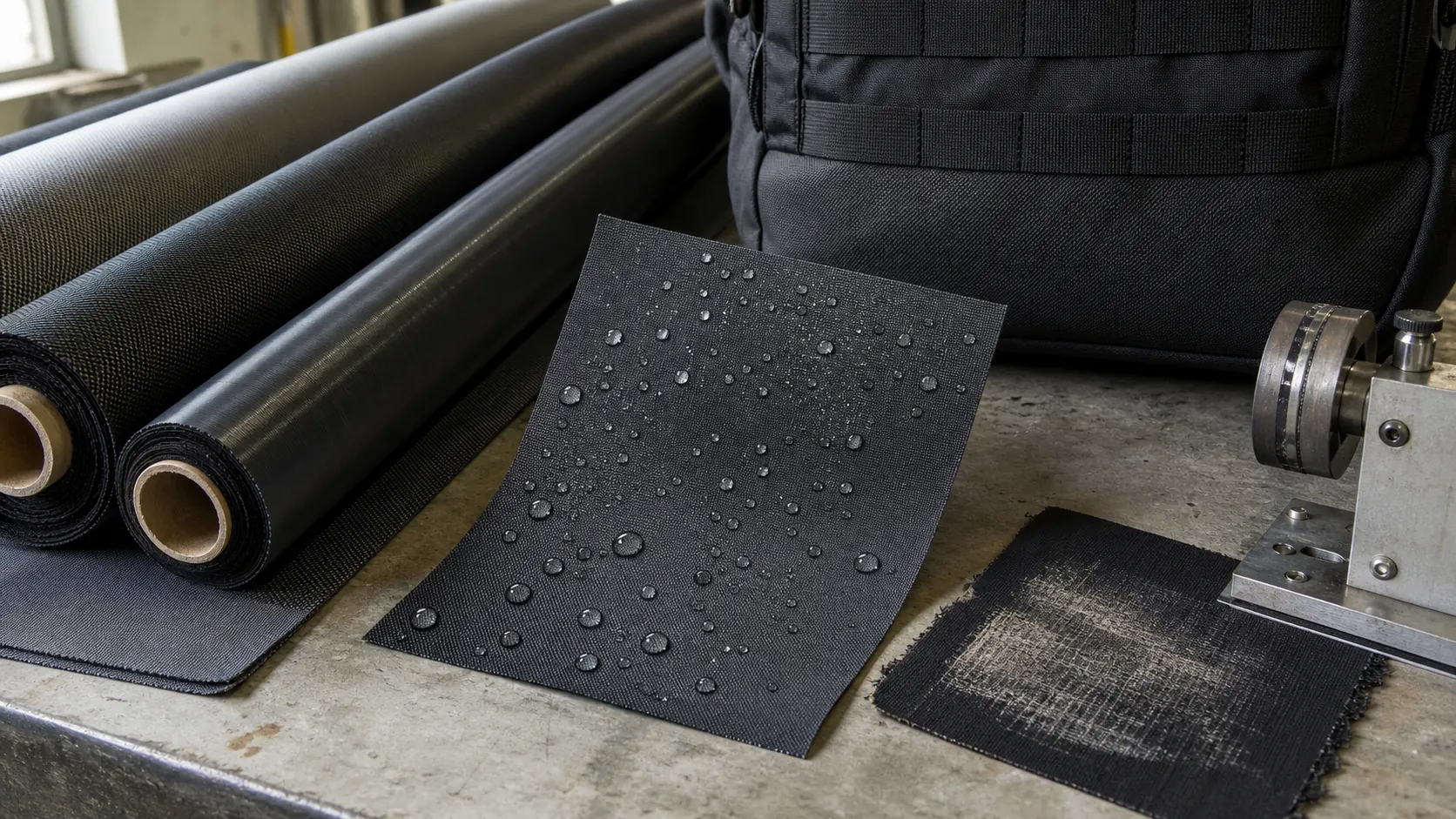
Finding a reliable tactical backpack means matching materials, suspension, capacity, organization, and hardware to a defined load and use environment. A strong-looking exterior alone does not prove that the pack will carry comfortably or survive repeated use.
The checklist below explains what to inspect in a sample, what to specify in a purchase order, and which claims require test evidence. Buyers developing custom tactical backpacks can use these points to compare suppliers on a consistent basis.
Which Tactical Backpack Fabric Features Matter?

Fabric selection should reflect the expected abrasion, tear, weight, weather, appearance, and cost requirements. High-denier nylon is one option, not an automatic quality guarantee.
Does Denier Rating Dictate Durability?
Denier measures yarn linear density rather than finished-fabric durability. Weave, yarn grade, coating, backing, and construction all influence the result. Review an outdoor durability case for context, then request relevant abrasion, tear, tensile, and colorfastness data for the exact material.
High-density materials may offer useful performance when properly specified:
- Greater abrasion resistance for exposed panels
- Higher tear strength when weave and yarn quality are suitable
- More structure for bases and high-contact areas
How Do Polyurethane Coatings Stop Water?
Polyurethane coatings can improve water resistance, but seams, zipper paths, needle holes, coating thickness, and hydrolysis resistance still matter. A coated textile does not make the finished backpack waterproof by itself.
Choose water-resistance targets and test methods that match the finished product claim.
| Material Type | Abrasion Resistance | Water Resistance |
|---|---|---|
| 600D Polyester | Application dependent | Depends on coating and construction |
| 1000D Nylon | Often high, subject to test | Depends on coating and construction |
Compare candidate textiles with the same test methods instead of ranking them by fiber name and denier alone.
Which Strap and Suspension Features Support All-Day Carry?

Suspension should be evaluated as a system: shoulder-strap shape, foam, spacing, torso length, load lifters, sternum strap, frame support, and hip belt must work together. Fit trials should use the intended payload and user range.
Are Padded Shoulder Straps Mandatory?
Padding thickness alone does not determine comfort. Foam density, recovery, edge binding, strap curve, width, and adjustment range influence pressure distribution and durability.
Inspect shoulder straps for practical fit:
- Smooth pressure distribution under the target load
- Neck and arm clearance without abrasive edges
- Foam recovery after compression-cycle testing
Why Do You Need A Waist Belt?
A structured hip belt can transfer part of the load to the pelvis when the pack has a compatible frame and torso fit. The amount varies by pack, payload, adjustment, and user anatomy; it should not be marketed as a guarantee against pain.
| Strap Component | Primary Function | Body Benefit |
|---|---|---|
| EVA Foam | Manages pressure | Comfort depends on density and shape |
| Waist Belt | Shares load with the pelvis | Improves stability when correctly fitted |
Sample testing should document fit range, strap adjustment, pressure points, movement, and stability.
How Should Buyers Evaluate Tactical Backpack Capacity?

Capacity should be matched to an actual packing list, carry duration, environment, and harness rating. Nominal liters are useful for comparison only when suppliers use a consistent measurement method.
Can A 30L Bag Hold Enough Gear?
A 30-liter pack often suits commuting, day use, and compact equipment sets. Whether it fits a laptop, medical kit, or overnight load depends on internal dimensions, pocketing, equipment size, and packing style.
Minimalist packing requires strict discipline:
- Pack only necessary medical supplies.
- Roll clothing tightly for space.
- Leave redundant tools at home.
Should You Size Up To A 45L Pack?
A 45-liter pack may suit bulkier clothing, shelter components, food, or team equipment. Climate, resupply, equipment type, and the user's body size can matter more than a simple mission-length label.
| Pack Volume | Best Use Case | Cargo Type |
|---|---|---|
| Around 30 Liters | Commute or day use | Laptop, layers, compact equipment |
| Around 45 Liters | Extended or bulky loads | Shelter, clothing, food, team gear |
Confirm usable dimensions and load rating on a finished sample rather than relying only on the stated liters.
What Should Buyers Inspect in MOLLE and PALS Systems?

MOLLE-compatible attachment depends on accurate PALS geometry, secure stitching, suitable webbing or laminate, and reinforcement beneath the grid. Buyers serving the outdoor and tactical industry should test representative pouches on the production-intent sample.
MOLLE describes the broader modular equipment system, while PALS is the webbing-grid geometry commonly used to attach compatible pouches. The terms are often used together in product listings, but buyers should specify row spacing, webbing width, slot geometry, stitch pattern, and the exact pouch interface instead of relying on the label alone.
How Does Laser-Cut MOLLE Compare?
Laser-cut laminate grids can reduce layers and create a lower-profile appearance. Performance depends on laminate composition, slot geometry, edge quality, and how the panel is anchored to the pack.
You gain several benefits from laser-cut systems:
- They may reduce snag points compared with raised webbing.
- They can reduce empty weight depending on the laminate.
- They blend into urban office settings.
Can You Attach Extra Medical Pouches?
Pouch compatibility should be confirmed by weaving the actual attachment straps through the complete grid. Medical or other critical equipment also needs retention, environmental protection, access control, and a placement decision based on the user's procedure.
| MOLLE Type | Weight Profile | Visual Style |
|---|---|---|
| Traditional | Usually higher profile | Familiar and repairable |
| Laser-Cut | Often lower profile | Weight depends on laminate |
Inspect spacing, bar tacks, slot edges, reinforcement, and repeated attachment performance.
Which Pocket and Access Features Improve Organization?

Internal layouts should reflect item size, access frequency, visibility, security, and cleaning requirements. More pockets are not automatically better if they reduce usable space or add unnecessary weight.
An admin panel is a structured organizer for pens, cables, cards, small tools, and documents. It works best when pocket dimensions match real items and the panel does not become a heavy flap. Removable dividers or modular internal walls can support tools, electronics, or medical accessories, but their attachment strength and effect on usable capacity need sample testing.
What Are Clamshell Opening Benefits?
A clamshell zipper provides broad visual access and works well for organized equipment sets. It may simplify packing and inspection, although airport screening procedures still vary.
Organized packing saves precious time during emergencies:
- Group medical supplies in red pouches.
- Store batteries in waterproof transparent bags.
- Keep navigation tools near the top lid.
Are Secure or Restricted-Access Pockets Needed?
Some users need a discreet pocket for documents, communications equipment, or other controlled items. Placement, closure, retention, labeling, and applicable laws or workplace policies should be considered before adding a specialized compartment.
| Opening Style | Access Speed | Visibility |
|---|---|---|
| Top-Load | Direct from top | Limited view of lower contents |
| Clamshell | Broad opening | High visibility when laid flat |
Choose the opening style from the workflow, weather target, and equipment profile rather than assuming one layout suits every use.
Which Zipper and Hardware Features Need Testing?
Zipper chain, slider, pull, end stops, seam support, and opening geometry should be tested together. Hardware performance cannot be judged reliably from a "heavy-duty" label.
Do Self-Repairing Zippers Actually Work?
Some coil zippers can realign after a minor separation when the slider is moved back over the affected section. This does not repair damaged chain, worn sliders, poor sewing, or contamination-related jams.
You must inspect fasteners carefully before buying:
- Confirm slider material and size match the zipper chain.
- Pull the track for smoothness.
- Look for weather-resistant fabric guards.
How Do Silent Pulls Benefit Operations?
Cord extensions can reduce metal-on-metal noise and improve use with gloves. They still require secure knots, abrasion resistance, and pull-cycle testing.
Other specialized hardware needs the same restraint. Emergency-whistle buckles should be tested for both sound and buckle strength. Drainage openings may suit wet-equipment pockets, but they also create an ingress path and need corrosion-resistant components. Low-IR or signature-management claims require application-specific material testing and should not be added to an ordinary commercial pack without evidence.
| Zipper Type | Durability | Noise Level |
|---|---|---|
| Metal pull tab | Application dependent | May create contact noise |
| Cord pull extension | Application dependent | Usually quieter |
Cycle, pull, contamination, and environmental testing provide a better basis for hardware selection.
Which Hydration Features Support Balanced Carry?
Hydration features should keep water close to the wearer's centerline, provide secure hose routing, and isolate predictable leak paths from sensitive equipment.
Where Should The Water Bladder Sit?
A dedicated sleeve can hold a reservoir close to the back panel and reduce movement. The sleeve should support the filled reservoir, provide a hanger when required, and separate likely leaks from electronics.
You must route your drinking hose properly:
- Pass the tube through the top port.
- Clip the nozzle onto your shoulder strap.
- Keep the bite valve away from dirt.
Are Dual Hose Routing Ports Useful?
Dual exit ports support either-shoulder routing and different user preferences. Port covers and hose retainers should remain secure when the hydration system is not installed.
| Hydration Setup | Balance Impact | Accessibility |
|---|---|---|
| Side bottles | Balanced when paired or countered | Direct pocket access |
| Center reservoir | Close to centerline | Hose access while moving |
Test the filled system for leakage, movement, hose reach, cleaning access, and interference with the harness.
Which Laptop Features Suit Tactical Commuter Packs?
Commuter-oriented tactical packs need a laptop compartment sized for the target device range and isolated from hard field equipment.
How Does A Suspended Sleeve Protect?
A suspended sleeve creates clearance between the device and the bag base, reducing direct bottom impact. It does not eliminate drop risk, especially at corners or when the device is loosely fitted.
You must protect your electronics from daily hazards:
- Keep the screen away from hard tools.
- Pad the front panel against impacts.
- Use water-resistant zippers near electronics.
Can Tactical Bags Blend Into Offices?
Neutral colors, restrained webbing, removable patches, and a compact silhouette can make a tactical-inspired pack more suitable for office use. For e-commerce bag projects, product imagery should show both the technical organization and the intended professional context.
| Laptop Protection | Base Impact Risk | Office Ready |
|---|---|---|
| Standard Pocket | High | Yes |
| Suspended Sleeve | Reduced, not eliminated | Yes |
Evaluate sleeve dimensions, bottom clearance, padding coverage, closure, and device movement on a loaded sample.
Which Construction and Load-Control Features Need Inspection?
Construction inspection should focus on shoulder attachments, carry handles, compression anchors, zipper ends, base seams, and any point where a load changes direction.
Where Are The Highest Stress Points?
Shoulder attachments carry a substantial share of the load, while compression anchors and handles see different pull directions. Reinforcement must match the fabric, seam allowance, thread, stitch pattern, and expected load.
Industrial machines apply specialized patterns for fabric joints:
- Select thread size and type for the material stack
- Use suitable bar tacks, box stitches, or reinforcement panels
- Control stitch density to avoid weak perforation lines
How Does Double Stitching Stop Blowouts?
A second seam line can add redundancy, but it does not compensate for poor seam allowance, weak fabric, unsuitable thread, or badly placed reinforcement. Finished-bag static and dynamic load tests are more informative than stitch count alone.
| Stitching Method | Load Capacity | Failure Rate |
|---|---|---|
| Single seam line | Depends on construction | Requires validation |
| Reinforced bar tack or box stitch | Designed for directional load | Requires validation |
Document the approved stitch pattern and inspect it consistently during production.
How Should Users Distribute Weight Inside the Pack?
Pack design and packing method both affect stability. Dense items generally belong close to the back panel and around the middle of the torso, subject to the equipment type and access requirements.
Should Heavy Gear Sit Against Your Spine?
Dense items such as radios should be restrained close to the inner back panel when their shape and safety requirements allow. Good placement can reduce leverage and movement, but it does not reduce the actual weight.
You must arrange your inventory strategically:
- Put light sleeping gear at the bottom.
- Center the heaviest metal objects.
- Place medical kits near the top.
How Do Compression Straps Stabilize?
Side straps reduce unused volume and help control cargo movement. They should compress the load without blocking pockets, deforming protected equipment, or overstressing zipper paths.
| Gear Placement | Body Impact | Balance Status |
|---|---|---|
| Far from back panel | Greater leverage | Often less stable |
| Close to back panel | Lower leverage | Usually more stable when restrained |
Include packing guidance with the product when load placement is important to intended use.
For procurement teams, a complete specification combines material data, component standards, sample approval, finished-bag testing, and production inspection. To discuss a tactical backpack program built around measurable requirements, contact us.
FAQ About Tactical Backpack Features
Can I use a tactical backpack for daily commuting?
Yes. A compact model with restrained styling, laptop protection, and practical organization can work well for commuting.
What is the best material for weather resistance?
No single textile is always best. Compare coated fabric, seams, zipper exposure, construction details, and finished-product test results against the intended claim.
How do I know whether the capacity fits my needs?
Build a representative packing list and test it in the sample. Check usable dimensions and pocket layout as well as stated liters.
Can I attach extra pouches later?
Yes, when the grid and pouch use compatible attachment geometry and the added load remains within the pack's limits.
What zipper works best in dusty areas?
The answer depends on chain construction, slider fit, protection, cleaning, and the dust type. Test the complete zipper assembly under representative contamination rather than relying on a generic heavy-duty label.