
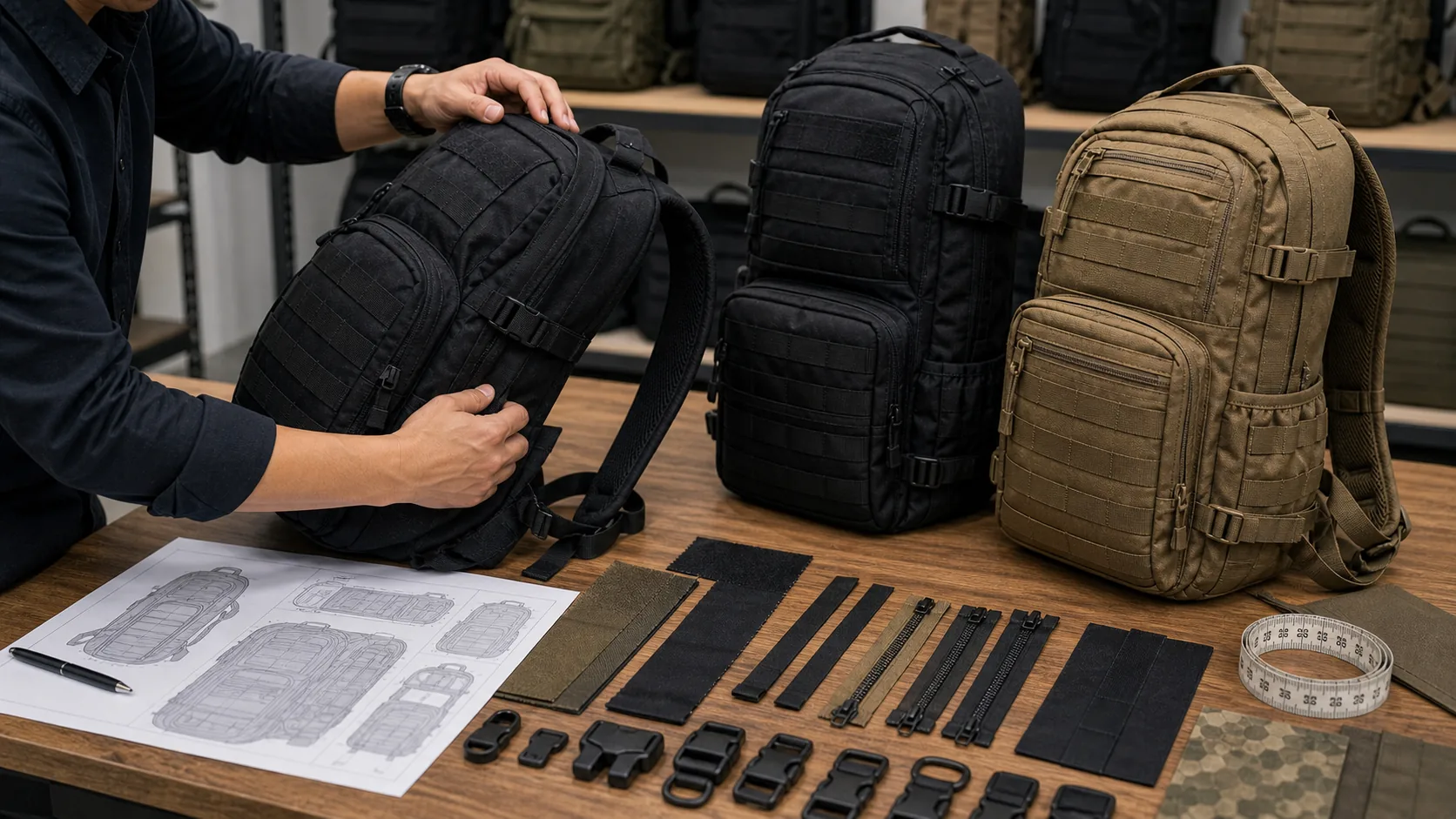
Top tactical backpacks come from manufacturers that combine suitable fabrics, reinforced sewing, reliable hardware, ergonomic carry systems, modular organization, and disciplined quality control. There is no universal best manufacturer for every buyer. The right partner is the one that can build and verify the required EDC, heavy-duty, outdoor, travel, patrol, or specialty-tool configuration at the intended order volume and price tier.
Sourcing top tactical backpacks requires more than comparing catalog photos. Procurement teams should review materials, load-bearing construction, customization options, testing evidence, and bulk-order controls before committing to a supplier.
Why Choose Top Tactical Backpacks for Rugged B2B Needs?

Top tactical backpacks protect B2B supply lines because they are built around load stability, modular expansion, durable materials, and reliable access. Commercial buyers need products that can survive repeated handling, outdoor use, daily commuting, and professional field environments without early strap, zipper, or seam failure.
For retailers, distributors, and OEM brands, the value is commercial as much as technical. A better-built tactical backpack can reduce return risk, support stronger positioning, and give buyers more confidence in repeat orders.
What Demands Drive Commercial Gear Procurement?
Commercial buyers usually care about function first: how the bag carries weight, how quickly users can reach key items, and how reliably the construction performs under repeated use.
Core procurement demands include:
- Reinforced strap anchors and grab handles
- Durable zipper tracks and pullers
- Weather-resistant coated fabric options
- Organized internal pockets for tools and electronics
- Consistent workmanship across bulk production
| Feature | Commercial Requirement | Buyer Benefit |
|---|---|---|
| Reinforced seams | Stable load-bearing construction | Reduces seam failure risk |
| Coated fabrics | Water-resistant performance target | Protects contents in outdoor use |
| Modular panels | Compatible attachment zones | Supports multiple use cases |
A tactical backpack program should start with a defined user and load, then build the specification around that use case.
Who Makes Top Tactical Backpacks Globally?

Top tactical backpacks are made by specialized factories and production hubs that understand heavy fabrics, modular webbing, ergonomic harnesses, and strict sample control. Global sourcing options vary by cost, order volume, compliance requirements, material access, and customization depth.
North American and European suppliers may suit specialized local programs or higher-priced niche production. Asian manufacturing hubs may offer larger capacity, broader material sourcing, and flexible OEM production, but capability must be verified supplier by supplier.
Which Regions Lead in Tactical Backpack Assembly?
Different regions serve different sourcing priorities. Buyers should compare sample quality, certification readiness, communication, capacity, lead time, and technical development support rather than choosing by geography alone.
| Sourcing Region | Common Advantage | Best-Fit Buyer |
|---|---|---|
| North America | Local procurement alignment | Specialized or compliance-sensitive programs |
| Europe | Niche design and regional positioning | Smaller specialized collections |
| Asia | Scalable OEM capacity and material access | Commercial, wholesale, and private-label orders |
For brands selling into the outdoor and tactical industry, the best partner is usually the one that can prove repeatable construction quality and respond quickly to sample feedback.
What Design Benchmarks Define Top Tactical Backpacks?

Top tactical backpacks usually share several design benchmarks: practical pocket placement, reliable clamshell or panel access, strong grab handles, structured shoulder straps, and controlled exterior modularity. These features make the product useful rather than simply rugged-looking.
Buyers can study established layouts without copying protected designs or brand identities. The goal is to understand visibility, access speed, load balance, organization, and durability.
Define the use case before comparing factories:
- EDC and commuting: compact profile, restrained webbing, laptop protection, and low empty weight
- Heavy-duty and field work: reinforced load paths, abrasion-focused panels, stable suspension, and secure tool storage
- Outdoor use: hydration, weather management, layer access, and a harness matched to the expected load
- Travel: clamshell access, stowable or controlled straps, document storage, and practical dimensions
- Patrol or duty programs: workflow-specific access, retention, identification, and documented user requirements
Which Layout Features Matter Most?
A high-performing tactical backpack should let users pack logically and retrieve gear quickly. Features should reduce friction in real workflows, not only add visual complexity.
Useful layout features include:
- Clamshell or wide-panel access for better visibility
- Admin pocket for small tools and documents
- Padded sleeve for electronics or flat equipment
- Reinforced handle for repeated lifting
- Exterior attachment area only where it supports the use case
| Design Element | Structural Layout | Practical Purpose |
|---|---|---|
| Clamshell opening | Broad zipper access | Faster packing and inspection |
| Structured admin pocket | Small-item organization | Reduces search time |
| Reinforced handle | Extra fabric and bar tacks | Improves lifting durability |
Strong design benchmarks help a private-label backpack compete on usability, not only on fabric weight or visual style.
Why Does Suspension Engineering Matter in Top Tactical Backpacks?

Suspension engineering matters because a tactical backpack is only useful if users can carry it comfortably under realistic load. Shoulder straps, sternum straps, hip belts, frame sheets, stays, foam density, and back-panel ventilation should work together.
Structured load systems are especially relevant to outdoor, patrol, emergency, and multi-day products. Poor fit can make even a durable backpack feel unstable or tiring.
What Makes an Adjustable Carry System Valuable?
Adjustability helps a backpack fit a wider range of users and load profiles. On larger packs, torso adjustment, load lifters, and hip belts can improve stability when used with the right frame structure.
| Carry Component | Function | Buyer Check |
|---|---|---|
| Shoulder straps | Pressure distribution | Curve, padding, binding, and anchor strength |
| Sternum strap | Harness stability | Slider range and buckle security |
| Hip belt | Load sharing on larger packs | Padding, fit, and attachment strength |
| Frame sheet or stays | Structure and load control | Material, removability, and fit range |
If a supplier claims specific load-transfer performance, ask for test methods, sample data, or field-trial evidence before using the claim in marketing.
How Does Fabric Grade Impact Top Tactical Backpacks?

Fabric grade affects abrasion resistance, tear strength, water resistance, weight, appearance, and cost. Top tactical backpacks often use high-denier nylon, heavy polyester, ripstop textiles, reinforced base panels, and coated linings depending on the target price and use case.
The best fabric is not always the heaviest. A well-built 500D or 600D pack can be more appropriate for EDC or travel, while heavier panels may be useful for bases, strap anchors, or high-friction zones.
What Is the Difference Between 500D and 1000D?
In general, 1000D fabrics are heavier and often more abrasion-resistant when properly specified, while 500D fabrics can reduce weight and improve mobility. Many strong designs use a material mix instead of one fabric everywhere.
| Material Type | Typical Strength | Common Application |
|---|---|---|
| 1000D nylon | High abrasion resistance when specified well | Base panels, high-wear zones |
| 500D nylon | Balanced strength and weight | Main body panels |
| Heavy polyester | Cost-effective structure | Commercial tactical-style packs |
| Ripstop nylon | Lightweight tear control | Selected panels or lighter products |
For sourcing decisions, request fabric test data for the exact material, coating, color, and backing used in the approved sample. A durability-focused backpack project can help frame how material changes affect product reliability.
What Modular Features Define Top Tactical Backpacks?
Modular features include MOLLE or PALS-style webbing, laser-cut attachment panels, hydration sleeves, removable pouches, compression straps, and internal divider systems. These features let users adapt one backpack to different tasks.
Modularity should be planned carefully. Too much exterior webbing can add weight and make the pack look overly specialized for retail or office-adjacent users.
How Does the MOLLE System Work?
MOLLE-compatible systems use webbing or cut slots that allow pouches to be woven into place. The quality depends on spacing accuracy, reinforcement, stitching, laminate strength, and compatibility testing.
| Modular Component | Structural Design | Practical Value |
|---|---|---|
| Sewn MOLLE webbing | Rows of reinforced nylon webbing | Familiar, repairable attachment |
| Laser-cut panel | Low-profile slots in laminate | Cleaner look and reduced bulk |
| Hydration routing | Sleeve, hose port, and hanger loop | Better outdoor usability |
Buyers should test real pouches on production-intent samples. A grid that looks correct can still fail if spacing, stiffness, or reinforcement is wrong.
Where Can You Source High-Quality Top Tactical Backpacks?
Source tactical backpacks from factories that can demonstrate suitable sewing equipment, technical pattern work, material control, sample development, and bulk inspection. A general fashion-bag supplier may lack experience with load-bearing construction or modular details, so verify capability through samples and records.
For OEM and private-label programs, supplier selection should cover both product quality and business fit. That includes communication, MOQ flexibility, sample speed, cost control, packing requirements, and after-sales support.
Ask every shortlisted manufacturer for the same evidence: a production-intent sample, exact material and hardware specifications, stress-point construction details, relevant test records, a sample-revision process, inspection criteria, and written change control. This creates a fair supplier comparison and exposes catalog claims that are not supported by repeatable production.
What Factory Equipment Supports Seam Strength?
Factories producing tactical backpacks should be able to handle thick layered construction, webbing, binding, foam, coated fabrics, and heavy zipper tape.
Common factory assets include:
- Bar-tack machines for stress points
- Walking-foot machines for layered panels
- Binding machines for internal edge finishing
- Hot cutting or controlled cutting for webbing
- Inspection stations for finished samples
| Factory Asset | Production Capability | Quality Benefit |
|---|---|---|
| Bar-tack machine | Reinforces strap and webbing junctions | Improves stress-point consistency |
| Walking-foot machine | Feeds thick fabric layers evenly | Reduces skipped stitches |
| Pattern and sample team | Develops custom structure | Speeds product iteration |
For cost-sensitive retail programs, a retail cost control case can help buyers decide where to invest and where to simplify.
How Do You Inspect and Test Top Tactical Backpacks?
Inspection and testing should verify whether the approved sample can survive the expected use case. Buyers should review material, stitching, zippers, buckles, webbing, strap anchors, capacity, comfort, and packaging before bulk shipment.
Testing targets should be defined in the technical file. If a supplier claims specific abrasion cycles, tensile force, temperature tolerance, or load ratings, those numbers should be supported by test reports or agreed inspection standards.
Which Quality Checks Matter Most?
Quality checks should focus on failure points that customers notice quickly: zipper jams, loose stitching, strap tearing, webbing pullout, buckle cracking, and fabric abrasion.
| Quality Check | What It Reveals | Buyer Action |
|---|---|---|
| Strap pull test | Anchor strength | Confirm target load and method |
| Zipper cycle test | Slider and chain reliability | Test with loaded compartments |
| Abrasion review | Fabric wear behavior | Compare exact approved materials |
| Drop or impact check | Hardware durability | Test buckles and loaded pack structure |
A testing plan also protects future reorders because it gives the buyer and factory a shared standard for acceptable workmanship.
Why Choose Custom Options for Top Tactical Backpacks?
Custom options allow brands to tailor pocket layout, material combinations, branding, packaging, colorways, zipper grades, MOLLE placement, hydration routing, and internal organization. This is how a tactical backpack becomes a product line rather than a generic stock item.
Customization is especially valuable for outdoor brands, field-service teams, emergency-preparedness kits, travel retailers, and e-commerce sellers that need a clear product angle.
What Custom Branding Methods Look Professional?
Professional branding should be durable and appropriate for the target customer. Rubber patches, woven labels, subtle embossed patches, zipper pulls, and hook-and-loop panels can all work when they match the product positioning.
| Custom Option | Common Modification | Target Use |
|---|---|---|
| Loop panel | Patch or ID placement | Outdoor, field, team, or retail styles |
| Padded dividers | Adjustable internal protection | Electronics, tools, or specialty gear |
| Molded label | Durable brand mark | Private-label products |
| Zipper pull | Usability and branding | Glove-friendly or quiet access |
For e-commerce brands, an e-commerce product testing case is useful before scaling a customized design.
How Do You Bulk Order Top Tactical Backpacks Securely?
Bulk ordering top tactical backpacks securely requires a clear technical data sheet, approved gold sample, written material specifications, production timeline, inspection plan, packing standard, and payment milestones. The stronger the specification, the lower the risk of confusion during mass production.
Commercial buyers should also define how changes are approved. Material substitutions, zipper changes, webbing changes, or packaging updates should not happen silently after sample approval.
Long-term value should be evaluated through landed cost, defect risk, repeat-order consistency, repair or replacement expectations, and communication quality. A low quotation can become expensive when specifications drift, while a higher quotation is not automatically safer without evidence and clear controls.
What Terms Protect a Wholesale Order?
Useful order controls include detailed component sheets, sample sign-off, pre-shipment inspection, carton labeling rules, and agreed defect handling. Third-party inspection can be useful for larger or higher-risk shipments.
| Procurement Step | Management Action | Risk Reduced |
|---|---|---|
| Specification agreement | Confirm materials, hardware, dimensions | Reduces ambiguity |
| Gold sample approval | Freeze workmanship and structure | Controls production drift |
| Pre-shipment inspection | Check random finished goods | Catches defects before freight |
| Milestone payment terms | Link payment to agreed steps | Improves accountability |
Top tactical backpacks are not defined by one fabric or one feature. They are the result of strong materials, practical layout, ergonomic support, modular flexibility, careful testing, and controlled bulk production. To discuss an OEM or private-label tactical backpack program, contact us today with your target use case, capacity, material preference, and order plan.
FAQ
Can I customize the outer layout for specific industrial tools?
Yes. A tactical backpack manufacturer can adjust webbing placement, pocket dimensions, dividers, sleeves, and attachment zones when the requirements are included in the technical drawings.
What is the best fabric weight for long-term field use?
There is no single best fabric for every project. Heavy nylon may suit high-abrasion zones, while lighter nylon or polyester may work better for mobility, travel, or cost-sensitive programs.
How do I know if a factory provides reliable tactical stitching?
Inspect bar tacks, seam consistency, thread tension, strap anchors, and pull-test documentation. Reliable suppliers should explain how stress points are reinforced.
Can I place a small order to verify product construction?
Many agile factories support pilot batches or low-MOQ testing. Confirm MOQ, sample timing, and customization scope before relying on this for launch planning.
How do I know if the zippers will survive heavy use?
Check zipper size, slider quality, sewing support, corner radius, cycle testing, and performance on a fully packed sample. Heavy-duty zippers still need correct installation.