
Two bags can share the crossbody label and offer very different openings, storage, and carry positions. Comparing the construction makes the choice clearer.
A crossbody bag uses a strap worn diagonally across the torso. Common types include slings, phone pouches, camera bags, saddle bags, messenger-style bags, buckets, boxes, and soft pouches. These names describe different features, so one bag can fit more than one type.
The guide below separates carry path from shape, then compares the fields that matter when choosing a bag or writing a product specification.
What Makes a Bag a Crossbody Bag?

The defining feature is the diagonal strap path, not a fixed body shape. Collins defines crossbody through the relationship between the bag and the opposite shoulder. In this guide, that carry arrangement is the starting point; the bag may sit toward the front, side, waist, hip, or back, depending on its design and adjustment.
Shape, closure, size, and organization are separate choices. A rounded flap bag and a rectangular zip pouch can both be crossbody bags when their straps support diagonal wear. A long strap alone does not establish that a particular product fits the intended wearer in that position.
Retail language also mixes carry methods with silhouettes. A listing may describe a product as a saddle crossbody, a camera crossbody, or a convertible shoulder bag. Read each name as a clue, then check the photographs, opening, strap attachment, and dimensions.
A useful product description therefore records two things: what the body is like and how it is intended to be carried. The wider bag-type classification guide covers hand, shoulder, waist, back, and wheeled carry. This page stays with diagonal torso carry rather than repeating that whole taxonomy.
Which Crossbody Bag Types Are Useful to Distinguish?
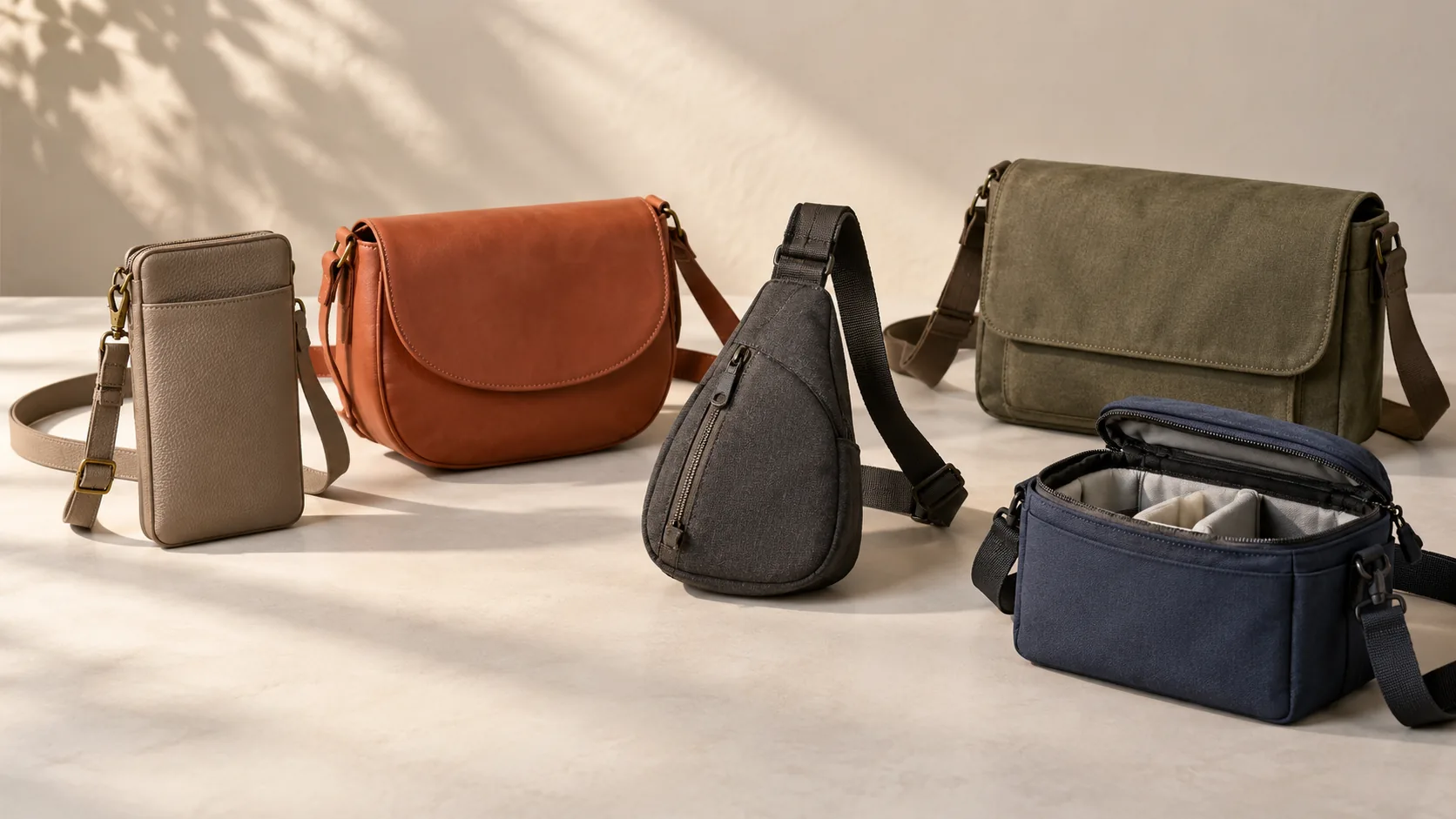
The formats below are a comparison framework, not an official or exhaustive list. Some names describe a silhouette; others describe contents or a changeable strap setup.
| Format | Body and intended contents | Opening and organization | Strap setup to check | Main comparison question |
|---|---|---|---|---|
| Sling | Compact body, often teardrop or rectangular; essentials or a small equipment kit | Zip or flap; layout varies | Single main strap, attachment orientation, adjustment, optional stabilizer | Can you reach the required items from the intended front or back position? |
| Phone pouch | Slim upright or flat body built around a phone | Top zip, flap, or open sleeve; sometimes card slots | Strap range and attachment clearance | Does the actual phone fit with its case, and can it be removed easily? |
| Camera crossbody | Equipment-oriented body with padding or dividers | Top, side, or flap access; removable or fixed organization | Strap connection, adjustment, optional secondary retention | Does the intended camera kit fit with the dividers installed? |
| Saddle-style | Rounded lower body, commonly with a flap | Flap fastening and interior layout vary | Side anchors and usable strap range | Does the curved shape leave enough space for the largest item? |
| Messenger-style | Landscape body for documents, devices, or other flat items | Broad flap or zip; possible device compartment | Long strap, padding if specified, optional stabilizer | Do the opening and internal dimensions fit the actual document or device? |
| Bucket | Upright body with a cinch, drawstring, or another top closure | Often a flexible mouth; pockets may be separate | Handle or strap arrangement suitable for diagonal wear | How well do the closure and pockets retain the intended contents? |
| Box or frame | Structured body with defined edges | Clasp, frame, flap, or zip | Detachable or fixed strap and connecting hardware | How much usable space remains after the frame, lining, and closure? |
| Soft pouch | Flexible flat or gusseted body | Often zip-top; simple or subdivided interior | Suitable side attachments and removable or fixed strap | Is the pouch usable while worn, rather than only as an organizer? |
| Convertible | Any body designed for more than one carry setup | Depends on the base design | Each strap, anchor, and connector needed for each advertised mode | Does every intended mode work with the same packed sample? |
A fashion bag called a camera bag may borrow a rectangular silhouette without providing equipment padding. Check the interior before treating that label as protection. Likewise, a box-shaped body does not establish impact resistance, and a bucket shape does not guarantee a particular capacity.
Mini, chain-strap, festival, and travel-security describe size, strap construction, or intended use rather than a separate body format. They can apply across several rows. For comparison, name the body format first, then add the relevant size, organization, or feature.
How Do Crossbody, Sling, Messenger, and Shoulder Labels Overlap?
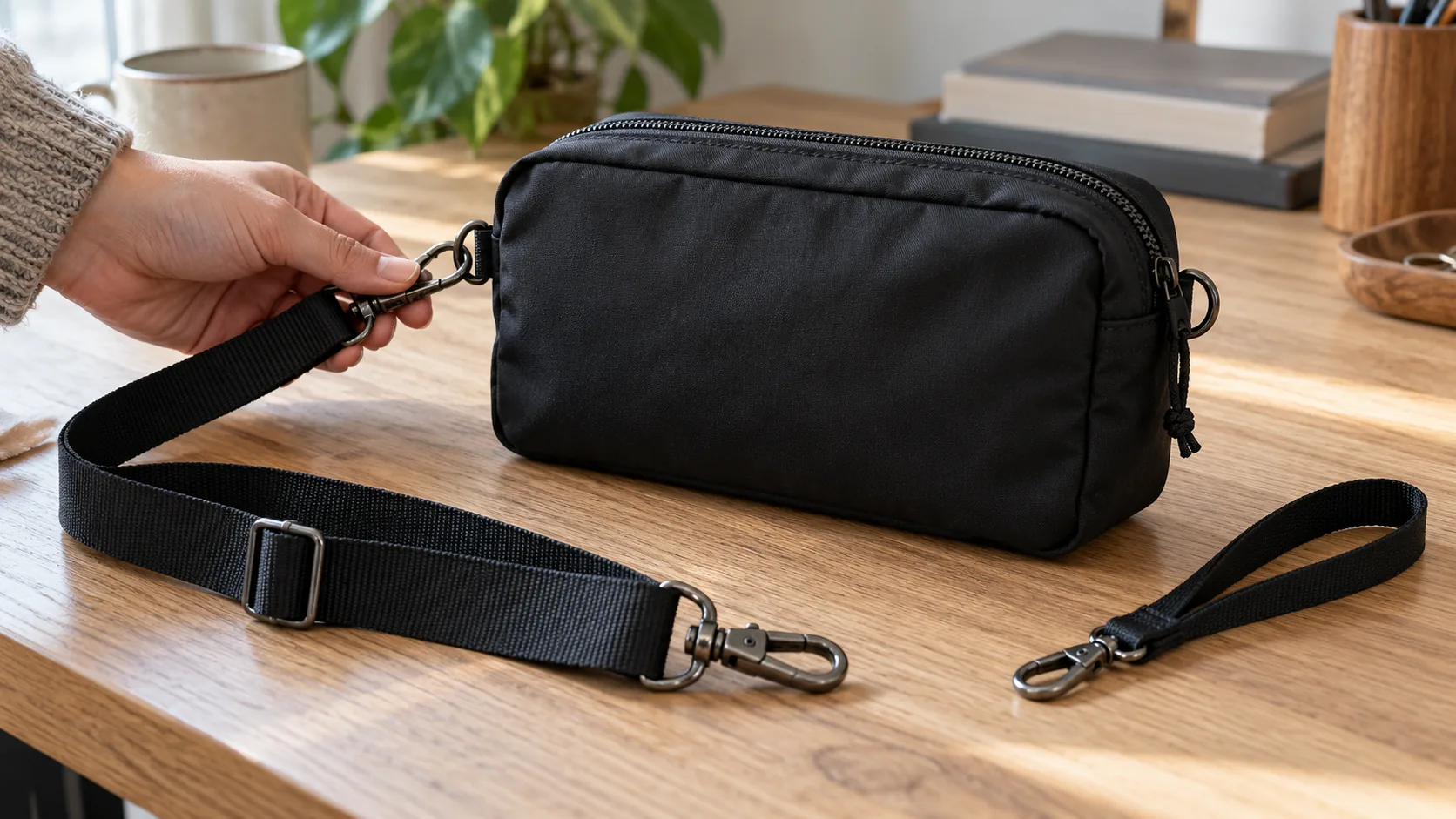
These labels answer different questions. Crossbody describes diagonal carry. Sling describes a strap-and-body arrangement in market use. Messenger and satchel names suggest body styles, but the name alone does not fix every construction field.
| Label pair | Possible overlap | What still needs checking |
|---|---|---|
| Crossbody and sling | A sling is crossbody when worn with a diagonal torso strap path | Some slings can also hang from one shoulder; check the intended modes and attachment orientation |
| Crossbody and messenger | A messenger-style body can use a diagonal strap | Body width, opening, device fit, and stabilization are separate specifications |
| Crossbody and satchel | A satchel-labelled body may have a suitable long strap | A top handle, rigid body, or full flap should not be assumed from the word alone |
| Crossbody and shoulder | One adjustable or interchangeable strap setup may support both | Short shoulder carry and diagonal carry need their own fit checks |
| Crossbody and hobo | A soft, curved body may be fitted for diagonal wear | Silhouette, material drape, anchors, and strap range are separate fields |
| Crossbody and clutch | A handheld body may accept a removable long strap | The connectors and loaded carry need checking; adding a strap does not prove a usable second mode |
The useful boundary is the intended wearing setup. For example, a pouch with a wrist loop is hand-carried. Fit it with a suitable long strap and it may also work crossbody. Its body shape has not changed, but its carrying system has.
This is also why crossbody and shoulder bags should not be treated as rival shapes. The broader shoulder family includes short straps and two shoulder-length handles that are not intended for diagonal wear. This guide does not reproduce that family’s full list of totes, baguettes, hobos, and underarm styles.
For the narrower question of positioning and adjusting a sling, use the sling backpack wearing guide. A general type list cannot settle fit for a specific bag and wearer.
How Do Shape, Opening, and Organization Change the Use?
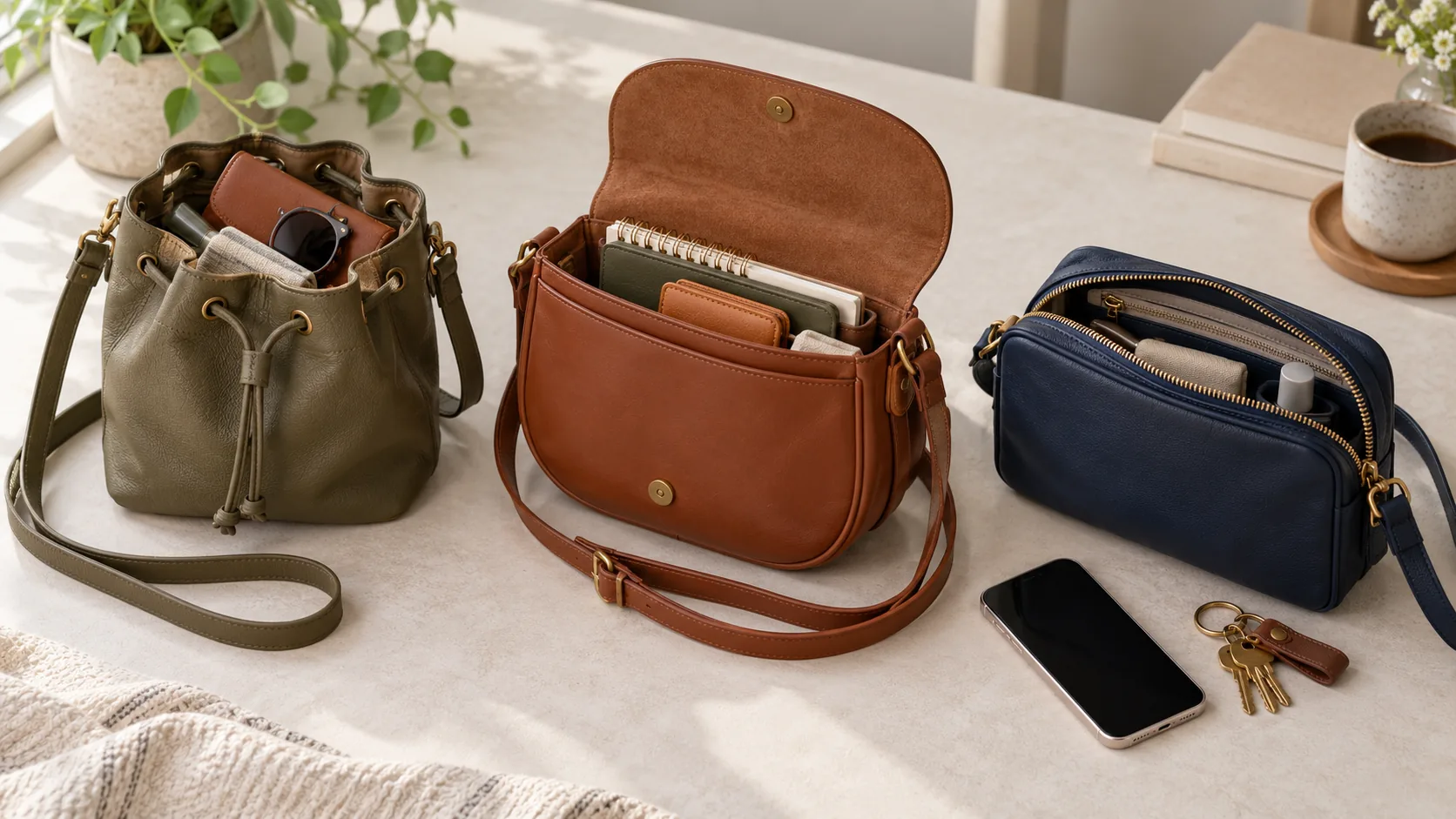
Start with the contents list. A phone, tablet, camera lens, sunglasses case, and water bottle present different fit questions even when two bags have similar outside dimensions.
Measure the usable opening as well as the interior. A rigid frame or curved flap may restrict entry for an item that appears to fit inside the body. Lining, padding, dividers, and internal pockets also occupy space. Outside length, height, and depth do not establish usable capacity by themselves.
Closure comparisons work better as checks than rankings:
| Closure | What to inspect on the actual bag |
|---|---|
| Drawstring or cinch | Remaining mouth gap, cord adjustment, retention of small items, and access with the intended load |
| Flap | Coverage, fastening position, extra closure underneath, and the movements needed to open it while worn |
| Top zip | Clear opening width, zipper ends, access direction, and whether the loaded shape interferes with operation |
| Clasp or frame | Opening clearance, fastening alignment, and operation with the intended contents inside |
A flap is not automatically more rain-resistant than a zipper. Water protection depends on the whole construction and the exposure being evaluated. Similarly, a top zipper is not automatically a sealed opening or a theft-prevention feature.
Organization should follow the item list. Camera dividers need to fit the intended equipment; phone slots need to accommodate the case; card pockets need a defined size and access position. Pockets and key retainers add components and work, so their cost and usefulness need checking rather than assuming they are negligible.
Also record where the opening faces when the bag is worn. Front, top, and body-side openings may require different movements. Try the loaded sample in the intended position and record whether the wearer must rotate, lift, or remove the bag to reach a frequently used item.
How Should Strap Geometry and Carry Position Be Evaluated?

Anchor position, strap range, and body orientation are design variables to compare on a sample. Their effects depend on the bag, strap route, contents, and wearer; anchor spacing alone does not establish how a bag will hang or move.
Record the anchor positions on the drawing, including their orientation and the connecting hardware. Check that hooks rotate as intended, rings have enough clearance, and the strap is not twisted in the advertised wearing setup. If a second anchor position supports another carry mode, evaluate that setup separately.
Specify adjustment as a usable range with a stated measurement method. Minimum and maximum length, strap width, and any padding answer different questions. Test the range with the intended wearers and clothing. A fixed-length strap may suit a defined product brief, but it should not be presented as fitting everyone.
Then load the sample with the agreed contents. Observe its position during the activities the product is meant for, such as walking, sitting, reaching, or changing the bag from front to side. Record any unwanted tilt, strap movement, closure interference, or pressure the wearer reports. These observations describe that configuration; they do not establish an ergonomic benefit or a universal safest orientation.
For an asymmetrical body, check access from both advertised wearing sides. Do not infer handedness solely from where a zipper appears in a product photograph. If the design supports only one setup, describe it accurately.
Formal attachment-strength evidence is a separate question from a wear trial. For example, SATRA TM244 covers load-bearing luggage fittings and their attachments under a defined tensile test. Its public scope does not establish a crossbody strap-length rule, a comfort claim, or a pass load for this bag. Any applicable test needs the actual configuration, method, and buyer-agreed criterion.
Which Type Fits Each Use Case?
A use case helps make a shortlist, but it does not select a winner without dimensions and contents. Treat the following rows as starting points.
| Use case | Formats to compare | Fields to check first |
|---|---|---|
| Phone and essentials | Phone pouch, small sling, soft pouch | Actual phone fit, closure, card and key storage, usable strap range |
| Commute | Messenger-style, structured pouch, other bodies sized for the kit | Document or device fit, opening access, packed weight, strap setup |
| Camera carry | Equipment camera bag or a sling with suitable organization | Camera and lens fit, divider layout, padding, closure, access position |
| Travel | Any suitable body with the required organization | Passport and phone access, closure arrangement, empty and packed weight, advertised security evidence |
| Fashion assortment | Saddle, bucket, box, pouch, or another chosen silhouette | Shape consistency, material behavior, hardware appearance, real contents fit |
| Convertible use | A body with documented alternative carrying setups | Required straps and connectors, changeover steps, access and loaded position in every mode |
Travel-security features belong in the travel row rather than beside saddle and bucket as another shape. Hidden pockets, locking pulls, cut-resistant layers, and RFID-related materials are different features with different evidence needs. None justifies a general promise that the bag prevents theft.
For a consumer, pack the items you actually carry and try the intended access movements. For a brand, turn those items and movements into the sample brief. A cycling commute, a train commute, and an evening outing may start with the same body format but require different strap setups or organization.
What Should Brands Specify and Approve?
A product name is not enough for a comparable quotation or a clear sample review. Record the selected format and the construction fields the supplier needs to build it.
RFQ checklist
| Field | What to record |
|---|---|
| Finished dimensions | Target values, measurement points, empty or loaded state, and agreed tolerances |
| Intended contents | Item list, sizes, packed arrangement, and mass where relevant |
| Opening and interior | Clear opening, usable dimensions, compartment and pocket map |
| Carrying setup | Intended front, side, hip, or back position; every advertised alternative mode |
| Strap | Usable adjustment range and measurement method, width, padding, material, and hardware |
| Anchors | Drawing locations, orientation, attachment construction, mating parts, and reinforcement |
| Closure | Type, component identity, placement, and required operation while worn |
| Materials | Shell and lining composition, construction, mass per area where relevant, finish, color reference, and structure |
| Hardware and branding | Supplier or component code, material, finish, quantity, placement, and artwork reference |
| Evidence and approval | Sample version, applicable checks, conditions, endpoints, acceptance criteria, and unresolved items |
Keep material composition, construction, finish, color, and performance requirements in separate fields. Drawings can refer to the controlled material or component row rather than repeating a value that may later change. This is particularly useful for a strap, hook, or reinforcement used in several places.
Denier describes yarn linear density, not finished fabric weight or bag strength. If that distinction needs clarification, the denier guide for bag sourcing explains why the fabric construction and relevant performance evidence still need their own fields.
Separate measured dimensions from appearance references. A tolerance belongs with the measurement point, product state, and method. An approved sample can show a particular shape, finish, or assembly, but it does not replace written material requirements or guarantee a later production lot.
Finished-sample approval checklist
| Check | What to evaluate | How to record the decision |
|---|---|---|
| Loaded position | Intended contents, wearer, clothing, strap setting, and carry mode | Record observed position and buyer-defined acceptable behavior |
| Access | Reach the required items from the intended wearing position | Record movements, interference, and any stated access requirement |
| Strap adjustment | Use the advertised range and inspect setting retention under the selected conditions | State conditions and acceptable movement; do not invent a universal limit |
| Anchors and connectors | Inspect clearances, rotation, attachment, and any relevant load-test result | Link observations or results to the actual sample and method |
| Closure | Operate it with the intended load and required hand use | Record jamming, misalignment, or unmet operating requirements |
| Pockets | Fit and retrieve each intended item | Compare against the item list, not an empty pocket photograph |
| Shape and appearance | Empty and loaded shape, alignment, finish, and stitching | Use agreed measurement criteria or the identified visual reference |
| Convertible modes | Repeat relevant fit and access checks in each advertised setup | Identify the hardware used and any unresolved limitation |
Freeze the fields that matter to each check: sample identity and revision, contents and distribution, wearing setup, conditions, procedure, endpoint, and acceptance rule. Mark an irrelevant field as not applicable and an undefined one as an open item. A wear trial and a destructive attachment test do not need identical protocols.
If a strap length, anchor, closure, or material changes after approval, record what changed, why, who approved it, the new revision, and which orders or product versions it affects. Revisit the checks affected by that change instead of assuming the earlier result covers the new configuration.
Once the contents, carrying setup, and approval criteria are defined, use the custom bag development page to frame a sample request around those fields.
Frequently Asked Questions
Is every sling bag a crossbody bag?
A sling is crossbody when its strap is worn diagonally across the torso. Some sling designs also support one-shoulder wear. Check the actual strap route, anchors, and intended modes rather than treating every sling as the same construction.
Can a shoulder bag also be worn crossbody?
Yes, if its strap arrangement and usable range support diagonal wear for the intended wearer. A short shoulder strap or two shoulder-length handles do not automatically provide that mode.
Are messenger and satchel bags crossbody types?
They can be when fitted and worn with a diagonal strap. Those names do not settle body dimensions, rigidity, handles, or opening. Compare the construction and contents fit separately from the label.
What strap length and capacity should a crossbody bag have?
Choose the strap range for the intended wearers, clothing, and position, then check it on a loaded sample. Capacity depends on usable interior space, opening, structure, and organization; neither a style name nor outside dimensions alone supplies the answer.
Do travel-security crossbody bags prevent theft?
The name does not establish theft prevention. Specify each advertised feature and seek evidence applicable to that feature and construction. Closure position, hidden pockets, cut-resistant materials, and locking hardware should not be combined into a blanket safety guarantee.