
A damp swimsuit packed beside dry clothing can leave the whole bag wet. A separate pouch addresses that storage problem, but its name does not prove containment.
A wet bag is a reusable pouch or compartment intended to separate wet, damp, or soiled items from other belongings. Swimwear, towels, and workout clothing are common examples. The name describes use, not a verified waterproof, leakproof, or odor-proof rating.
This guide explains wet bag meaning, compares wet and dry bags, and turns material, care, and performance claims into questions a buyer can check.
What Does Wet Bag Mean?
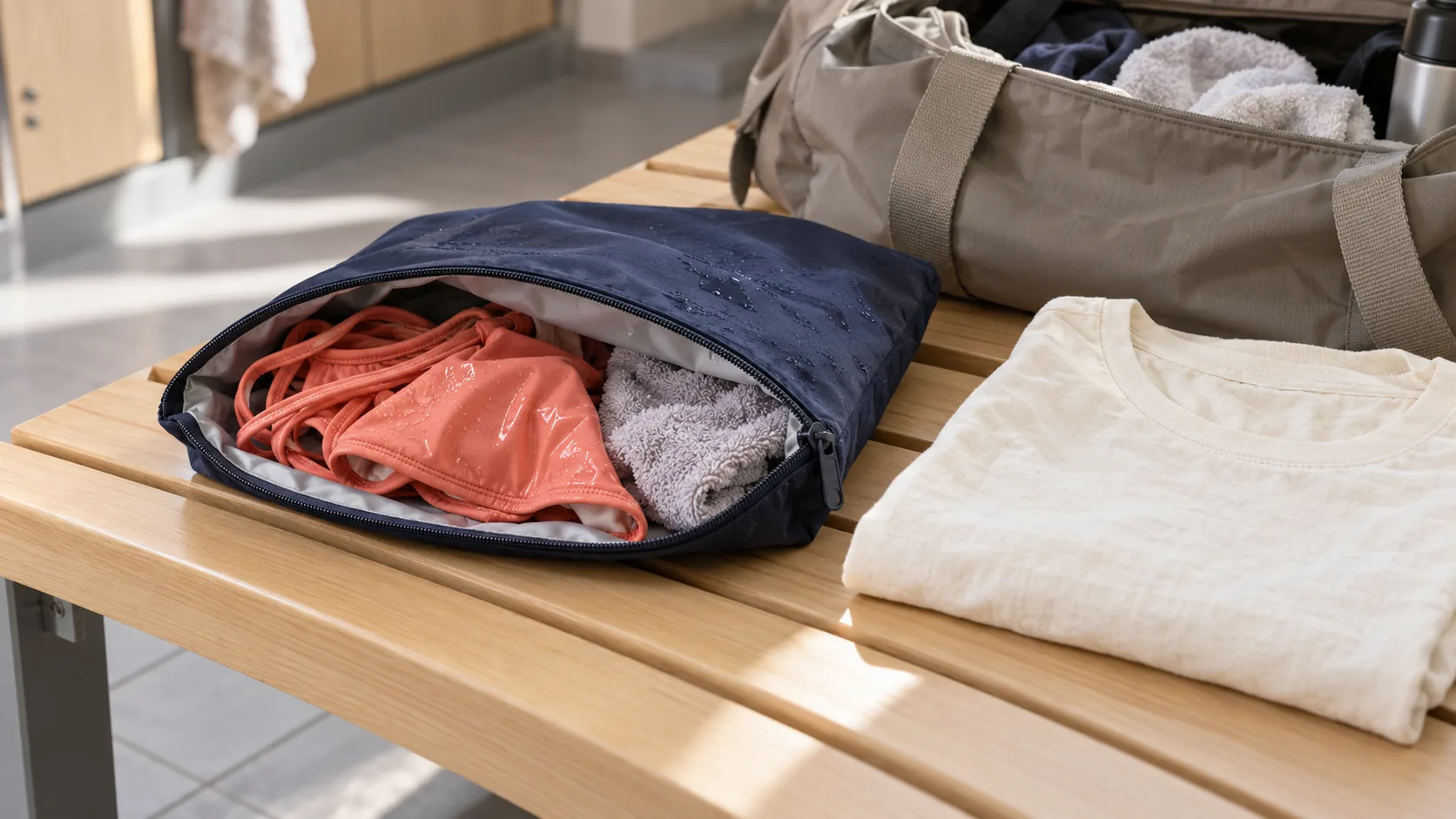
A wet bag organizes items that are already damp, wet, or soiled. It may be a removable pouch or a compartment built into a larger bag. Its intended job is to keep those items separate from the rest of the load.
That description does not settle how much moisture the product can contain. A damp towel, dripping swimsuit, and quantity of free liquid are different loads. Whether moisture reaches the outside depends on the layers, seams, closure, orientation, condition, and exposure time.
Listings use the name for different constructions. Some products are simple zip-top pouches; others have a second compartment, a removable liner, or a folded closure. Ask what goes inside and how it will be carried before choosing the construction.
Keep the product name and the claim separate. A specification can say “wet pouch for damp workout clothing” without claiming that it holds free water, blocks odors, protects electronics, or supports immersion. Each additional promise needs its own applicable evidence.
How Is a Wet Bag Different From a Dry Bag?
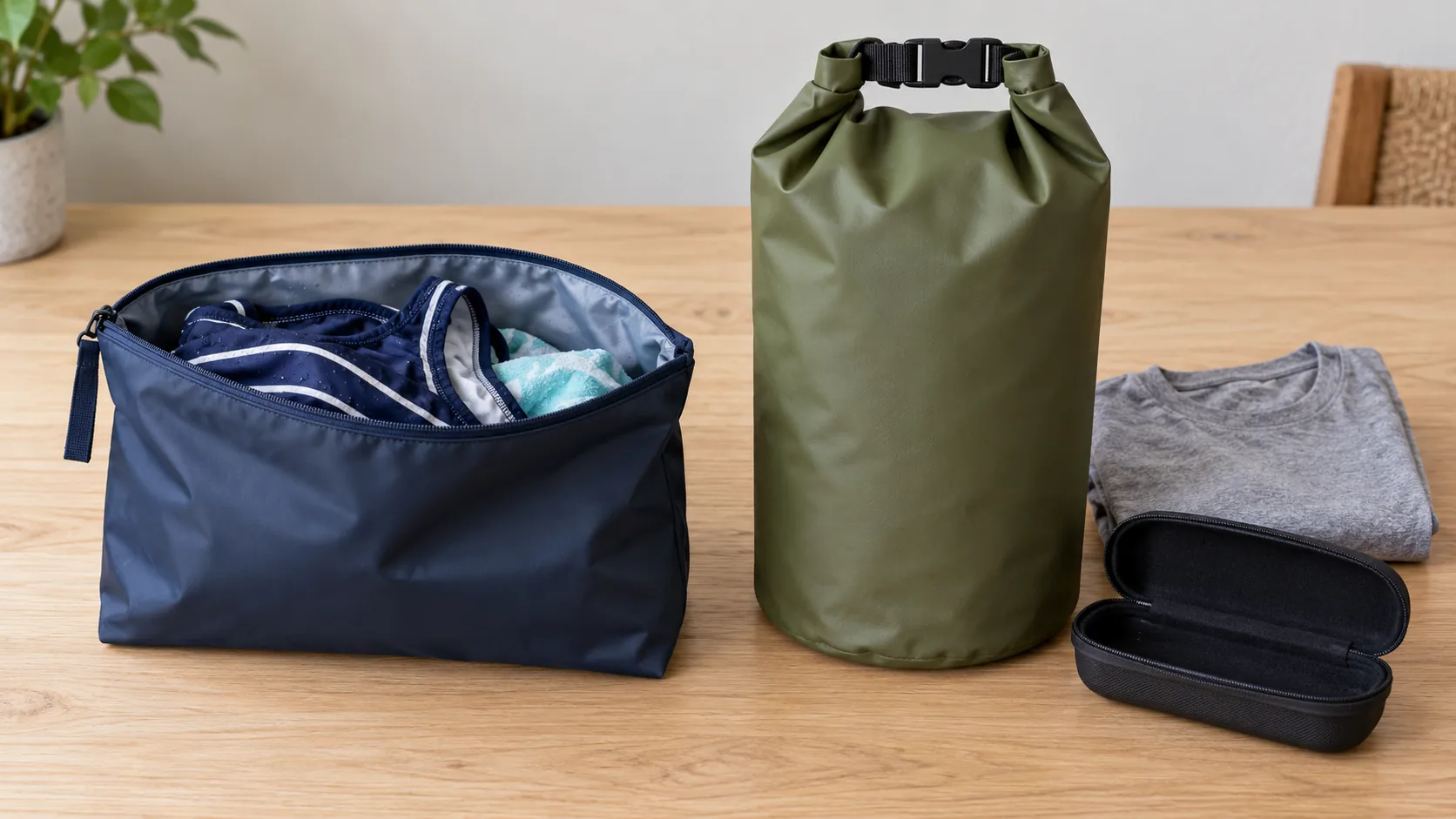
The useful distinction is where the moisture starts. Wet bags are intended to separate moisture-bearing contents from other belongings. Dry bags are intended to protect dry contents from outside water. These are use directions, not mutually exclusive construction categories.
| Design question | Wet-item containment | Dry-content protection |
|---|---|---|
| Where does the water start? | In or on the contents | Outside the container |
| What is the intended task? | Separate damp or soiled items from the rest of the load | Limit outside water reaching dry contents |
| Which closures may appear? | Zip, fold, snap, drawstring, roll-top, or combinations | Roll-top, sealed zip, or other purpose-designed closures |
| What needs evaluation? | Layers, seams, opening, and attachments under the intended inside-to-outside exposure | The same relevant parts under the intended outside-to-inside exposure |
| What evidence is useful? | Finished-item results with defined contents, moisture state, position, time, and endpoint | Finished-item results for the defined rain, splash, or other claimed exposure |
A roll-top does not define every dry bag, and a zipper does not define every wet bag. A product may be used in both directions if its construction and documented limits suit both tasks. A result for one exposure does not automatically prove performance in the other direction.
A wet pouch also solves a different problem from weather protection for a backpack. The backpack waterproofing guide concerns outside moisture reaching dry gear. A wet pouch manages items that are already wet inside the packing system; it does not make the whole backpack waterproof.
This wet bag vs dry bag comparison is about purpose and evidence. Dry-sack naming, roll-top instructions, and a full dry-bag buying guide are separate questions.
Which Uses Require Different Wet-Bag Designs?
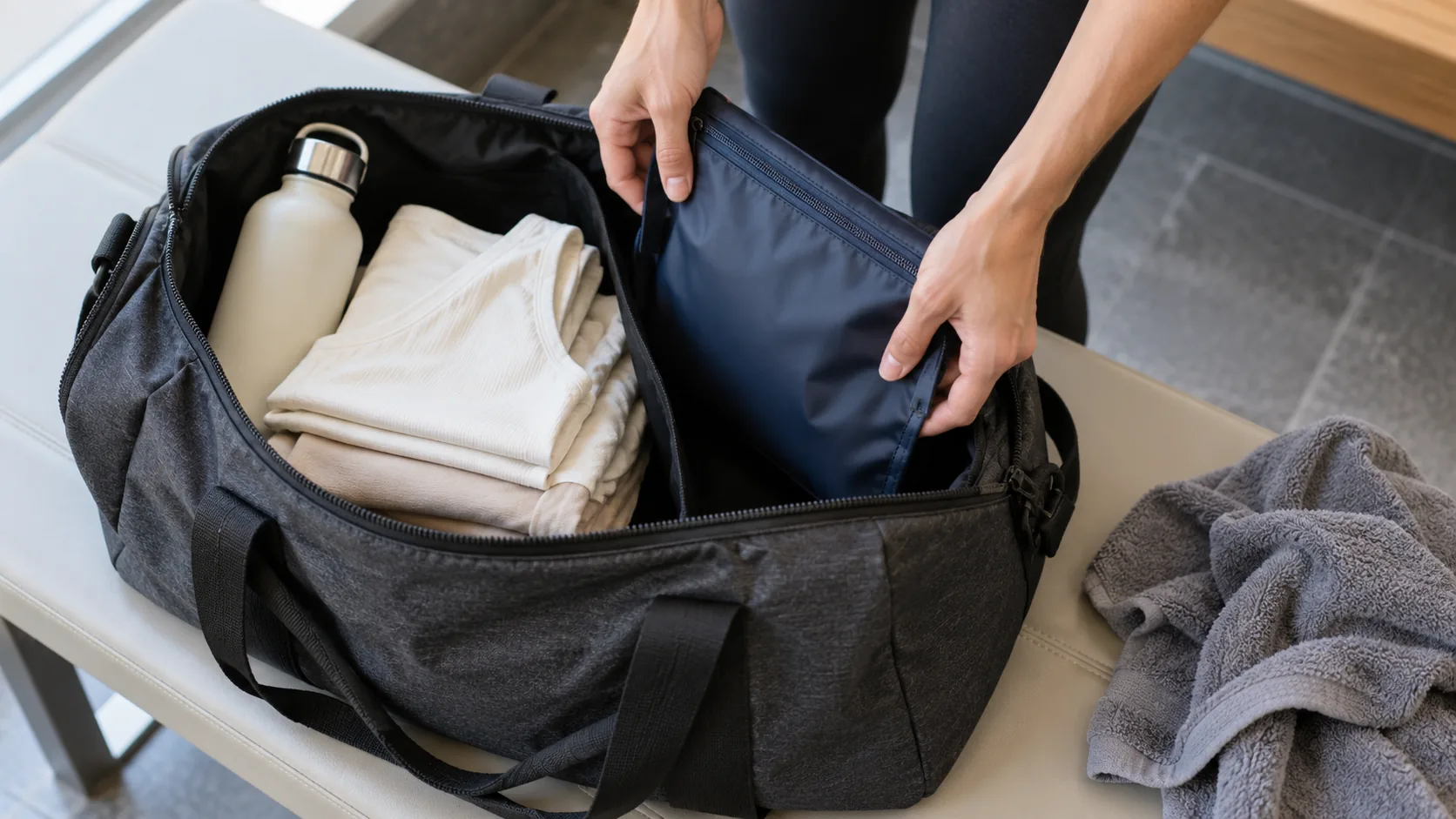
Contents, moisture, storage time, and care requirements determine the design brief. They should be supplied for the intended use rather than assumed from a swim, gym, or travel label.
| Use | Contents to define | Design questions |
|---|---|---|
| Swim | Actual swimsuit and towel sizes; damp or dripping condition | Is the pouch large enough, how is it closed, and what transfer limit is required? |
| Gym | Workout clothing, towel, and any other intended items | Does the filled pouch fit inside the larger bag, and can it be removed without contacting dry items? |
| Travel laundry | The agreed clothing load and moisture state | What hold time, packed orientation, access, and care method does the project require? |
| Reusable hygiene or diaper storage | Exact intended items and use boundary | What construction and care documentation is required, and which claims need separate specialist review? |
| Beach | Wet clothing plus the specified sand or residue exposure | How will the opening, closure, layers, and documented care be checked under those conditions? |
| Removable wet compartment | The load and its place inside a larger bag | How is it attached, what orientations occur, and how is transfer to the main cavity assessed? |
For gym products, a gym-bag development brief can record the removable pouch or wet compartment alongside the dry-clothing space, shoe storage, and packed dimensions. A separate compartment proves separation of space, not sealing, odor control, or sanitation.
Hold time is a project variable. Do not assume gym items are stored longer than swim items or assign an acceptable storage duration from the bag type. State the expected interval and evaluate the intended configuration.
For diaper and reusable-hygiene uses, this guide stays at construction, contents, and care-documentation level. It does not provide infant-safety, infection-control, skin-contact, or sanitation advice. A wet-bag label establishes none of those outcomes.
Which Materials and Constructions Control Containment?
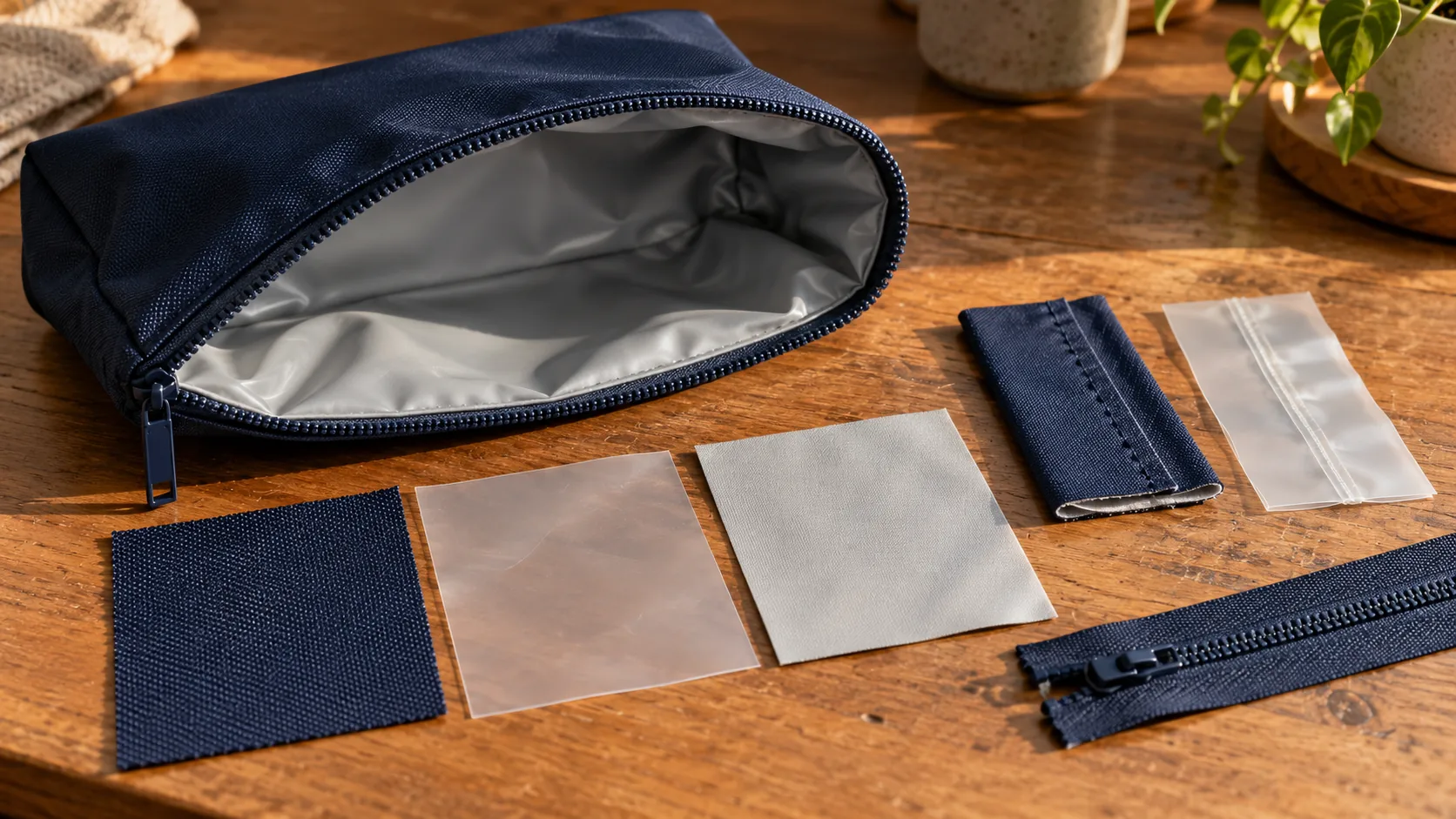
A finished wet bag is a system. Record the base fabric, barrier layer or liner, seams, closure, and attachments separately, then evaluate them in the actual closed and loaded item.
The base fabric provides a construction to specify: fiber composition, weave or knit, mass per area, and other relevant fields. A coating, bonded film, or separate liner adds another layer with its own identity. Do not treat fiber name, denier, or fabric weight as a finished-bag leakage rating.
PUL is used as a polyurethane-laminate label, while TPU identifies thermoplastic polyurethane. Neither abbreviation supplies the full layer construction, thickness, bonding, care method, or applicable performance result. Request the actual material specification rather than assuming that every product using the abbreviation has the same composition.
The same caution applies to PEVA, PVC, and other named films or liners. The PEVA material guide explains the material term; it is not evidence that a pouch using it is leakproof, food-safe, antimicrobial, or machine washable.
For seams, record where the layers are sewn, bound, taped, sealed, or welded, and how openings and attachment points are finished. Needle holes, zipper ends, corners, liner transitions, and hanging loops are separate areas to inspect. A continuous barrier panel does not establish how those interfaces behave.
Fabric tests answer narrower questions than finished-item checks:
| Evidence | What the official scope addresses | What it does not establish by itself |
|---|---|---|
| ISO 811:2018 | Fabric resistance to water penetration using hydrostatic pressure | Leakage through a particular bag’s closure, seams, corners, or attachments |
| AATCC TM22 | Fabric resistance to surface wetting in a controlled spray test | Finished-bag containment, a rain-protection level, or resistance under another exposure |
| ASTM D751 | A collection of coated-fabric test methods, including hydrostatic resistance | One universal wet-bag rating; the relevant method, specimen, and result still need identification |
A fabric result remains useful evidence about the tested fabric. It simply does not extend to untested seams or the whole pouch. Surface wetting and penetration under pressure also ask different questions; their results should not be converted into each other.
Closure and orientation belong in the finished-item plan. Record how the product is closed and whether it stands upright, lies on its side, or changes position inside another bag. Recheck relevant performance after the specified care or wear conditioning if the claim is meant to apply in that condition.
Which Product Claims Need Evidence?
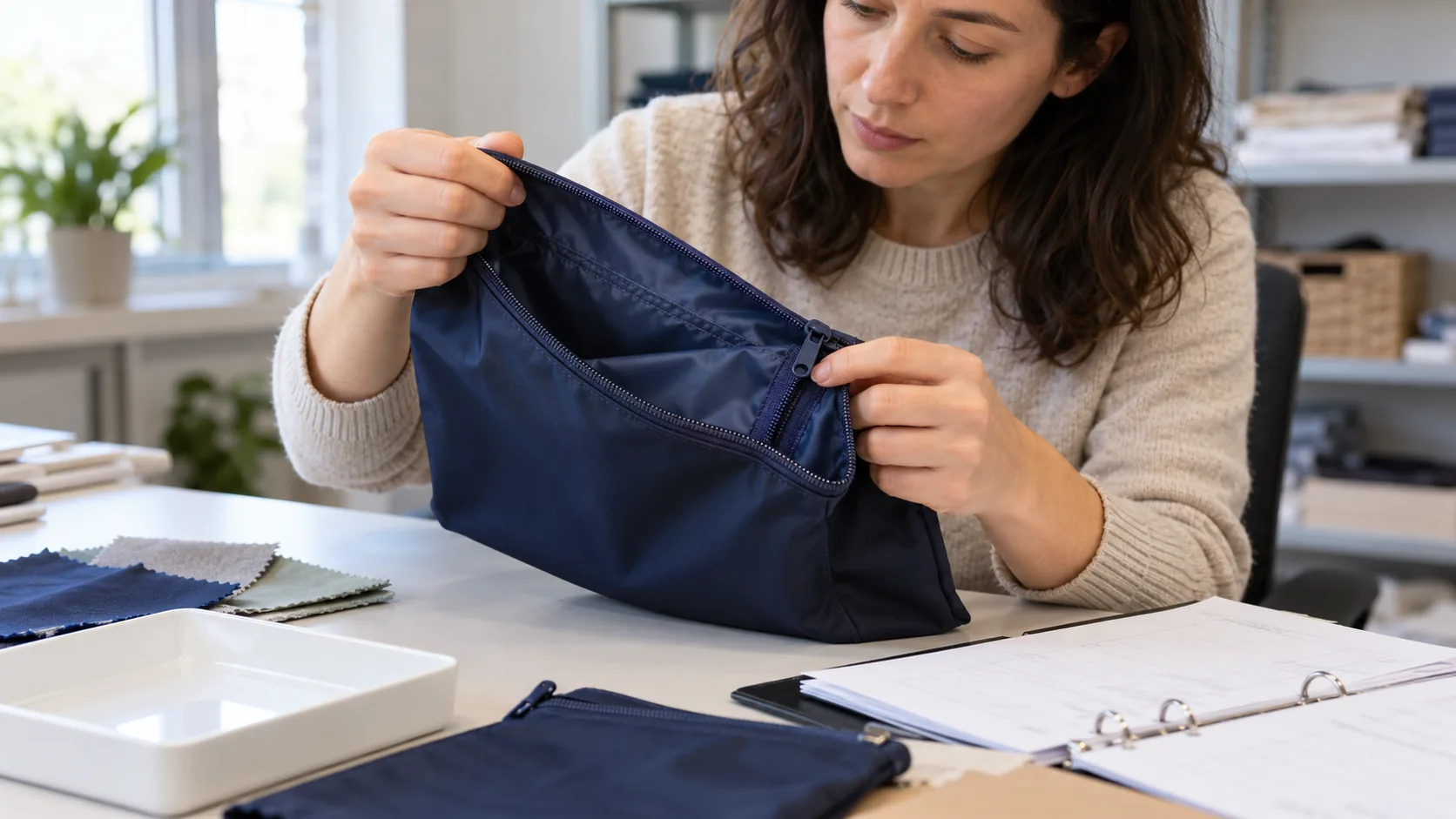
For each claim, identify the object tested, method, conditions, result, and acceptance rule. A material report, care instruction, and market-specific claim review serve different purposes.
| Claim | Question for the supplier or review file |
|---|---|
| Waterproof | Is the claim about a material or the finished item? What exposure, closed state, orientation, duration, and result support it? |
| Leakproof | What finished-item containment check used the intended contents or defined liquid, in which orientations, for how long, and with which endpoint? |
| Odor-proof or odor-containing | What applicable method, contents, time, judging procedure, and acceptance rule support this exact wording? |
| Washable | What care method is documented for the complete product, and which relevant properties were checked afterward? |
| Antimicrobial | What is treated, what protection is claimed, and what evidence and US regulatory review apply to that claim? |
Do not infer an odor result from a water result. If the offered odor evidence does not answer the intended use, record that gap before approving the wording. This guide does not establish the absence of every possible bag-level odor method.
Antimicrobial language needs claim-specific review. EPA’s treated-products guidance distinguishes qualifying treatments that protect the article itself from public-health claims. A treated-article exemption may apply under specified conditions; it is not a general permission to claim that a wet bag protects users from germs. Conversely, not every statement about a qualifying treated article has the same registration outcome.
Keep test reports, care instructions, and claim or labeling review distinct in the project file. Ask for evidence applicable to the actual material, construction, version, and market. This article does not decide the legal status of a specific product.
What Should Buyers Specify and Approve?
A useful brief states the contents and exposure before selecting the material. The sample review then checks that documented configuration rather than relying on the wet-bag name.
Wet-bag RFQ checklist
| Field | What to define |
|---|---|
| Contents | Item list, sizes, amount, packed arrangement, and damp, dripping, or other moisture state |
| Use conditions | Expected hold time, carrying and storage orientations, and closing procedure |
| Fit | Finished external dimensions, clear opening, usable interior, measurement state, and agreed tolerances |
| Compartments | Single or double space, liner layout, removal or attachment arrangement, and intended wet/dry separation |
| Materials | Shell, barrier, and liner composition and construction; relevant thickness or mass; finish and color reference |
| Seams and closure | Locations, assembly method, component identity, and treatment of corners, openings, and attachments |
| Care | Product-specific cleaning and drying instructions, relevant conditioning, and properties to recheck |
| Claims | Exact proposed wording, target market, evidence object, method, and review responsibility |
| Acceptance and records | Sample identity and revision, procedure, endpoint, acceptance criteria, unresolved items, and reference-retention plan |
Keep composition, finish, color, dimensions, and performance in separate controlled fields. Link drawings to the material or component record instead of maintaining conflicting copies of the same value.
Dimensions need a measurement point, state, and method. An appearance reference can show finish or shape, but it does not replace written tolerances or material identity. Define which fields are measured and which are judged against an identified sample.
The completed brief can frame a sample request to a custom bag manufacturer. It states the intended product and the evidence needed without implying that ZWbags already has a particular wet-bag test result.
Finished-sample review sequence
- Confirm the sample ID, revision, materials, dimensions, layers, seams, and closure against the brief. Record discrepancies before testing.
- Load the agreed contents in the defined moisture state and arrangement. Record their amount and any relevant conditioning.
- Close the sample as specified and evaluate the intended carrying and storage positions for the agreed time. A project-specific check needs an explicit endpoint and acceptance rule.
- Inspect the exterior, interfaces, and adjacent dry space for transfer. If witness material is used, record its identity, placement, starting condition, and judging method.
- Record seam or closure movement under any handling included in the procedure. Do not add uncontrolled squeezing and then treat it as the agreed exposure.
- Follow the documented care method and repeat the relevant checks if the approved claim includes that post-care condition. Include color transfer or appearance where the brief requires it.
- Review any odor or antimicrobial statement against its own evidence and approval requirements rather than inferring it from the containment check.
- Identify and retain the approved reference and records according to the project’s retention plan. A reference sample is a comparison tool, not a guarantee for every later unit.
If moisture appears outside, record the location, amount or pattern, load, closing state, orientation, timing, and repeatability. Transfer from wet hands, residual moisture, material penetration, and an interface leak are possibilities to investigate; a wet spot alone does not establish which one occurred.
Locate and reproduce the observation before changing the seam, closure, or barrier. A controlled follow-up can vary one relevant condition at a time. Keep the earlier sample and result identifiable, then evaluate the affected checks on the revised configuration.
Frequently Asked Questions
Is a wet bag the same as a dry bag?
The names describe different primary purposes: separating wet contents versus protecting dry contents from outside water. Constructions and uses can overlap. Check the required exposure direction and the product’s documented limits instead of treating either name as a rating.
Are wet bags waterproof or odor-proof?
Not from the name alone. Material water resistance, finished-item leakage, and odor containment are different claims. Ask which object, conditions, method, and result support each one.
Can the same wet bag be used for swim and gym clothing?
It may be suitable if the actual contents, moisture state, size, storage position, hold time, and care requirements fall within its documented use. Do not assume that one use always involves more water or a longer hold than the other.
How should a wet bag be washed and dried?
Follow the instructions for the complete product. A liner or fabric name does not establish machine-washing or drying compatibility for the pouch, seams, closure, and decorations. Reusable-hygiene and diaper applications need their own applicable care and claim review; this guide does not supply sanitation instructions.
What should I do if a wet bag leaks?
Move moisture-sensitive belongings away from the observed transfer and follow the product’s care instructions. Record where and when moisture appeared, how the pouch was closed, and what it held. For a product review, investigate the actual cause before specifying a different material or seam; do not assume every wet spot has the same cause.