
A beach bag carries the things needed for a beach or pool visit: towels, swimwear, sunscreen, bottles, footwear, and small personal items. The name describes the use, not one material or shape. An open canvas tote, mesh carryall, molded EVA tote, or beach backpack can all serve that role.
The useful comparison starts with what has to fit, how it will be carried, and which items need to stay separate. A bag that sheds loose sand through mesh is making a different design choice from a closed tote intended to limit exposure.
What Is a Beach Bag?
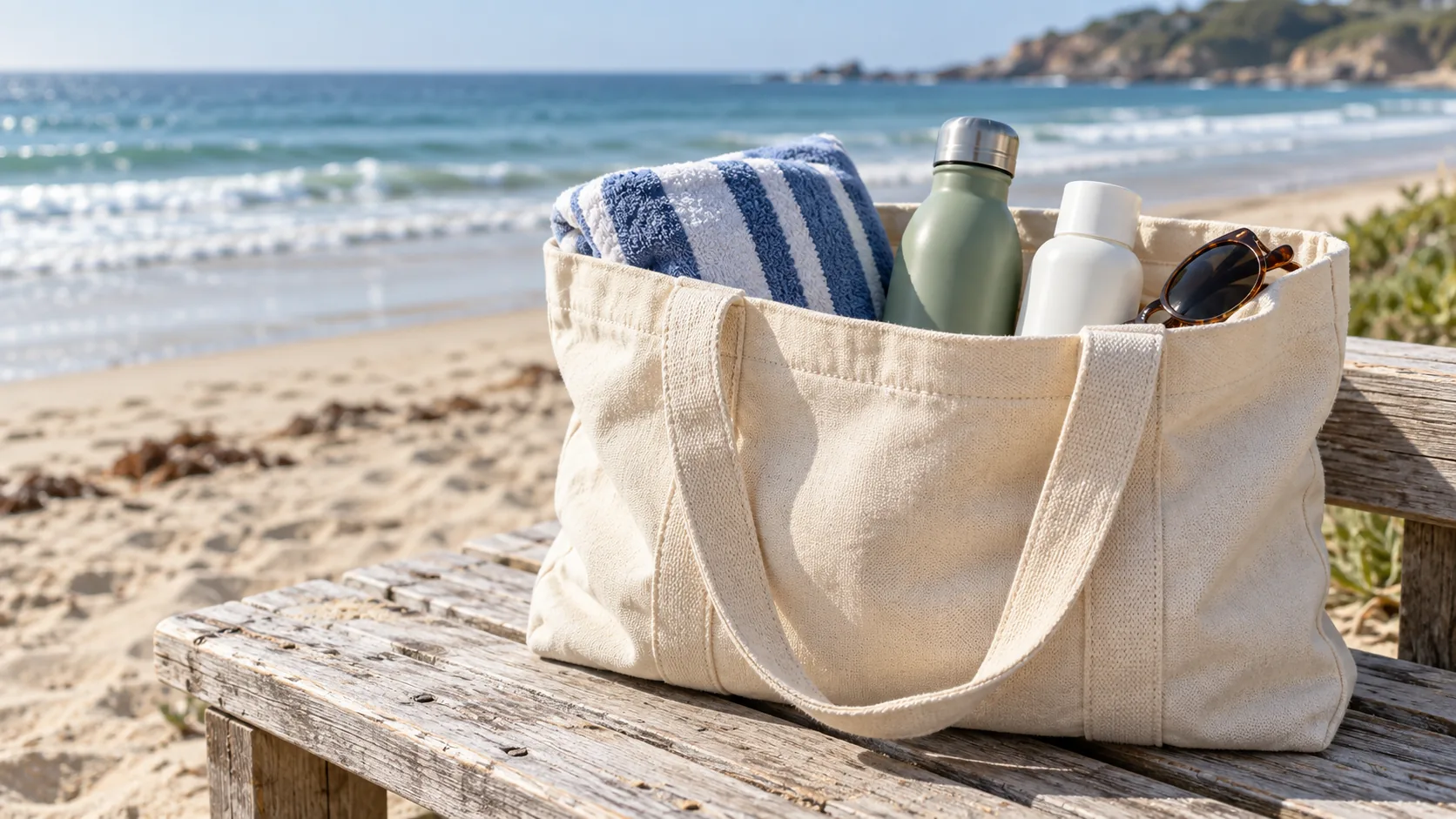
A beach bag is a carryall used to move beach belongings between home, transport, changing areas, and the shore. It may have one large compartment, several pockets, or removable organizers. Handles, shoulder straps, and backpack straps offer different ways to carry the same general load.
There is no single construction that defines the category. Some beach totes keep the opening wide for bulky towels; others use a zipper to contain smaller items. Mesh bags expose their contents through an open structure. Molded totes use a shaped body instead of a sewn fabric shell. Insulated bags add another layer of construction, but insulation alone does not establish a food-storage temperature or duration.
A beach bag also differs from a dry bag. Beach use does not, by itself, establish that the contents will stay dry during rain, splashing, or immersion. Check the finished product’s intended exposure and evidence rather than treating the category name as a protection rating.
Which Beach Bag Formats Serve Different Loads?
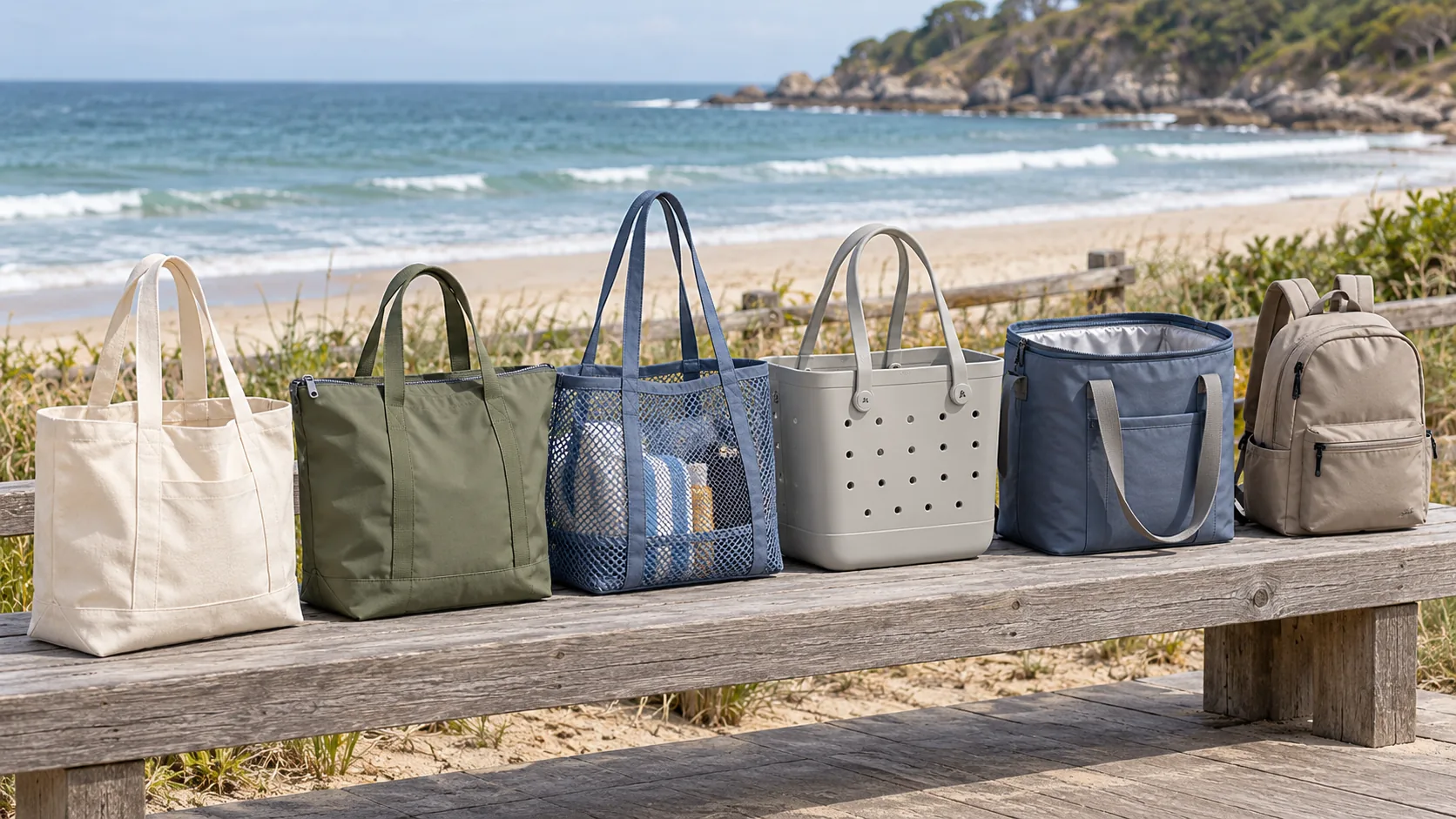
The format changes how a load is accessed, contained, and carried. Choose it around a typical trip rather than an empty product photograph.
| Format | Useful starting point | What to examine in the actual bag |
|---|---|---|
| Open fabric tote | Towels and belongings that need frequent access | Opening width, handle clearance, pocket placement, and whether a loaded bag keeps its intended shape |
| Zip-top tote | Loose items that need a closable main compartment | Closure path, usable opening, lining, and access with the planned load inside |
| Mesh bag | Carrying gear where an open structure and release of loose particles are wanted | Opening size, retained items, bound edges, snag points, and exposure of contents |
| Molded EVA tote | A shaped carryall with a wipeable body surface | Body grade and finish, base geometry, handle attachments, holes, and accessory fit |
| Insulated fabric tote | A carryall with insulated construction | Inner dimensions, liner seams, closure, cleaning instructions, and any separately supported temperature claim |
| Beach backpack | A load intended to be carried on two shoulder straps | Loaded fit, strap adjustment, access, and separation between damp gear and other belongings |
These formats can overlap. A mesh tote may contain a removable pouch, while a fabric tote may have a stiffened base. “Backpack” does not necessarily mean smaller than “tote,” and an insulated tote is not automatically a substitute for a tested cooler.
For a closer look at the molded-tote category, our Bogg Bag explanation covers a narrower format within the wider beach-bag category. Brand terms should not be used as the generic name for every beach bag.
Which Materials and Constructions Are Common?
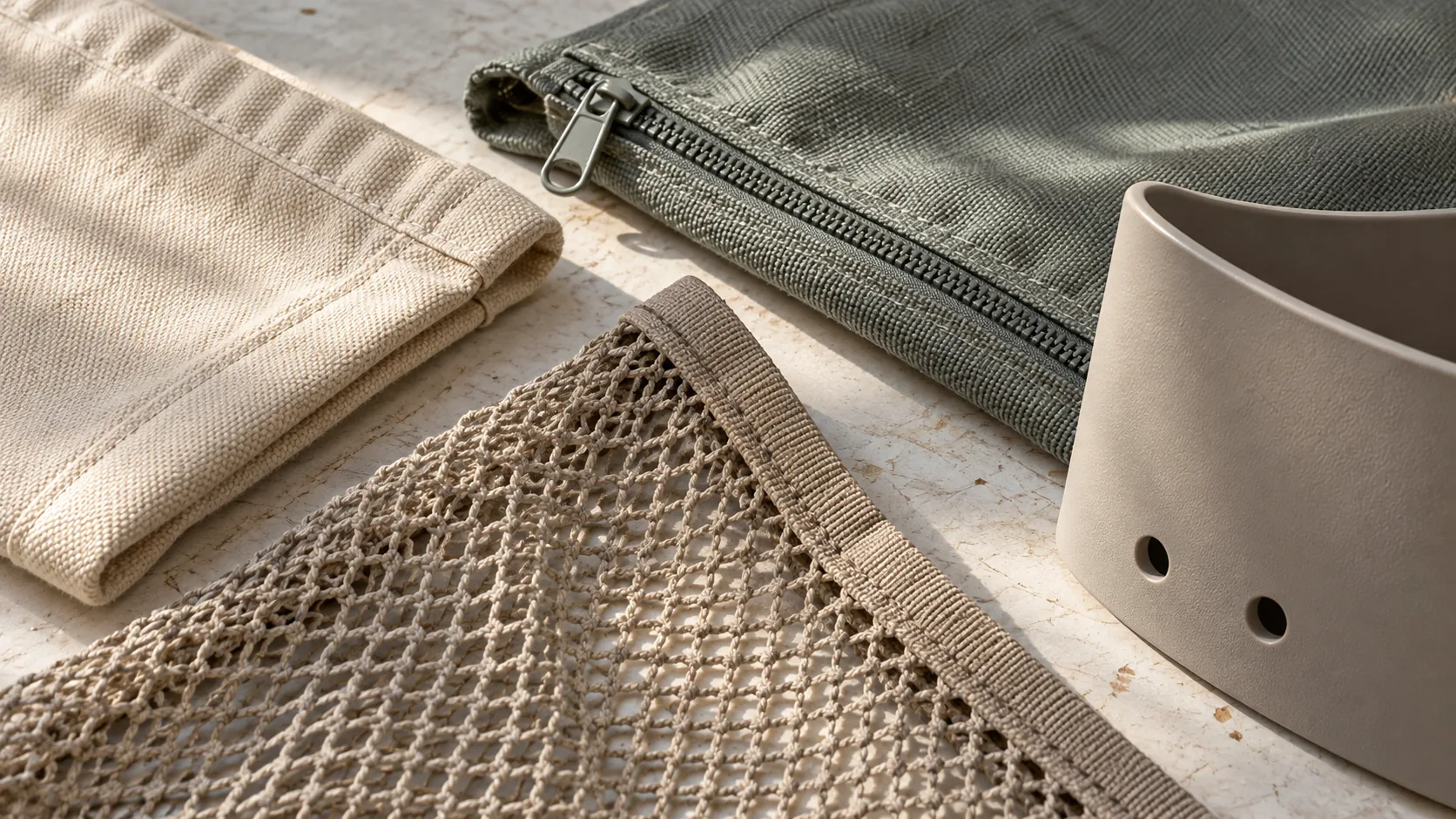
Material names help describe the shell, but the layers, finish, and assembly still matter. Nylon and polyester identify fibers; mesh describes an open structure; EVA identifies a polymer family. Those labels do not answer the same question.
| Material or construction | Details worth specifying | Do not infer from the name alone |
|---|---|---|
| Cotton canvas | Fabric weight, weave, finish, lining, and base reinforcement | That the bag stands upright, repels water, or dries within a particular time |
| Woven nylon or polyester | Fabric construction, coating or laminate, lining, seams, and trim | That untreated fabric makes water bead or that the completed bag is waterproof |
| Mesh | Woven, knitted, or other structure; yarn, openings, finish, and edge treatment | A measured airflow rate, stretch behavior, or complete sand release |
| Molded EVA | Grade, body construction, wall geometry, surface finish, and attachments | That every tote is one piece, has the same rigidity, or tolerates the same cleaning process |
| Neoprene-based laminate | Core, facing fabrics, thickness, bonding, and care instructions | That every exposed surface resists wetting or that seams keep water out |
| Woven decorative material | Actual fiber or strip material, finish, lining, and handle assembly | That a similar appearance means the same response to damp storage or washing |
Our canvas bag material guide expands the fabric specifications; the neoprene bag guide explains why the facing and layered construction deserve attention alongside the core material.
Keep water-repellency evidence at its stated scope. AATCC TM22’s published summary describes a fabric test for resistance to surface wetting. It does not establish protection through a bag’s opening, seams, or attachments. A shell swatch and an assembled beach tote are different test objects.
How Do Closure, Drainage, and Wet-Item Separation Change the Design?
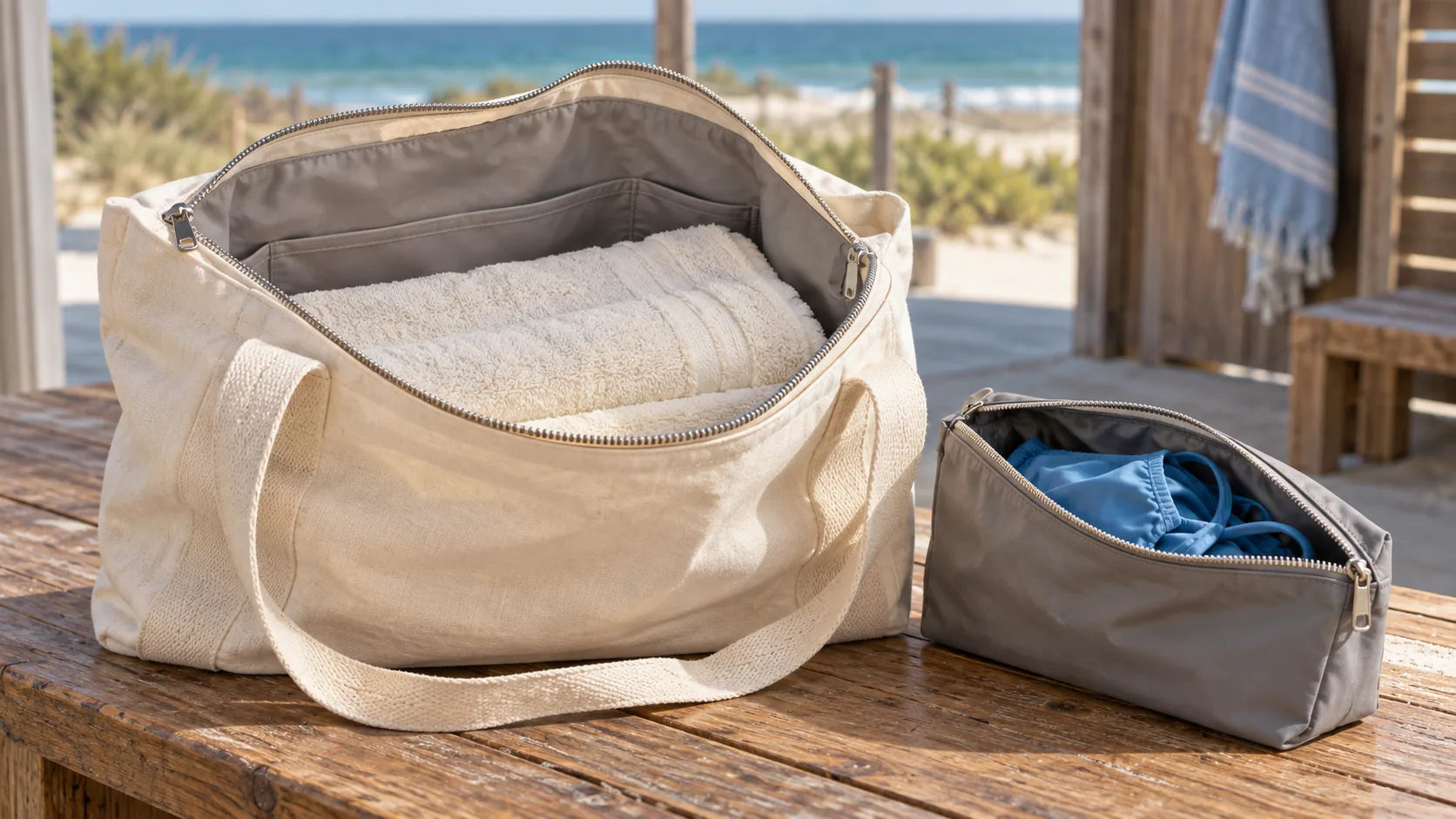
A closure contains belongings and changes the opening; it is not automatically a waterproof seal. The zipper model and its installation matter. For example, YKK’s AquaGuard product guidance explicitly distinguishes that water-resistant zipper from a completely waterproof one. That is a component-specific example, not a rating for every beach bag using a coated zipper.
Drainage holes and mesh openings provide routes through the body. Consider both directions: a route that lets water leave can also admit water under some exposure conditions. The size and location of openings affect which small items stay contained. A zip pouch can keep loose accessories together without making the whole carryall sealed.
Wet-item separation needs its own construction. A removable pouch or a dedicated lined compartment can keep damp swimwear away from towels, subject to the pouch’s material, seams, and closure. A canvas tote can use such a pouch; a molded open tote does not separate wet and dry belongings merely because its body is shaped plastic.
Inspect the intended arrangement with the bag packed. Does the wet pouch consume the main opening? Can it be removed and cleaned according to its instructions? Does it press against the valuables pocket? Those checks are more informative than counting compartments in a listing.
How Should Size and Capacity Be Chosen From the Actual Load?
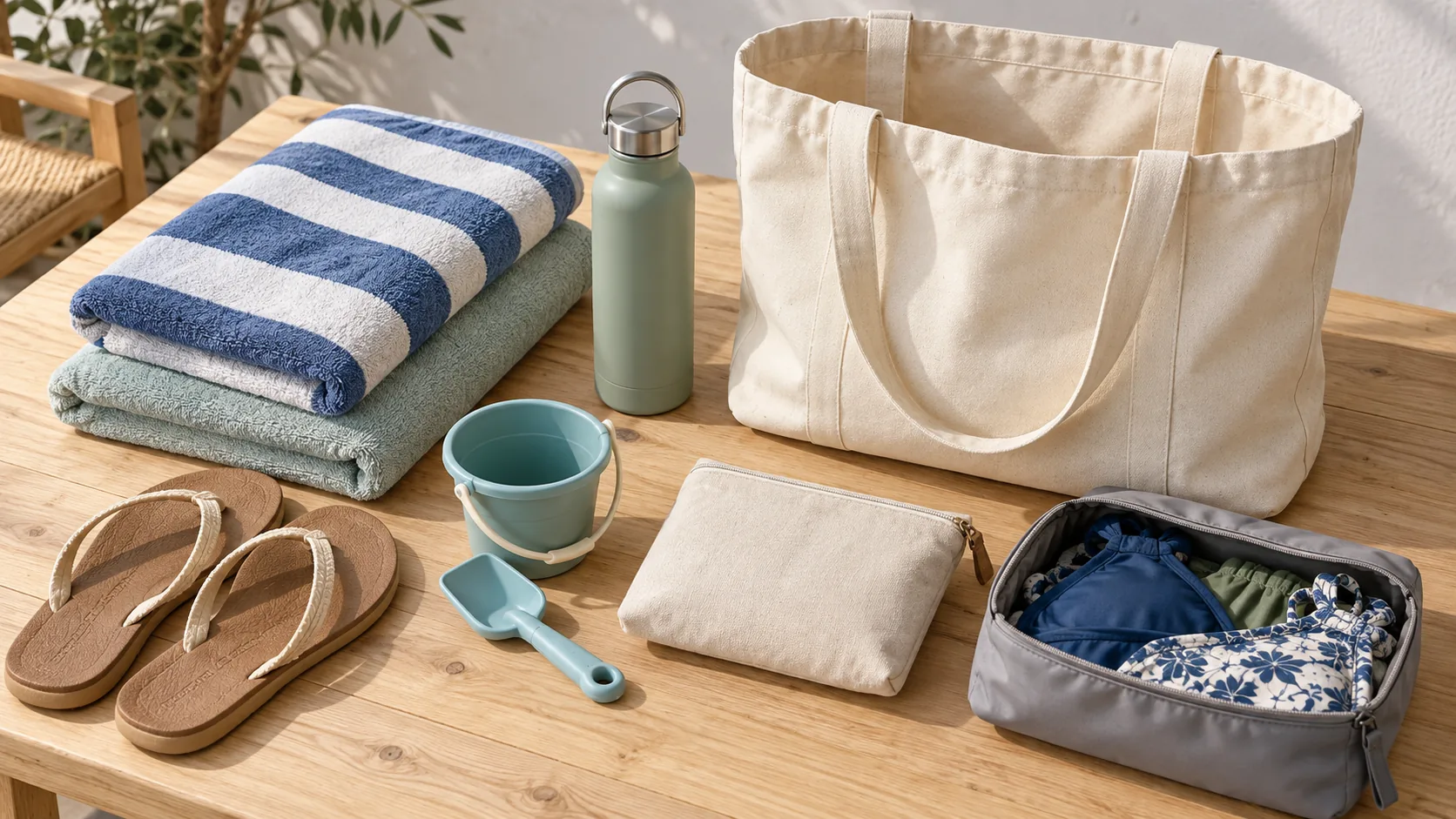
Start with the contents of a typical trip. Fold or roll towels as they will actually be packed, include the planned wet-item pouch, and measure rigid items that must pass through the opening. Then check the finished sample, not just the outline dimensions.
| Load group | Size or layout question |
|---|---|
| Towels and spare clothing | Does the usable main compartment accept their packed shape without blocking the closure? |
| Bottles and sunscreen | Can they be placed and retrieved without relying on the towel stack to hold every item upright? |
| Footwear and toys | Is their intended space separate from items that should remain clean? |
| Wet swimwear | Is space reserved for the actual pouch or compartment, including its filled shape? |
| Valuables and small accessories | Is a reachable closable location available without unpacking the whole bag? |
Compare finished width, height, base depth, and opening dimensions using the same measurement method. Pockets, tapered walls, lining, insulation, and closure clearance can reduce the space available to a specific item. Two bags with similar external measurements may pack differently.
If a supplier lists liters, ask how that figure was determined and which spaces it includes. Do not substitute a rectangular width × height × depth estimate for a measured usable capacity in an irregular soft bag. Likewise, a size label such as “large” needs dimensions and a packing example to become useful.
For sourcing, keep the sample’s packed-item list beside its measurements. A change to the lining, base, wet pouch, or closure can change fit even when the nominal outer size stays the same.
What Should Brands Verify in a Beach Bag Sample?
Match each claim to the object and exposure
Translate a proposed claim into a checkable statement before asking for a report. “Water-resistant,” “sand-proof,” “quick-drying,” and “easy-clean” need an object, conditions, and an agreed outcome. A photograph of water beading does not answer whether contents stay dry in a closed bag during a defined exposure.
For a water-protection claim, name the exposure: surface wetting, splashes, rain, or immersion. Then specify the relevant direction, duration, bag orientation, closure state, contents, and what will be inspected. These are planning questions, not four universal protection grades. An open beach tote does not become an immersion-protection product through a favorable fabric result.
Map the routes relevant to the construction: needle holes, panel joins, zipper ends, opening edges, drainage holes, and accessory attachments. Inspecting these paths helps choose the assessment; it does not establish that one path is always the first to fail.
| Proposed claim | Evidence question |
|---|---|
| Water protection | Was the fabric, component, compartment, or complete bag assessed under the stated exposure? |
| Sand release or exclusion | What particle conditions, locations, closures, and retained contents were used? |
| Quick drying | What was wetted, how was excess water removed, and what drying conditions and endpoint were used? |
| Easy cleaning | Which soil, cleaning method, surfaces, and appearance changes were assessed? |
| Carrying durability | What load distribution, attachments, method, repetitions, and failure criteria were relevant? |
SATRA’s luggage-method catalogue separates static handle loading, snatch loading, repeated lifting, and fittings attachment assessments. That distinction shows why one generic “strength tested” label is incomplete. Select an applicable method for the actual beach-bag construction; do not imply every luggage method belongs in every tote project or convert cycles into years of service.
Review the finished sample and retain a reference
Check both the empty geometry and the intended packed configuration. Record the materials, finish, lining, closure, handles, reinforcement, pockets, and removable parts that define the sample. For the chosen assessment, retain the relevant load, distribution, fixture or support, orientation, duration or cycles, and inspection outcome. Fields that do not apply should not be filled with invented values.
Separate appearance approval from measured acceptance criteria. A photo can show a pocket location, but it does not establish a numerical tolerance or attachment strength. An approved sample is a comparison reference for later work, not a guarantee that every future unit has the same measured performance.
If the selected format is a molded EVA tote, our EVA beach bag development page is the relevant next route. Keep the body geometry, accessories, intended load, and evidence questions in the project brief rather than carrying assumptions from a different fabric-bag design.
Frequently Asked Questions
Is a beach bag the same as a tote bag?
A beach bag describes a use; a tote describes a carrying format. A tote may serve as a beach bag, but mesh carryalls and backpacks can serve that use too. Choose around the load and access requirements.
Are beach bags waterproof?
Not by category. Openings, seams, holes, closures, and attachments all affect the finished design. Ask what object was assessed and under which exposure before relying on a water-protection claim.
Does a mesh beach bag keep sand out?
Mesh has openings rather than a sealed wall. Whether particular particles leave or enter depends on the mesh, openings, load, and use conditions. A mesh description alone does not prove complete sand release or exclusion.
What size beach bag should I choose?
Pack the towels, bottles, footwear, and pouches used on a typical trip, then compare their shape with the sample’s usable compartment and opening. Outer dimensions and a “large” label are not enough to confirm fit.
Can a fabric beach tote carry wet swimwear?
It can include a separate pouch or wet-item compartment. Check that component’s construction, closure, filled space, and cleaning instructions. The fabric tote’s shell material alone does not answer whether damp items remain separated.