
A tote bag is a roomy carry bag with two parallel handles and a broad top opening. The classic version is open and lightly structured, but current totes may add a zipper, snap, lining, pockets, base panel, padding, or stiffener.
The name identifies a bag format. It does not set the dimensions, capacity, safe load, material, closure, or level of structure. Those details have to be specified separately when a brand moves from a product idea to a sample.
What Is a Tote Bag?
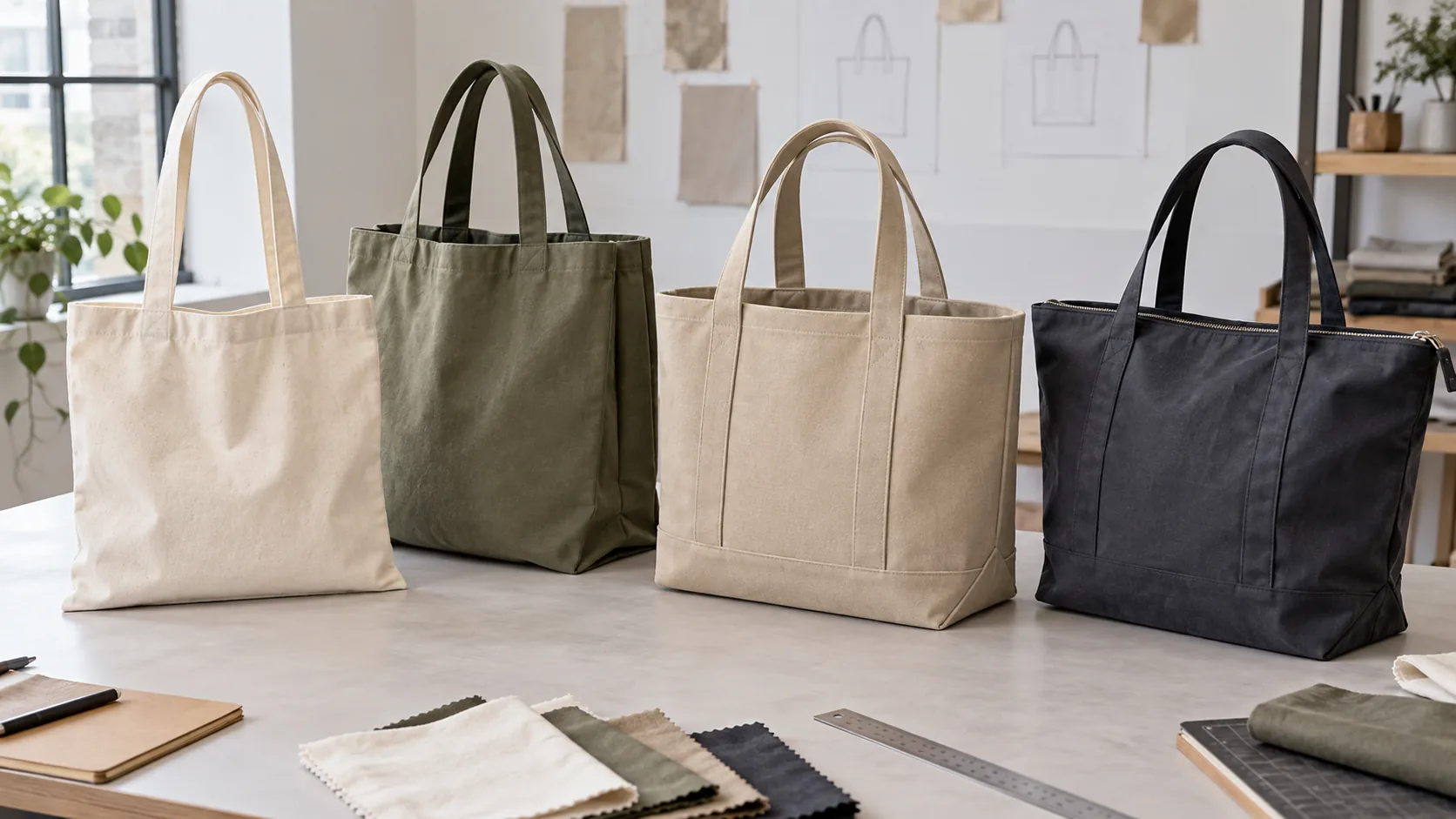
The Cambridge Dictionary definition describes a tote as a large open bag with two handles, often made from strong cloth. That captures the familiar form without turning every common feature into a rule.
Two parallel handles and broad top access remain the clearest visual cues. An open top is traditional, while zip-top and snap-top products still sit comfortably inside the tote family. Cloth is common, but a tote can also use leather, coated textile, nonwoven fabric, jute, or a molded polymer body.
Retail names overlap. A tote may also be sold as a shopper, work bag, beach bag, promotional bag, or carryall. The useful definition comes from the body, opening, handles, and intended contents rather than the merchandising label.
Which Features Define a Tote Bag?
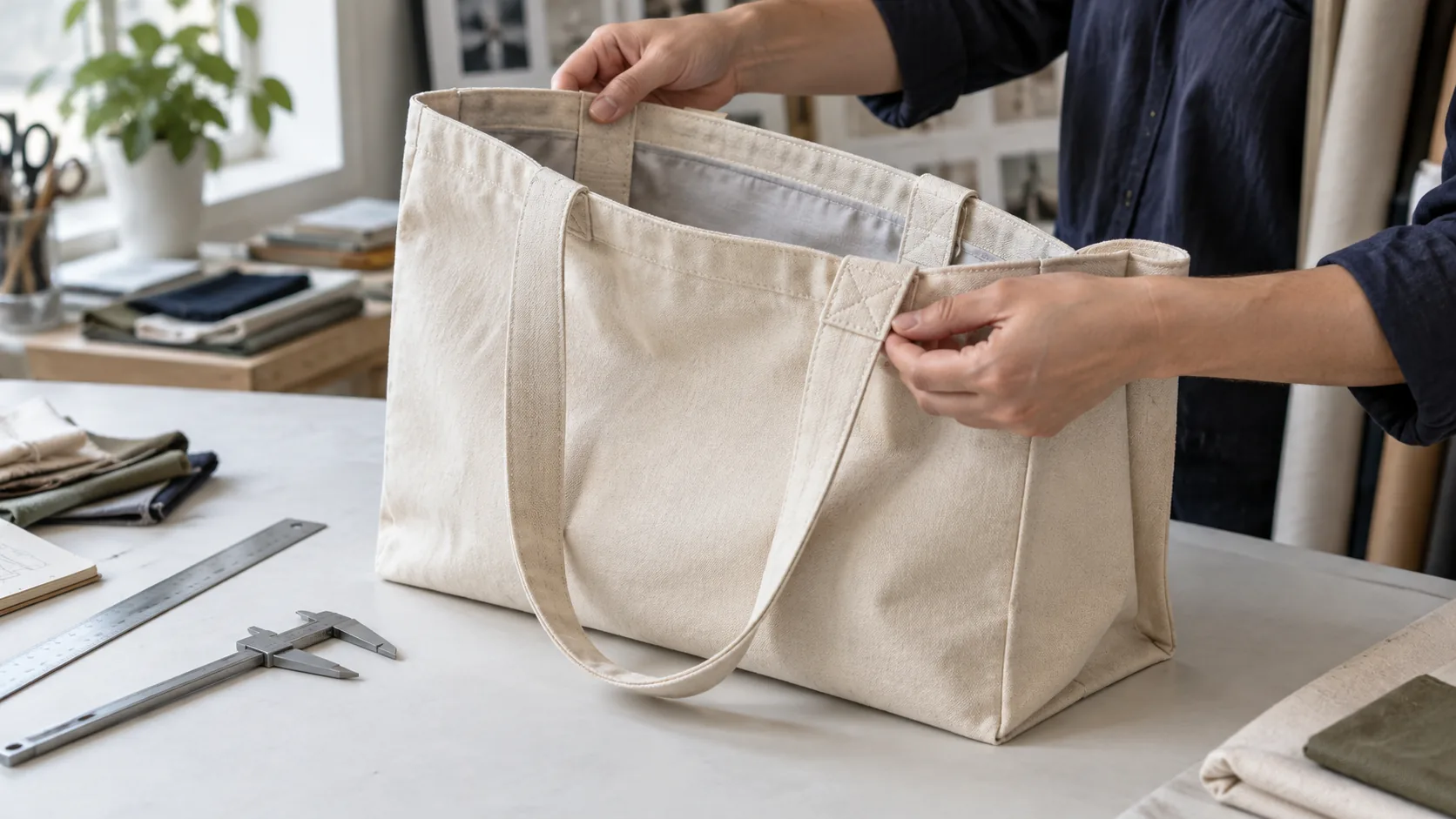
A tote design starts with a main body, two handles, and a broad opening. Five fields determine how that basic form behaves.
- Handle arrangement and drop: Parallel handles attach on opposite sides of the opening. Handle drop affects whether the bag is carried by hand, at the elbow, or on the shoulder.
- Opening and closure: Open tops favor direct access. Zippers, snaps, magnets, ties, and recessed closures change access and content retention.
- Gusset and base: A flat body folds nearly flat. Side gussets, a bottom gusset, or a separate base panel create usable depth.
- Structure: Interfacing, foam, stiffeners, lining, piping, and edge construction can change the shape even when the exterior pattern looks similar.
- Handle load path: Strap material, attachment geometry, stitching, reinforcement, and the body fabric work together. A handle specification cannot stand in for the whole assembly.
Words such as “structured,” “roomy,” and “heavy duty” are descriptions until they point to measurable construction fields or relevant evidence. A photograph can show the silhouette, but it cannot confirm the hidden support layers or the strength of the installed handles.
What Are the Main Types of Tote Bags?
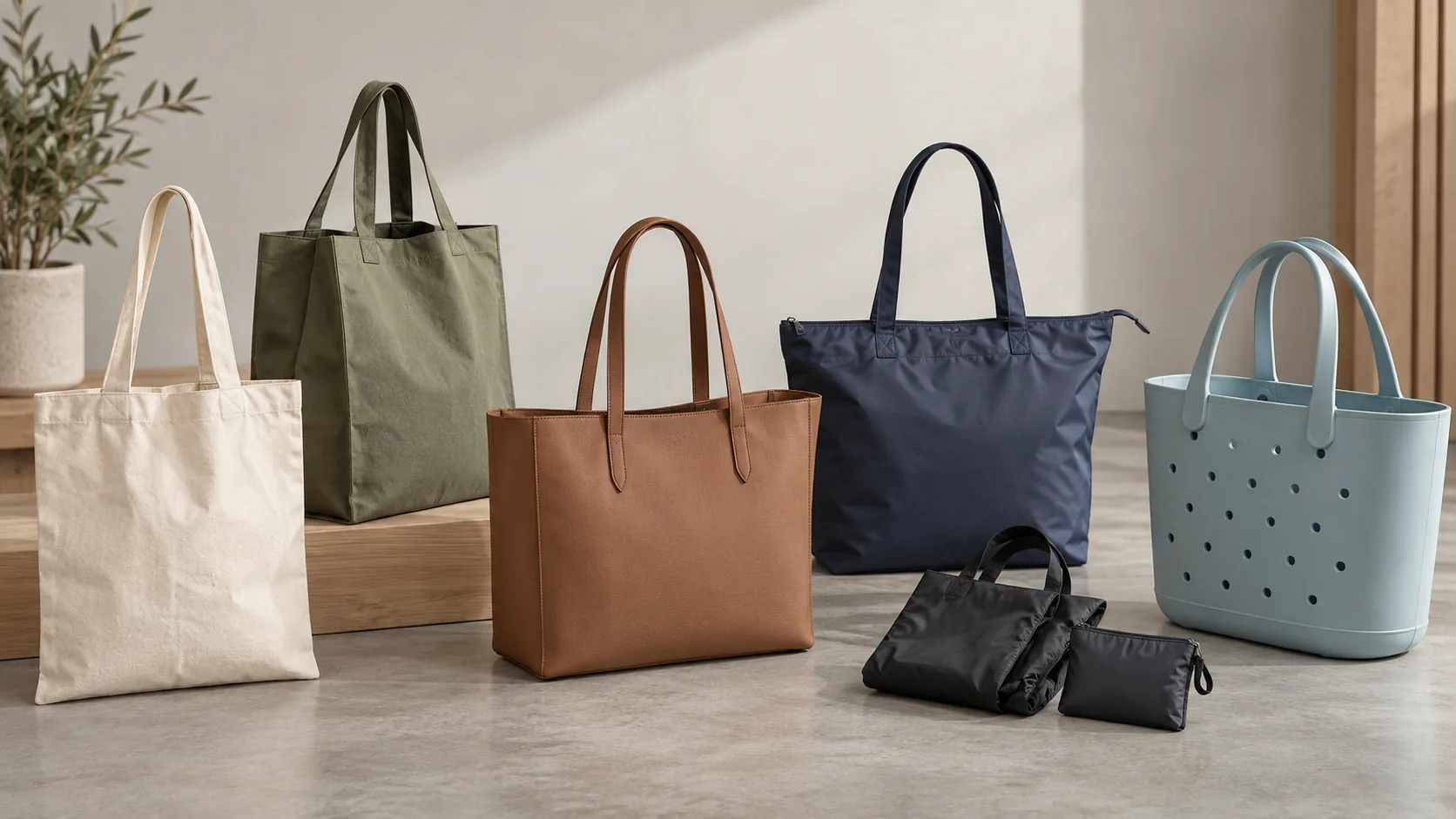
Tote types are easiest to compare by body construction and opening. Use-case names can then be added without implying a fixed build.
| Tote type | Body and opening | Structure | Typical design questions |
|---|---|---|---|
| Flat tote | Two panels or one folded body, little or no gusset, usually open | Minimal | Print area, fold size, handle attachment, intended load |
| Gusseted shopper | Side, bottom, or full gusset with broad opening | Soft to semi-structured | Base size, loaded shape, opening clearance, reinforcement |
| Structured tote | Defined base and side profile, often lined | Semi-rigid to firm | Hidden support layers, empty weight, usable interior, edge finish |
| Zip-top tote | Full or recessed zipper at the opening | Any level | Zipper length, end construction, opening width, access when loaded |
| Packable tote | Lightweight body designed to fold or stow | Minimal | Fold method, crease behavior, closure, decoration after repeated folding |
| Beach or molded tote | Wide opening with a formed or easy-clean body | Semi-rigid or molded | Drainage, cleaning, handle attachment, storage and nesting state |
| Convertible tote | Additional shoulder or backpack carry option | Varies | Which carry system is primary, stowage, hardware, and separate load paths |
These categories can overlap. A gusseted shopper may add a zipper, and a structured work tote may also convert to shoulder carry. Record the features that exist instead of forcing the product into one exclusive type.
Which Tote Bag Materials Are Common?
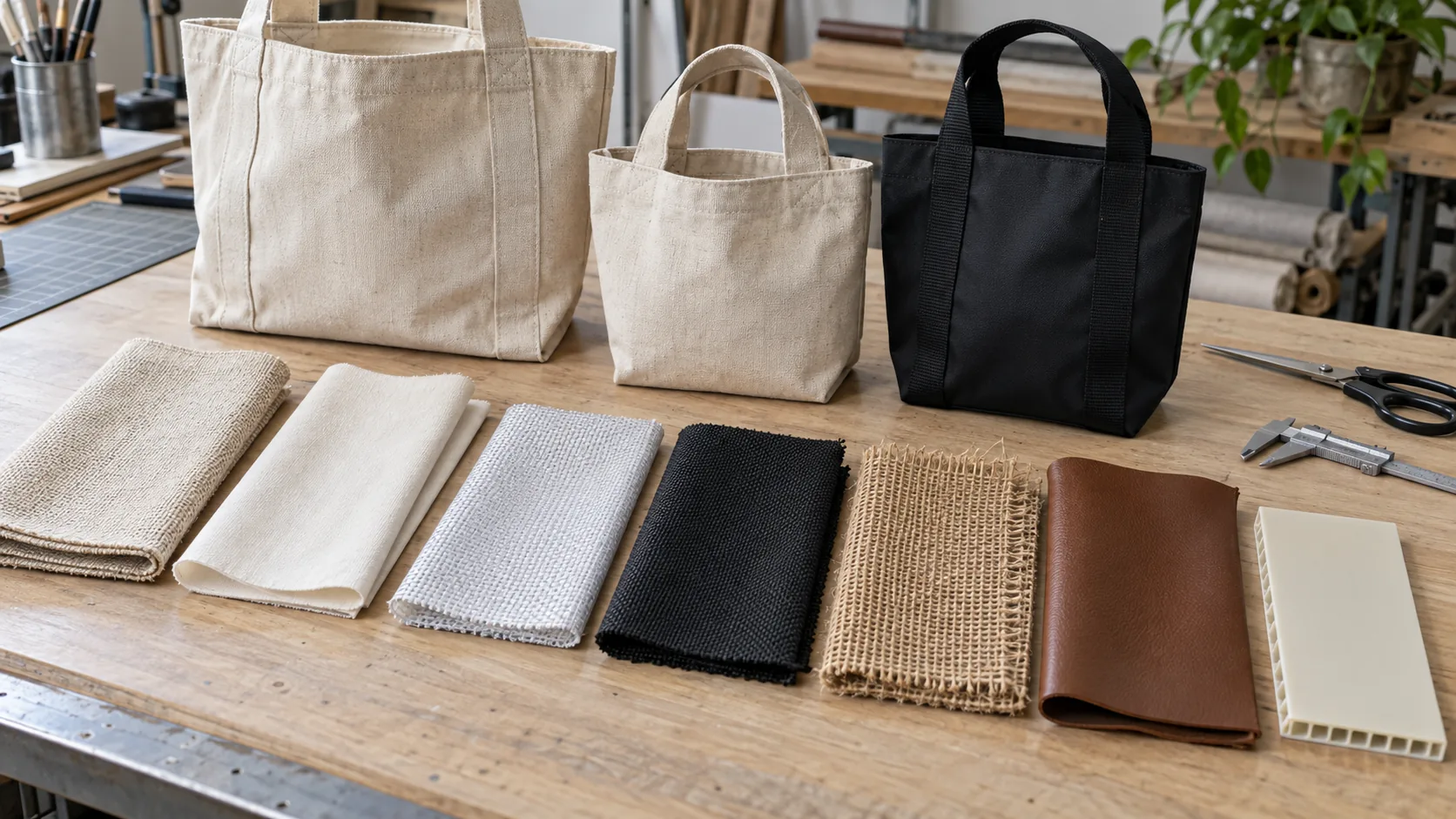
Common tote materials include canvas, cotton sheeting, polyester, nylon, nonwoven polypropylene, jute, PU leather, genuine leather, and molded polymer constructions. The material name alone does not establish fabric weight, strength, colorfastness, care, or finished-bag durability.
- Canvas describes a fabric construction and may use cotton, polyester, or a blend. The canvas bag material guide covers fiber content, fabric weight, weave, finish, and decoration compatibility.
- Cotton sheeting and lighter cotton fabrics suit fold-flat totes and printed programs, but fiber content, fabric mass, finish, color, and care still need to be written into the specification. See the cotton bag material guide for those fields.
- Polyester and nylon textiles may be woven, knitted, coated, or laminated. Denier is only one field; weave, coating, backing, and finish change the supplied material.
- Jute and other coarse natural-fiber fabrics create a visibly textured surface. The weave and surface should be checked with the chosen print, embroidery, or label construction.
- PU leather is a layered material whose backing, surface layer, finish, and construction need separate control. The PU leather material guide explains those boundaries.
- Molded polymer bodies create formed totes that cannot be specified like a sewn textile bag. Wall geometry, rim, base, handle connection, storage state, and usable internal space need their own fields.
Environmental wording requires the same discipline. The US FTC Green Guides summary warns against broad, unqualified claims such as “green” or “eco-friendly” and calls for clear, specific support. A reusable format, natural fiber, or recycled-content input does not prove an overall environmental benefit by itself.
What Are Tote Bags Used For?

Totes are used for shopping, commuting, retail packaging, promotions, events, travel, beach and pool trips, and everyday carry. The same silhouette can serve several uses, but the construction has to match the contents and route.
For shopping, check base depth, opening width, handle clearance, cleaning method, and the heaviest planned contents. A work tote adds questions about device fit, closure, internal organization, base support, and loaded carry. Promotional programs often prioritize flat packing and decoration area, while retail packaging also has to present well at handover. Beach and travel uses bring moisture, sand, repeated packing, closures, and storage state into the brief.
A useful selection note names the largest item, the typical load, the items accessed most often, the carry position, and the exposure conditions. Those five details narrow the format more reliably than a label such as “everyday tote.”
How Should Tote Dimensions and Capacity Be Measured?
External width, external height, opening width, internal floor, usable height, gusset depth, and handle drop answer different questions. A structured or tapered tote may have a wide rim and a smaller base, while thick walls and an internal sleeve reduce usable space.
Each critical dimension should state three things: the measurement points, the bag state, and the allowed deviation. “Width” could mean the widest outside point, opening, base, or internal floor. “Height” could include or exclude handles. The state may be empty and upright, flattened, loaded, or nested.
External length × width × height describes a bounding box rather than usable capacity. Rounded corners, taper, wall thickness, a raised base, and interior components all change the result. A capacity figure becomes comparable only when the object, loading rule, and endpoint are stated.
ASTM F2153 standardizes capacity measurement for backpacks and named related bags such as rucksacks, duffels, and travel packs; the public scope does not list totes. Do not present it as a universal tote-capacity standard. When no applicable protocol has been selected, verified fit cases are more useful than a calculated liter figure.
How Is a Tote Different From a Shopper, Shoulder Bag, or Satchel?
The boundaries are based on emphasis, not a universal retail taxonomy.
| Name | Common emphasis | Where it overlaps with a tote |
|---|---|---|
| Shopper | Broad opening and volume for purchases | Often a flat or gusseted tote with few internal divisions |
| Shoulder bag | Carrying from one longer shoulder strap | A tote may have shoulder-length handles or an added detachable strap |
| Handbag | Broad category for personal carry bags | Structured and fashion totes commonly sit inside handbag ranges |
| Satchel | Traditional shoulder-strap school bag or a structured handbag family | Some modern satchels add two top handles and a defined base |
Compare the body, opening, handle or strap layout, carry position, closure, and intended contents. The satchel meaning guide shows why a neighboring style name also needs construction fields before sampling.
What Determines Tote Bag Durability?
Finished performance comes from the complete load path: handles, attachment stitching, reinforcement, body material, seams, base, closure, and any hardware. A material test for one layer cannot establish the safe load or service life of the assembled tote.
Use the intended contents and carry scenario to choose evidence. A promotional tote carrying literature and a commuter tote carrying a device, bottle, and personal items expose different interfaces. If a load test is used, record the sample, load mass and distribution, carry configuration, duration or cycle conditions, inspection points, endpoint, and result.
The current ISO 13935-2:2026 measures maximum force to seam rupture when force is applied perpendicular to a seam. Its scope and result belong to that seam-test object. It does not by itself prove a finished tote’s working load. Test load, failure load, acceptance line, and any customer-facing load claim should remain separate records.
What Should Brands Specify Before Sampling a Tote?
A quote-ready brief replaces adjectives with controlled fields.
| Field | What to record |
|---|---|
| Product form | Flat, gusseted, structured, molded, zip-top, packable, or convertible features that exist |
| Dimensions | Measurement points, units, bag state, target, and tolerance for each critical field |
| Intended contents | Largest item, typical load, access needs, and fit cases |
| Handles | Material, width, drop, attachment geometry, reinforcement, and installed orientation |
| Opening and closure | Usable opening, closure type, hardware or zipper specification, and end construction |
| Body and hidden layers | Exterior material, lining, interfacing, foam, stiffener, base insert, and layer positions |
| Interior | Pockets, dividers, device sleeve, key loop, and their usable dimensions |
| Decoration | Method, artwork size, placement reference, colors, and approval standard |
| Care and claims | Cleaning instructions and the evidence required for load, recycled content, or other claims |
| Packaging | Folding state, inserts, protective materials, and carton requirements |
Define what each sample stage needs to close. A form sample may settle proportions and opening access. A later sample made with approved materials can confirm color, hand, decoration, interfaces, and fit. The final reference sample still works alongside written dimensions, tolerances, material codes, and test evidence; it does not replace them.
The custom tote bag manufacturing page connects these fields to material selection, sampling, branding, and production planning.
Frequently Asked Questions
Do tote bags have to be open at the top?
No. An open top is the classic form, while zipper, snap, magnetic, tie, and recessed closures are common variations. The closure should be specified because it changes access, opening width, and content retention.
Are tote bags always made of canvas?
No. Totes can use canvas, cotton sheeting, polyester, nylon, nonwoven fabric, jute, leather, PU leather, or molded polymers. Each option still needs its own construction and performance fields.
Is a tote bag the same as a shopper bag?
The terms often overlap. “Shopper” usually emphasizes shopping capacity and simple access, while “tote” describes the wider two-handle format. Compare the gusset, opening, handles, base, closure, and intended contents.
Can a tote bag carry a laptop?
It can when the opening and usable interior fit the device and the design provides the required sleeve, padding, base support, closure, and handle load path. The word “tote” does not guarantee those features.
How much weight can a tote bag hold?
There is no universal figure. A defensible load claim needs evidence for the complete construction and stated conditions, including the sample, load distribution, carry setup, duration or cycles, inspection, and endpoint.
Can a tote bag be washed?
Care depends on the exterior, lining, interfacing, stiffeners, decoration, hardware, colorfastness, and construction. Confirm the intended cleaning method on a production-representative sample before setting the care label.
Turn the Tote Name Into a Buildable Brief
Start with the tote format, then freeze the fields that change use: opening, gusset, base, handles, structure, materials, dimensions, fit, and claims. Approve those fields against a production-representative sample and keep the written targets, tolerances, and evidence with it. That gives the factory a buildable product and gives the buyer a clear basis for review.