
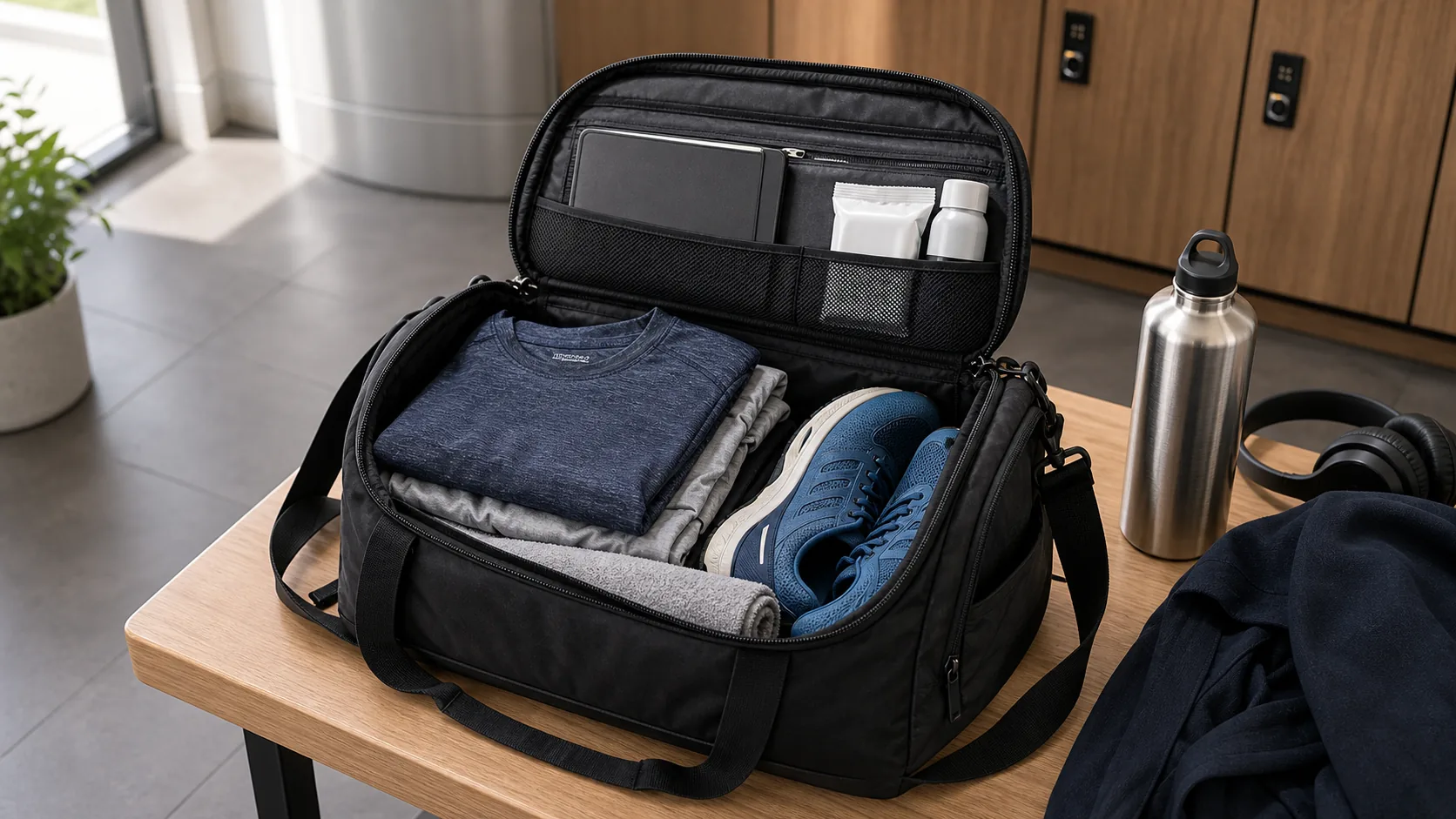
What to pack in gym bag before work starts with five essentials: training clothes, the right shoes, a water bottle, a small hygiene kit, and clean work clothes. Add a towel, lock, headphones, snack, and workout-specific gear only when your routine requires them. The goal is not to carry everything; it is to move from workout to office without forgotten items, damp clothing, leaks, or wrinkled workwear. A well-planned custom gym bag supports this routine with clear clean, wet, shoe, and valuables zones.
How do you decide what to pack in gym bag before work?
Build the list around three questions: what training you will do, whether you will shower, and what you must wear afterward. A runner needs different shoes from a lifter, while a commuter heading to a formal office needs more garment protection than someone working remotely. Start with the universal essentials, then add personal and session-specific items instead of filling the bag with rarely used gear.
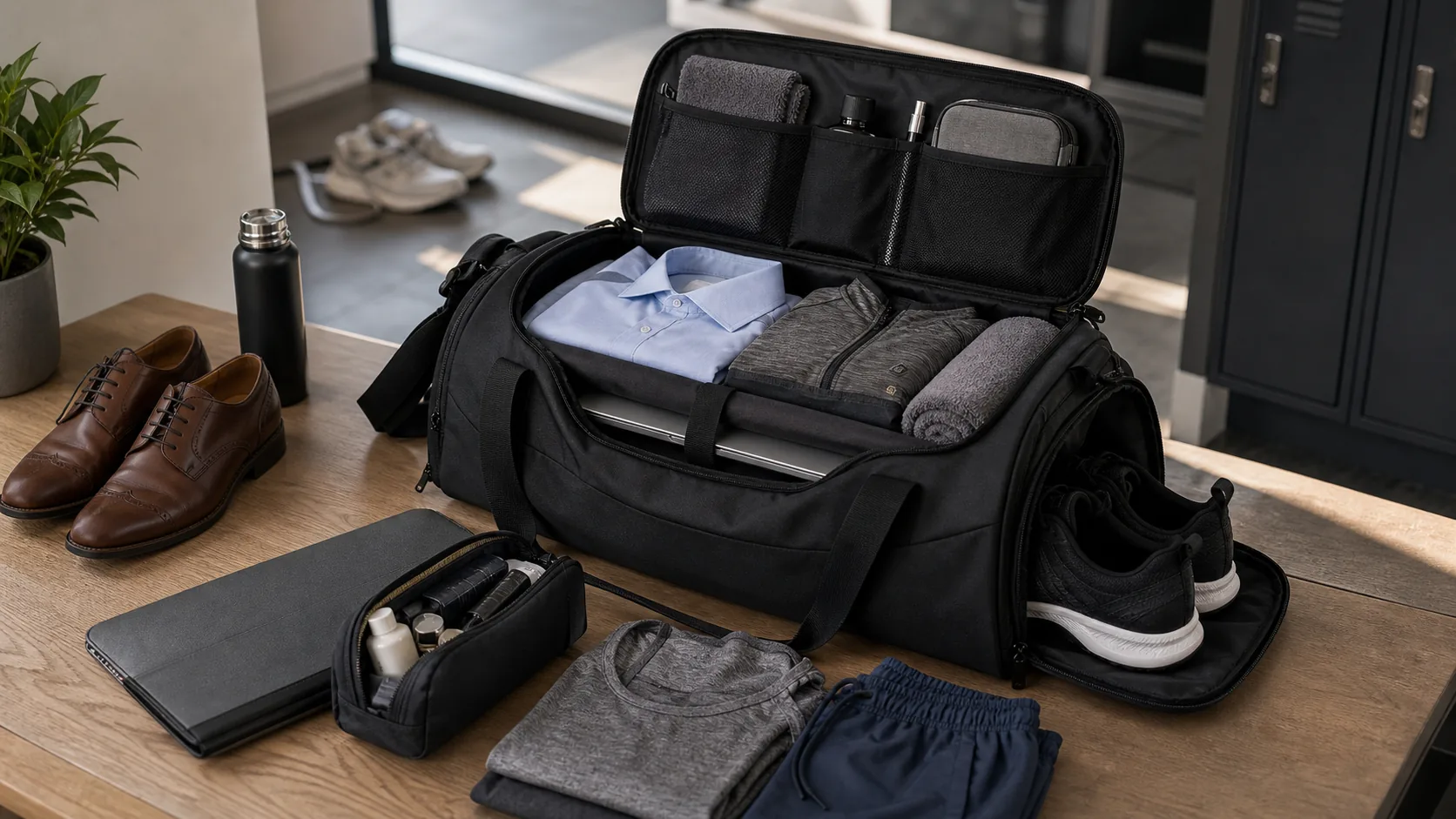
How do you organize work and gym clothes?
Use separate packing zones so clean items never mix with worn gear. Put fresh underwear, socks, and your work outfit in a dry packing cube or garment folder. Roll flexible training clothes, but fold dress shirts and structured garments flat. After training, move sweaty clothes directly into a washable wet bag.
- Training clothes: Moisture-wicking top, shorts or leggings, sports bra when needed, and athletic socks.
- Work clothes: Shirt or blouse, trousers or skirt, clean underwear, belt, and any required uniform pieces.
- Small personal items: Hair ties, period products, spare contact lenses, or other items needed for your normal routine.
- Clean-clothes pouch: A light packing cube that keeps office clothing away from shoes and toiletries.
Why is shoe selection critical for morning routines?
Pack shoes for the actual workout rather than relying on one pair for every activity. Running shoes provide cushioning for repetitive forward movement, while flatter cross-training or lifting shoes offer more stability for strength work. Keep office shoes in a separate shoe bag so their soles do not touch clean clothing.
- Running shoes: Best for treadmill sessions and steady cardio.
- Cross-trainers: A practical choice for mixed classes, circuits, and general gym work.
- Lifting shoes or flat trainers: Useful when stability matters during squats and strength sessions.
- Office shoes: Pack separately or leave a pair at work when possible.
Key Takeaway: Choose footwear by workout type and isolate every used pair from clean clothes.
| Footwear Type | Best Gym Application | Packing Method |
|---|---|---|
| Running Shoes | Treadmill and cardio | Ventilated shoe compartment |
| Cross-Trainers | Classes and mixed training | Separate shoe bag |
| Office Shoes | Work after training | Clean dust bag or office storage |
Once the core clothing and footwear are clear, a repeatable packing routine makes the checklist much easier to follow.
Why optimize what to pack in gym bag before work daily?
A fixed checklist prevents the small mistakes that derail a gym-to-work routine: missing socks, a dead set of earbuds, no towel, or a forgotten access card. Keep the list in your phone and adjust only the workout-specific section. This same routine-based thinking also helps brands planning e-commerce bag projects decide which compartments users will actually need.
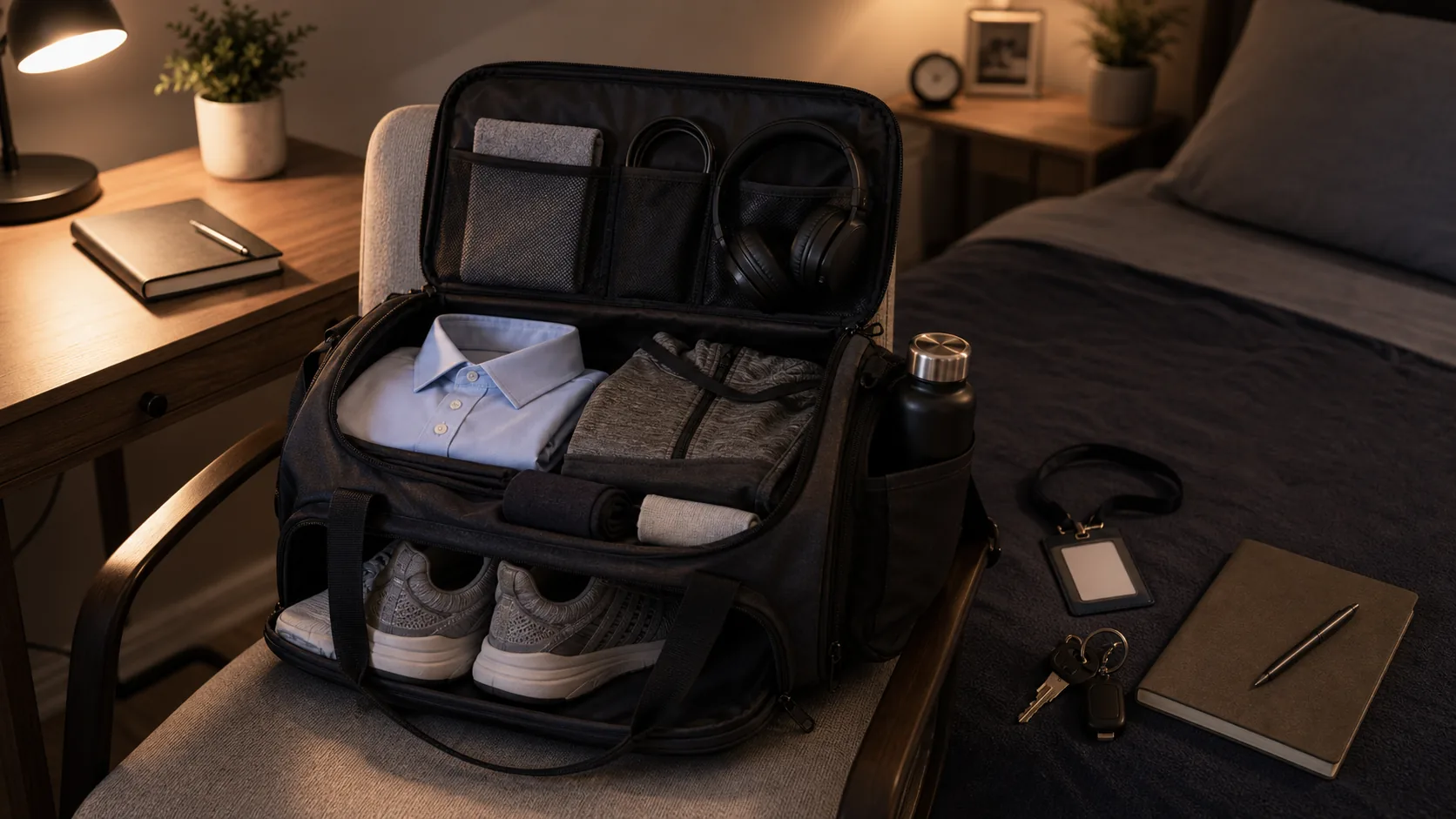
How does packing early prevent mental fatigue?
Pack the night before and stage anything that cannot go in the bag yet, such as refrigerated food or a charging phone, beside your keys. Refill toiletries, charge devices, and check the next day's workout before closing the bag. A two-minute final check in the morning is more reliable than rebuilding the whole kit while rushing out.
- Use a short checklist: Clothes, shoes, water, hygiene, work items, and access essentials.
- Restock immediately: Replace used wipes, toiletries, snacks, and first-aid supplies after each trip.
- Charge in one place: Keep your watch, earbuds, and phone near the packed bag.
- Check the schedule: Add swimming, lifting, yoga, or running equipment only when needed.
Can proper planning improve workout consistency?
Planning removes practical barriers. When clothes are clean, the bottle is ready, and the work outfit is protected, it is easier to follow the session already on your calendar. The most useful system is simple enough to repeat and flexible enough to handle morning, lunch, or evening training.
- Permanent kit: Lock, toiletry pouch, empty shaker, resistance band, and small first-aid pouch.
- Daily kit: Fresh clothing, towel, food, water, and workout shoes.
- Session kit: Belt, wraps, swim gear, yoga strap, or other activity-specific equipment.
Key Takeaway: Keep permanent items in the bag and refresh only clothing, food, and workout-specific gear.
| Preparation Style | What You Do | Main Benefit |
|---|---|---|
| Night-Before Pack | Load daily and session items | Fastest morning departure |
| Permanent Base Kit | Leave small essentials in the bag | Fewer forgotten items |
| Morning Check | Add cold food, water, and devices | Prevents leaks and dead batteries |
With the routine established, hygiene becomes the next priority for a comfortable office transition.
What to pack in gym bag before work for clean hygiene?
Pack a compact hygiene kit based on the facilities you will actually use. A full shower kit may include body wash, face cleanser, deodorant, a quick-dry towel, shower slides, comb, and clean underwear. For a short workout without a shower, body wipes, deodorant, face wash, and a fresh shirt may be enough. A private label gym bag should keep these liquids and damp items away from workwear and electronics.
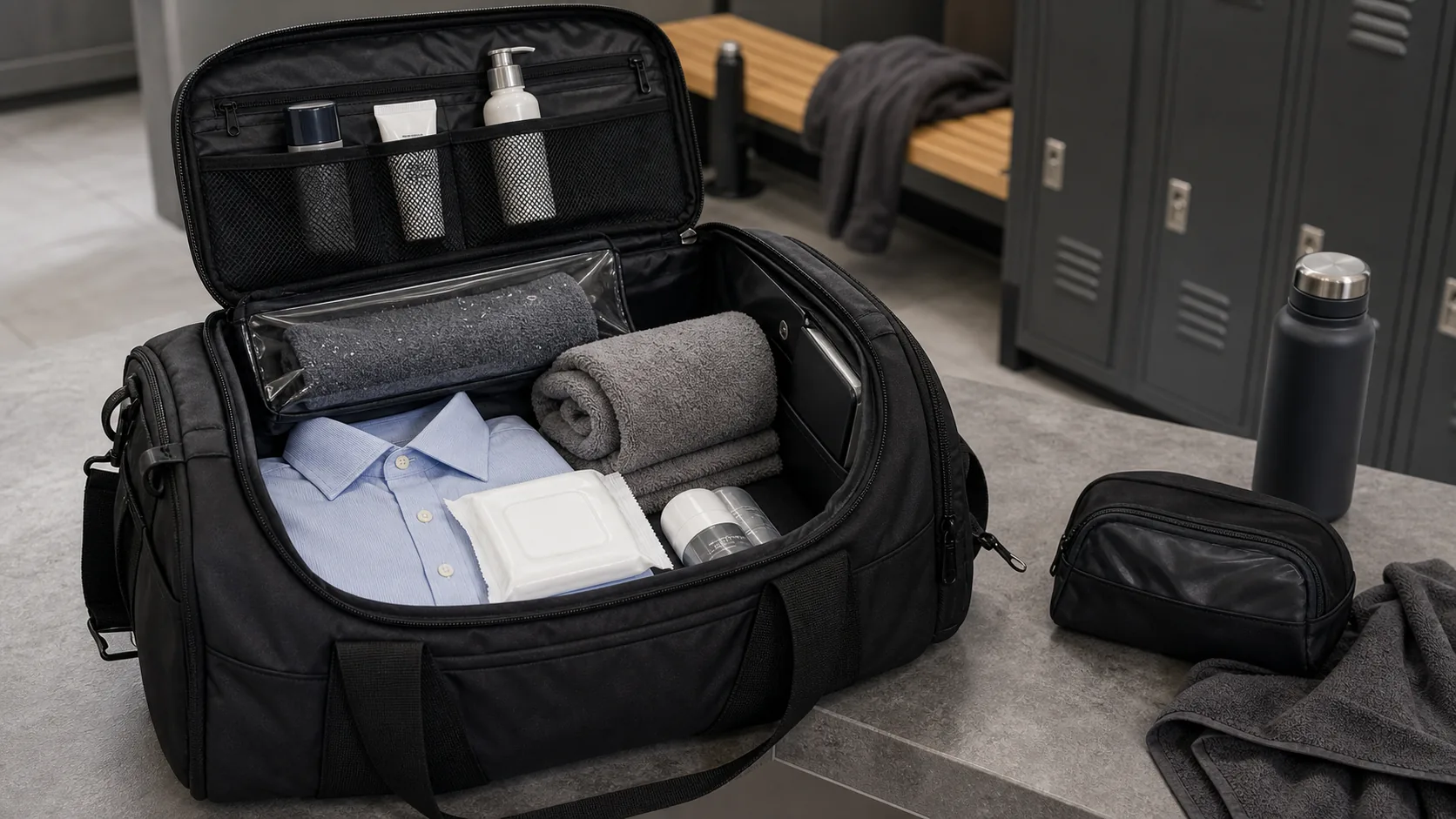
Which toiletries are non-negotiable for professionals?
Choose travel sizes and pack liquids in a leak-resistant pouch. Personal needs vary, so use a core kit and add the products that matter to your skin, hair, and workplace routine.
- Deodorant or antiperspirant: Reapply after washing and drying your skin.
- Body wash and face cleanser: Use small, securely closed containers.
- Comb, hair ties, or dry shampoo: Helpful for restoring hair after training.
- Body wipes: A backup when shower access or time is limited.
- Shower slides: Useful in shared changing and shower areas.
- Clean underwear and socks: The most important post-workout clothing change.
How do you handle damp towels post-workout?
Use a quick-dry towel and move it into a waterproof wet pouch after use. The pouch protects the rest of the bag during the commute, but it is temporary storage, not a place to leave damp gear overnight. Remove the towel and worn clothes as soon as you get home, then leave the bag open to air.
- Microfiber towel: Packs smaller and generally dries faster than a thick cotton towel.
- Wet pouch: Contains moisture during the trip home.
- Ventilated shoe zone: Reduces trapped humidity around footwear.
- Simple care habit: Empty, wipe, and air the bag after every damp session.
Key Takeaway: Separate damp gear for the commute, then remove and dry it promptly.
| Towel Option | Packed Size | Best Use | After-Workout Care |
|---|---|---|---|
| Microfiber Towel | Small | Daily commute | Hang to dry after use |
| Light Cotton Towel | Medium | Gentle skin feel | Wash and dry fully |
| Body Wipes | Very small | No-shower backup | Dispose after use |
The remaining space can be used for equipment that directly supports the planned workout.
What to pack in gym bag before work for heavy strength?
For a strength session, pack only the accessories included in your program. Common options include a belt, wrist wraps, lifting straps, knee sleeves, resistance bands, and chalk where the gym permits it. Heavy equipment should sit close to the bottom and back of the bag so the load feels stable during the commute. This is especially relevant across the sports and fitness industry, where pocket layout must reflect real equipment dimensions.
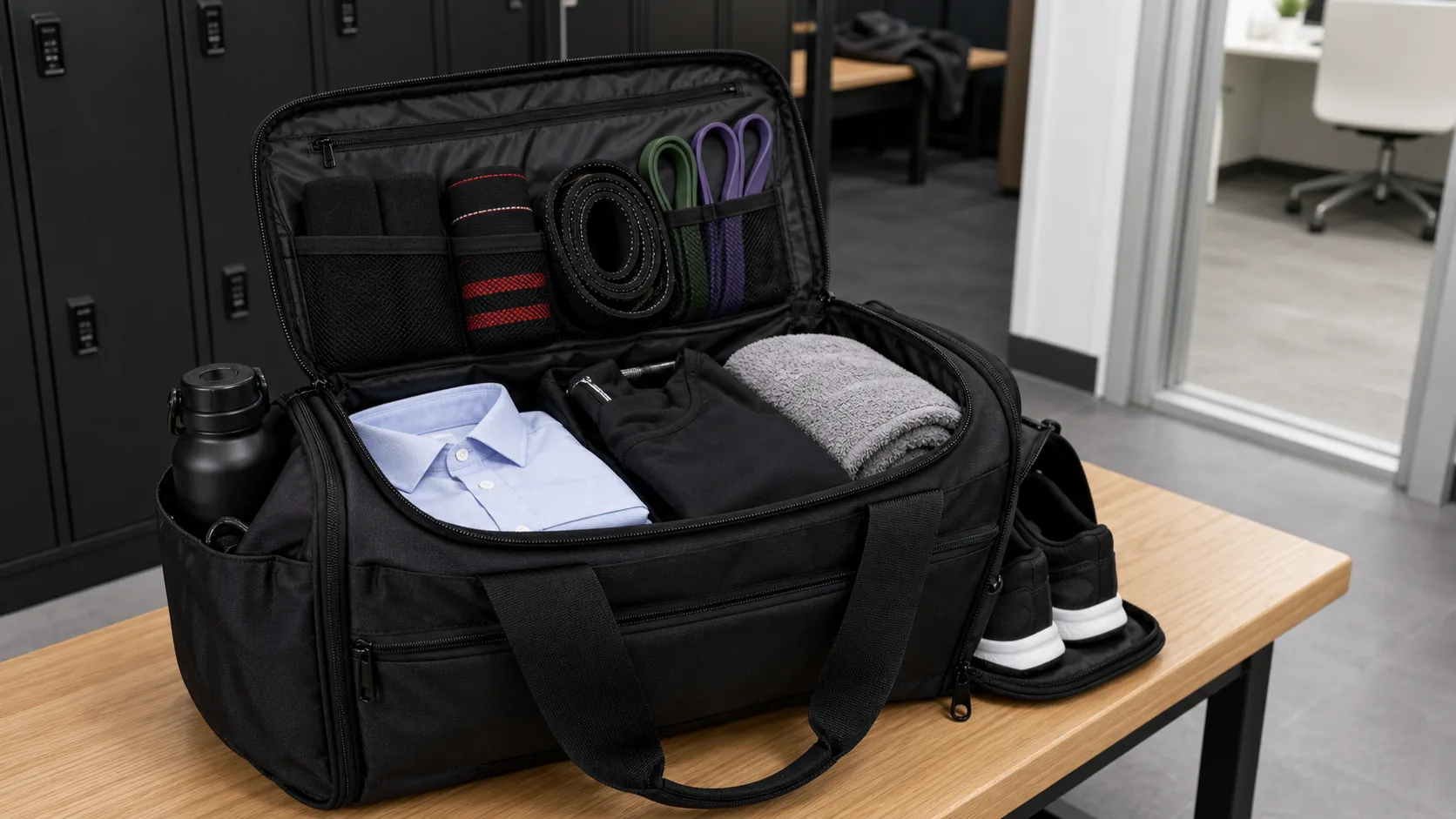
What accessories elevate heavy morning lifting?
Accessories should solve a specific training need. A combination lock and a small first-aid pouch are often more universally useful than carrying every possible lifting aid.
- Lifting belt: Pack when your program and coaching call for it.
- Wrist wraps or lifting straps: Keep together in a small mesh pouch.
- Knee sleeves: Air them after training instead of sealing them in the bag.
- Resistance band: Useful for warm-ups without taking much room.
- Combination lock: Keeps personal items secure in a gym locker.
- Basic first aid: A few bandages and blister covers are sufficient for minor issues.
Why should you pack lightweight accessories?
A commuter carries training gear for much longer than it is used. Flexible belts, fabric bands, and compact pouches reduce bulk and make it easier to protect office clothes. If rigid equipment is essential, place it along the bag wall rather than on top of folded garments or electronics.
- Roll flexible gear: Bands, wraps, and nylon belts fit neatly around the bag perimeter.
- Bag chalk separately: Use a sealed pouch to keep dust off clothing and devices.
- Protect small items: Store tape, clips, and locks in a zip pocket.
Key Takeaway: Carry the equipment required by today's session, not your entire training collection.
| Accessory Type | Main Use | Portability | Best Storage Zone |
|---|---|---|---|
| Flexible Belt or Wraps | Training support | High | Along the inner wall |
| Resistance Band | Warm-up and mobility | Very high | Small mesh pouch |
| Lock and First Aid | Security and minor care | High | Quick-access pocket |
For a midday workout, speed and easy access matter more than carrying a large equipment set.
What to pack in gym bag before work for midday runs?
A lunch-break run needs a compact kit: running shoes, breathable clothing, socks, water, sun protection when needed, and a fast hygiene option. Put the office access card, phone, and lock in the same secure pocket every time. This makes it possible to change, train, refresh, and return without searching through the main compartment.
How do you refresh without a full shower?
Change out of damp clothing first. Wipe or wash the areas that collect the most sweat, dry your skin, apply deodorant, and put on clean underwear, socks, and a fresh top. Keep used garments in the wet pouch until they can be washed.
- Body and face wipes: Useful when no shower is available.
- Fresh base layers: More effective than trying to mask damp clothing.
- Deodorant and hair kit: Supports a quick return to work.
- Compact towel: Helps dry sweat before changing.
What apparel works best for hot lunch breaks?
Choose clothing that matches the weather and intensity. Lightweight synthetic blends and merino options can manage moisture better than a heavy everyday cotton shirt, but fit and comfort still matter. Add a cap, sunscreen, and sunglasses for outdoor sessions where appropriate.
- Light training top: Breathable and comfortable against the skin.
- Shorts or leggings: Allow the movement required by the session.
- Fresh socks: Prevent damp feet during the afternoon.
- Weather items: Sunscreen, cap, light shell, or reflective details as conditions require.
Key Takeaway: A midday kit should prioritize fast changing, clean base layers, and immediate access.
| Fabric Type | Moisture Handling | Drying Speed | Practical Use |
|---|---|---|---|
| Synthetic Blend | Good | Fast | High-sweat training |
| Merino Blend | Good | Moderate to fast | Odor-conscious commuters |
| Cotton | Absorbs moisture | Slow | Light activity or spare casual top |
Evening training changes the order of the routine but still benefits from deliberate preparation.
What to pack in gym bag before work for evening lifts?
For an after-work session, pack training clothes, shoes, water, a pre-workout snack, and the equipment required by the program. Add a light mobility tool if sitting at a desk leaves you stiff. Because the bag remains with you all day, avoid pre-mixing drinks that need refrigeration and keep food isolated from used gear. Brands managing popular commuter products can also study an Amazon fast replenishment case when planning inventory around repeat demand.
What gear supports intense after-work strength sessions?
The essentials remain simple: appropriate shoes, comfortable clothing, water, and any programmed support equipment. Earbuds and a charged fitness watch may help some users, while others need a lock, wrist wraps, or a mobility ball. Protect electronics in a dry, padded pocket rather than leaving them loose beside a bottle.
- Training shoes and clothes: Pack clean and ready to change into.
- Program-specific accessories: Belt, wraps, straps, sleeves, or bands.
- Small mobility tool: A band or massage ball for a short warm-up.
- Protected technology: Earbuds, watch charger, or phone in a dry pocket.
How do you pack for post-workout recovery?
Recovery packing should focus on hydration, a normal snack or meal, and dry clothing for the trip home. If you use protein powder, carry it dry in a closed container and mix it only when needed. An instant cold pack can be useful in a basic first-aid kit, but significant pain or injury needs appropriate professional care.
- Water or electrolyte drink: Choose according to workout duration and conditions.
- Protein and carbohydrate snack: Pack something easy to store and tolerate.
- Fresh top or light layer: Prevents a damp commute home.
- Small recovery tool: Optional band or massage ball.
Key Takeaway: Keep food and powder dry, and prioritize hydration and fresh clothing after training.
| Recovery Item | Purpose | Storage Method | When to Use |
|---|---|---|---|
| Water Bottle | Rehydration | Upright side pocket | During and after training |
| Dry Protein Portion | Convenient nutrition | Sealed container or shaker | Mix when ready |
| Shelf-Stable Snack | Post-workout energy | Clean food pouch | After the session |
Good organization keeps these items accessible without turning the bag into an overfilled container.
How to save space and what to pack in gym bag before work?
Choose a bag size that matches the routine. Around 20 to 25 liters can suit a light workout with minimal toiletries, while many commuters need roughly 30 to 40 liters for shoes, a towel, workwear, and food. Larger bags are useful for bulky sport equipment but may not fit standard lockers. Before scaling a compartment concept, a low-MOQ testing case shows why testing the packed use case matters.
How do packing cubes optimize internal volume?
Use a few purpose-based pouches instead of many small organizers. One clean-clothes cube, one toiletry pouch, one wet bag, and one small accessories pouch are usually enough. Keep frequently used items in exterior or top pockets and valuables in a hidden zipped pocket with a key clip where possible.
- Clean-clothes cube: Workwear, underwear, and socks.
- Toiletry pouch: Upright, leak-resistant storage for liquids.
- Wet bag: Temporary isolation for used clothing and towels.
- Small organizer: Lock, earbuds, cables, hair ties, tape, and cards.
Can rolling your clothes prevent professional wrinkles?
Roll flexible activewear to reduce empty space, but fold formal clothing according to the fabric and garment construction. A dress shirt benefits from a garment folder or a flat position near the top. Do not compress a blazer or structured footwear beneath dense training equipment.
- Roll activewear: T-shirts, shorts, leggings, and lightweight layers.
- Fold office wear: Shirts, blouses, trousers, and skirts stay flatter in a folder.
- Use the bottom wisely: Place shoes and dense equipment low and close to the carry side.
Key Takeaway: Organize by clean, wet, shoe, food, and valuables zones rather than forcing everything into one compartment.
| Packing Strategy | Best For | Wrinkle Control | Accessibility |
|---|---|---|---|
| Rolling | Flexible activewear | Moderate | Fast |
| Garment Folder | Shirts and workwear | High | Easy from the top |
| Purpose-Based Pouches | Toiletries and small gear | Not applicable | Very high |
Food and hydration need their own clean zone within this system.
What to pack in gym bag before work to sustain nutrition?
Pack food that suits your schedule, dietary needs, and access to refrigeration. A water bottle is the universal starting point. Add a banana, nuts, a protein bar, yogurt in a chilled container, or another familiar snack when the time between meals and training is long. Keep every food container sealed and away from shoes and damp gear.
What are the best pre-workout early morning fuels?
Choose a familiar, easy-to-digest option and adjust the portion to the time available before exercise. There is no single required gym snack. Simple carbohydrates may suit a short window, while a balanced breakfast works when there is more time before training.
- Banana or other fruit: Portable and easy to pack.
- Toast, oats, or a simple bar: Convenient carbohydrate options.
- Nuts or nut butter packet: Compact but better suited to users who tolerate them before training.
- Water: Fill the bottle before leaving or at the gym.
How do you keep protein shakes fresh at the office?
Carry powder and liquid separately unless the mixed drink can remain properly chilled. Use a screw-top shaker, store milk or yogurt in a refrigerator or insulated food container, and rinse the shaker soon after use. Never place a loosely closed shaker beside a laptop or clean workwear.
- Dry powder container: Keeps powder stable until mixing.
- Secure shaker lid: Reduces leaks during the commute.
- Insulated food pouch: Separates chilled food from gym equipment.
- Easy-clean placement: Use an upright bottle pocket or coated compartment.
Key Takeaway: Pack familiar food in sealed containers and keep liquids separate from electronics and clothing.
| Nutrition Option | Storage Need | Practical Timing | Packing Note |
|---|---|---|---|
| Fruit or Bar | Room temperature | Before or after training | Keep in a clean pouch |
| Dry Protein Powder | Sealed dry container | Mix when needed | Do not pre-mix for a long commute |
| Yogurt or Prepared Meal | Refrigeration or insulated carrier | Based on meal schedule | Keep separate from used gear |
The final clean-clothes and grooming check makes the transition to work complete.
What to pack in gym bag before work to look very sharp?
Pack the work outfit as a complete set, including the small items most often forgotten: clean underwear, socks, belt, access badge, and the right shoes. Personal grooming needs vary. A compact kit may include a comb, hair ties, moisturizer, dry shampoo, makeup, shaving items, or other products used in your normal routine. For commuter-focused brands, OEM gym bags can be designed around garment protection, shoe separation, and compact grooming storage.
How do you transport a suit without wrinkling it?
Use a garment folder, a separate garment sleeve, or a convertible garment duffel for structured clothing. Fold along natural seams, keep heavy objects away from the garment, and place it near the top of the bag. When possible, leave a blazer and office shoes at work to reduce the daily load.
- Garment folder: A practical choice for shirts, blouses, and trousers.
- Garment sleeve: Better for suits and structured pieces.
- Small lint roller: Useful for dark clothing after a dusty gym environment.
- Office storage: The simplest option for shoes and jackets used every day.
What grooming tools help with office styling?
Pack only what you routinely use. Keep liquids capped, protect fragile items, and separate grooming tools from damp towels. Hair ties and dry shampoo may be useful for longer hair, while a comb, moisturizer, or shaving item may suit another routine. The best kit is personal, compact, and easy to replenish.
- Hair tools: Comb or brush, hair ties, clips, and optional dry shampoo.
- Skin care: Face cleanser, moisturizer, sunscreen, and products used regularly.
- Work refresh: Deodorant, toothbrush, toothpaste, and a small lint roller.
Key Takeaway: Pack a complete work outfit and a small personal grooming kit, not a duplicate bathroom cabinet.
| Grooming Accessory | Main Purpose | Packed Footprint | Storage Method |
|---|---|---|---|
| Comb or Hair Ties | Restyle hair | Very small | Dry zip pocket |
| Travel Toiletries | Wash and refresh | Small | Leak-resistant pouch |
| Lint Roller | Clean workwear | Small | Garment compartment |
Clean presentation also depends on controlling moisture throughout the day.
What to pack in gym bag before work to stay totally dry?
Use physical separation rather than relying on fragrance to hide moisture. A coated wet pocket or removable wet bag should hold used clothes and towels, while a separate padded zone protects electronics. Bottles should remain upright in pockets that are easy to wipe. This arrangement protects clean clothing and also makes the bag faster to empty after the commute.
Why is wet/dry separation crucial for daily commuters?
Moisture moves easily between fabrics and can carry odor into workwear. It can also damage paper, chargers, and electronics. Separating wet items limits that transfer, but damp gear still needs to be removed promptly after use.
- Protects workwear: Keeps clean clothing away from sweat and shower moisture.
- Protects valuables: Reduces the chance of liquid reaching a phone, laptop, wallet, or documents.
- Simplifies cleaning: A removable wet pouch is easier to wash than the entire bag.
- Supports organization: Users know exactly where used gear belongs.
Which materials resist moisture and prevent bacteria?
Look for coated, wipe-clean surfaces in the wet and toiletry zones. TPU-coated lining and other non-porous materials can help contain leaks, while durable polyester or nylon shells may offer practical abrasion resistance. Performance depends on construction as well as fabric, so seams, zippers, drainage, and ventilation should be checked on a packed sample.
- Coated lining: Useful inside wet and toiletry compartments.
- Durable shell fabric: Select weight and coating for the intended price and use case.
- Ventilation details: Helpful around shoes and damp equipment.
- Washable removable pouch: Makes routine care easier for the user.
Key Takeaway: Moisture control comes from compartment design, coated surfaces, ventilation, and prompt unpacking.
| Material or Feature | Moisture Control | Cleaning Ease | Best Application |
|---|---|---|---|
| TPU-Coated Lining | High in enclosed zones | Easy to wipe | Wet and toiletry pockets |
| Durable Nylon or Polyester | Depends on coating and seams | Usually straightforward | Main shell |
| Ventilated Mesh Panel | Releases trapped humidity | Easy to inspect | Shoe compartment |
The same checklist that helps an individual commuter also gives product teams a realistic way to evaluate bag design.
Strategic Considerations for Commuter Workouts
A useful commuter gym bag should be tested with the actual load: shoes, towel, clean workwear, toiletries, bottle, food, lock, and any required electronics. The packed test reveals whether the opening is wide enough, the bottle pocket stays upright, the shoe compartment steals too much main volume, or a wet pocket presses against clean clothing. Capacity labels alone cannot answer these questions.
The ZhiWei Advantage in Custom Sport & Gym Bags
ZhiWei helps brands, fitness clubs, and retailers translate this real packing routine into a practical product specification. Development can cover compartment layout, fabric and lining choices, zipper access, reinforcement, branding, and packed-sample testing before bulk production.
- User-Based Compartment Planning: Map clean clothing, shoes, wet gear, bottles, food, and valuables before sampling.
- Material and Hardware Options: Select shells, coated linings, mesh, webbing, zippers, and reinforcement for the target use and price.
- OEM and ODM Development: Refine an existing concept or build a new gym bag around a defined customer routine.
- Sample and Quality Review: Check fit, access, balance, seams, and packed performance before confirming production.
Whether the product is a compact locker bag, a gym-to-office backpack, or a garment duffel, the brief should describe the user, workout, work dress code, packed item list, and cleaning expectations. Contact ZhiWei to discuss a gym bag specification and sampling plan.
FAQ
Can I use a standard school backpack as a professional commuter gym bag?
Yes, if it comfortably fits the load and you add separate pouches for shoes, toiletries, clean clothing, and damp gear. A purpose-built gym bag becomes more useful when you need a ventilated shoe compartment, a wet pocket, or better protection for workwear and electronics.
What's the best way to clean my gym bag to prevent persistent musty odors?
Empty it after every workout, remove damp items immediately, and let the bag air out. Follow the care label for deeper cleaning. Wipe coated linings with mild soap and water, rinse removable pouches, and allow every part to dry completely before repacking.
How do I know if my gym bag is too heavy for my daily office commute?
It is probably too heavy if carrying it causes discomfort, changes your posture, or makes the commute difficult. Remove duplicate products and unused equipment first. If the required load remains heavy, use a well-fitted backpack-style carry system or reduce what travels by storing shoes and toiletries at work.
Can I leave my wet gym clothes in my bag overnight if I am tired?
No. Remove wet clothing, towels, and shoes as soon as practical. Wash or hang them to dry, wipe any moisture from the wet compartment, and leave the bag open until the interior is fully dry.
What's the best fabric to look for when choosing a durable, water-resistant gym bag?
There is no single best fabric for every product. Durable polyester and nylon are common shell choices, while coated linings are useful in wet zones. Compare fabric weight, coating, seam construction, zipper quality, abrasion performance, cleaning requirements, and the intended retail price as one system.