
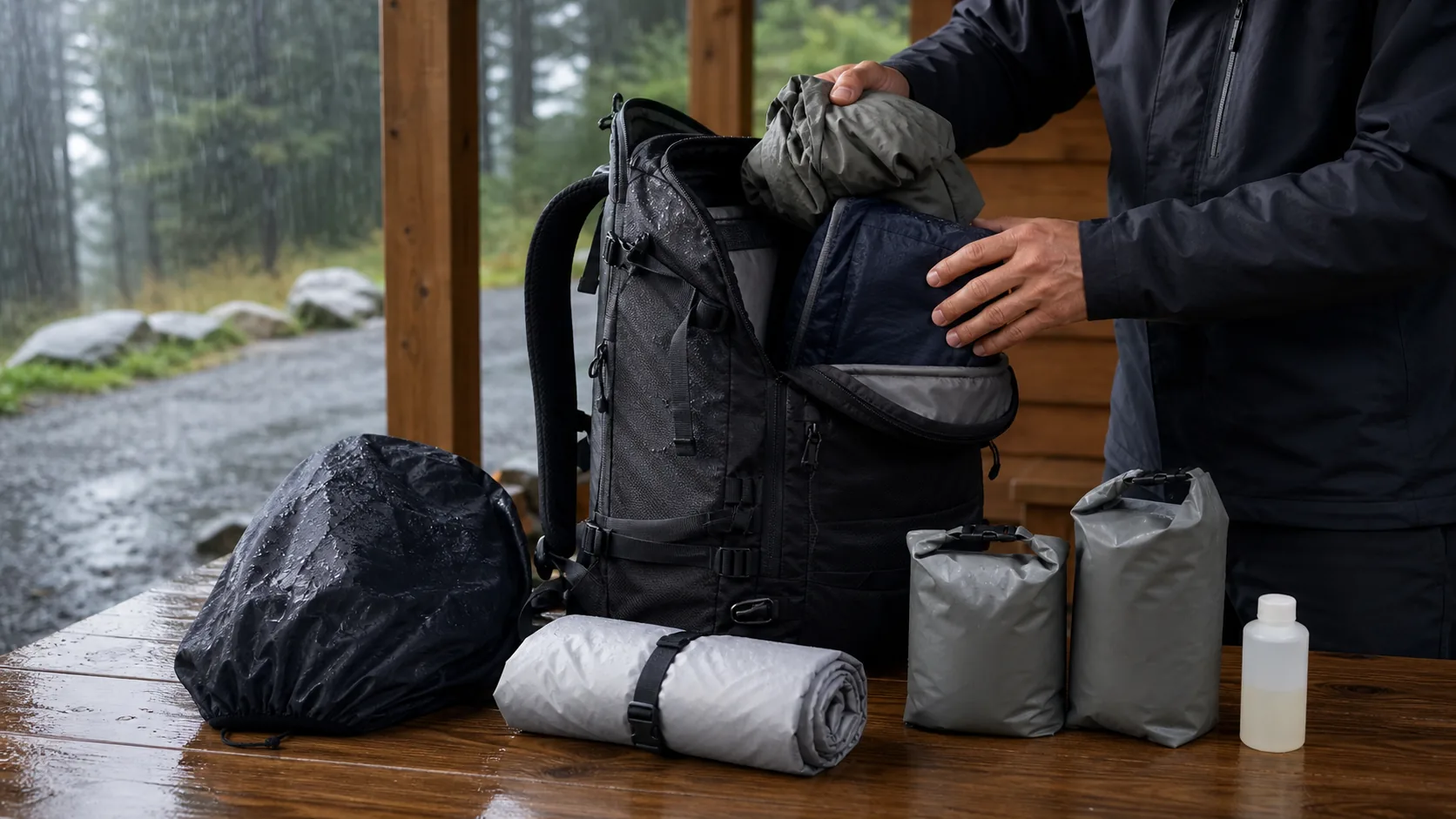
To waterproof a backpack as effectively as its construction allows, clean and dry it, inspect the coating and seams, apply only a treatment compatible with the shell fabric, repair eligible leakage points, protect the opening with a fitted rain cover, and place critical items in a waterproof liner or rated dry bag. These steps can improve weather protection, but they cannot turn every sewn backpack into a submersible dry bag.
The best weather-ready backpacks combine water-resistant or waterproof fabrics, protected construction, suitable closures, and a packing system that keeps valuable gear dry. When you are commuting through heavy rain, hiking across wet ground, or traveling with electronics, a soaked backpack can mean damaged gear, unhappy customers, or avoidable returns.
For brands, retailers, and sourcing teams, waterproofing is not one feature. It is a system of material choices, seam construction, closures, internal organization, user instructions, and quality control. Dependable protection can be designed without making every backpack bulky or difficult to use, but the target protection level must be defined before materials and construction are selected.
Why Should You Learn How to Waterproof a Backpack?

You should learn how to waterproof a backpack because moisture can damage electronics, clothing, documents, food packaging, insulation, and other sensitive contents. Absorbed water can also add weight, create odor, and contribute to material or coating deterioration if the bag remains wet or is stored without proper drying.
Before applying any treatment, read the care label and material information. Empty the bag, brush away loose dirt, clean it using the manufacturer’s instructions, let it dry, and spot-test any spray or seam product in a hidden area. Silicone, polyurethane, waxed textiles, leather, laminated fabric, and coated synthetics do not all accept the same treatment.
What Happens When Water Reaches Your Gear?
Water can enter through fabric, seams, zippers, pockets, hydration ports, and gaps around closures. A backpack may shed rain across the main panel while allowing moisture through untreated stitch lines or an exposed zipper track.
- Electronics can short-circuit or corrode
- Clothing and insulation can become unusable until fully dried
- Paper documents can become unreadable
- Wet gear can create odor, mildew, or cross-contamination inside the bag
Which Users Need Stronger Protection?
Outdoor users, commuters, photographers, travelers, and emergency-preparedness customers benefit from dependable water protection. Brands should match protection levels with how buyers actually use their bags instead of treating `water-resistant` and `waterproof` as interchangeable claims.
| User Type | Main Water Risk | Appropriate Protection Direction |
|---|---|---|
| Daily commuter | Rain during transit | Coated fabric, protected closure, and fitted rain cover |
| Hiker | Longer rain exposure and wet ground | Protected seams plus internal dry storage |
| Traveler | Weather, spills, and exposed transfers | Protected zippers and organized waterproof pouches |
| Tactical or field user | Harsh outdoor conditions | Project-specific fabric, seam, closure, and test system |
A clear user profile helps product teams select protection that solves a real problem instead of adding unnecessary cost or making a stronger claim than the completed bag can support.
Can a Rain Cover Fully Waterproof a Backpack?

A rain cover reduces direct rainfall, but it cannot fully waterproof a backpack during prolonged exposure, immersion, wind-driven rain from the body side, or water entering through uncovered areas. Use a cover as one layer rather than the only defense.
When Does a Rain Cover Work Best?
A rain cover works best during temporary rain exposure when the user needs fast exterior protection. Covers can shift in wind, leave the harness or back panel exposed, and collect water if they fit poorly.
- Choose an elastic or adjustable edge that grips the intended pack shape
- Match the cover to the loaded backpack rather than relying only on stated capacity
- Store it in an easy-access pocket
- Secure any retention strap as designed
- Inspect the fabric, elastic, and seams after repeated use
What Are Its Limits?
A cover cannot reliably stop moisture from reaching shoulder straps, the back panel, exposed seams, or an open zipper track. It also does not make a backpack safe for immersion or river crossings.
| Rain Cover Benefit | Rain Cover Limitation |
|---|---|
| Fast to deploy | Can shift or blow loose |
| Keeps much of the exterior cleaner | Does not seal internal compartments |
| Adds little weight | Provides poor immersion protection |
| Low-cost upgrade | May trap or channel water when poorly fitted |
For better protection, pair the exterior cover with a waterproof liner, rated dry bag, or sealed pouch around items that cannot get wet.
Which Fabrics Help Waterproof a Backpack?

Coated nylon, coated polyester, laminated fabrics, and verified recycled textiles can all support a weather-protection system. Fabric alone does not create a waterproof backpack because seams, zippers, attachment points, openings, and abrasion affect the finished result. Product teams developing waterproof travel backpacks should specify both the textile and the complete-bag performance target.
How Do Coatings Change Fabric Performance?
PU, TPU, silicone-based treatments, and other constructions can slow or block water penetration through the textile. Performance depends on the base fabric, coating or film thickness, adhesion, hydrolysis resistance, abrasion, flexing, age, and how the material is cut and joined.
- TPU films or laminations can provide a flexible moisture barrier and may support welding when the complete material is designed for it
- PU-coated fabrics are widely used for practical water resistance, with performance varying by formulation and coating weight
- High-density nylon can provide abrasion resistance, but density alone does not make it waterproof
- RPET fabrics can support sustainability-focused lines, provided recycled content and performance claims are verified
- DWR surface finishes help water bead and roll off but do not seal seams or make an uncoated bag waterproof
Should You Choose Nylon or Polyester?
Nylon is often selected for abrasion resistance and toughness, while polyester can offer dimensional stability, UV performance, and cost advantages. The correct choice depends on customer expectations, target pricing, coating system, colorfastness, exposure, and end use.
| Fabric Option | Typical Use | Main Consideration |
|---|---|---|
| High-density coated nylon | Outdoor and tactical bags | Cost, coating, and abrasion exposure |
| Coated polyester | Travel and commuter bags | Performance varies by base cloth and coating |
| TPU-laminated fabric | Higher-protection designs | Stiffness, weldability, cost, and repairability |
| Verified RPET fabric | Sustainability-focused collections | Traceability and tested finished performance |
A fabric specification should define measurable performance and commercial goals. A spray-on water-repellent treatment may restore surface beading on a compatible fabric, but it will not repair delaminated coatings, seal openings, or create an immersion-proof product.
Are Sealed Seams Necessary for Waterproof Backpacks?

Sealed seams are necessary when the product specification requires stronger protection across sewn construction because needle holes can become leakage paths. However, seam tape is not compatible with every fabric, coating, seam shape, or home repair method. The tape, adhesive, temperature, pressure, dwell time, and substrate must work as a system.
Why Do Stitch Lines Leak?
Every sewing needle creates openings, and thread can carry moisture through a seam under sustained exposure or pressure. Water often enters through construction details before it penetrates an intact coated panel.
- Use compatible seam tape or liquid seam sealer only where the material and construction allow
- Prioritize high-exposure joins, including the base and main shell
- Inspect seam alignment, skipped stitches, puckering, and contamination before sealing
- Avoid applying heat or chemicals without checking the care instructions and hidden-area compatibility
- Test the completed sample after construction and conditioning
What Should Brands Specify?
Brands should identify which seams require tape, welding, binding, storm protection, or no sealing before sampling begins. They should also define whether the claim covers light rain, sustained rain, spray, temporary water contact, or another agreed condition.
| Construction Area | Protection Direction |
|---|---|
| Main compartment seams | Compatible seam tape, welding, or specified sealant |
| Bottom panel | Coated or laminated panel with protected joins |
| Front pocket joins | Compatible seam treatment or protective design |
| Shoulder strap attachment | Structural reinforcement plus project-specific leakage control |
Reinforcement and waterproofing solve different problems. A bartack can improve structural strength while still leaving needle holes that require separate leakage evaluation.
Do Zippers Make or Break Waterproofing?

Zippers are common entry points for rain and splashes, so an effective waterproofing plan must address the closure design. A water-resistant zipper reduces ingress under defined conditions; it should not automatically be described as watertight or immersion-proof.
Which Zipper Features Matter Most?
Coated zipper tape, reverse-coil construction, storm flaps, zipper garages, and protected end stops can reduce water entry. The result still depends on track curvature, sewing, slider position, loading pressure, and the way the user closes the compartment.
- Choose zipper tape and chain construction for the target exposure
- Add zipper garages or covered ends where the design supports them
- Use storm flaps for exposed rain paths when quick access allows
- Avoid overstuffing, which can spread the zipper path and distort the surrounding panel
- Inspect the zipper seam as well as the zipper tape
Can Roll-Top Closures Improve Protection?
Roll-top closures can provide strong weather protection when the shell and seams are compatible and the user rolls and buckles the opening correctly. They work well for larger main compartments but may trade quick access for a more protected opening.
| Closure Type | Weather-Protection Direction | Best Application |
|---|---|---|
| Standard zipper | Basic protection | Everyday organization |
| Zipper with storm flap | Improved rain protection | Commuter backpacks |
| Water-resistant zipper | Stronger ingress control when properly installed | Tech and travel bags |
| Roll-top closure | Strong protected opening when correctly closed | Outdoor and utility packs |
The correct closure balances access, loading, appearance, cost, repair, and the level of water exposure the product is designed to handle.
Should You Waterproof a Backpack From the Inside?
Yes. Internal protection provides a second line of defense when exterior materials or closures become wet. For items that cannot tolerate moisture, a waterproof liner, rated dry bag, or sealed pouch is more dependable than relying on the outer backpack alone.
What Internal Solutions Work Best?
Dry bags, pack liners, sealed electronics pouches, and compartment organizers can keep critical gear dry inside a damp backpack. Check the closure style and product rating because not every pouch or compression bag is waterproof.
- Place electronics in a rated waterproof pouch or dry bag, then add padding for impact protection
- Pack clothing in a suitable dry bag or waterproof pack liner
- Use a main liner for larger groups of items
- Separate liquids from dry gear and electronics
- Close roll-top liners with the required number of folds for the product
Should You Protect Every Item Separately?
Not every item needs a separate dry bag, but high-value, moisture-sensitive, or absorbent gear deserves extra protection. Grouping items can also improve access and prevent one leaking container from wetting the entire load.
| Item | Recommended Internal Protection |
|---|---|
| Laptop or tablet | Rated waterproof pouch plus padded sleeve or compartment |
| Clothing | Dry bag or waterproof pack liner |
| First-aid kit | Sealed pouch appropriate to its contents |
| Documents | Waterproof document case or sealed pouch |
Padding protects against impact; it does not make an ordinary laptop sleeve waterproof. Users should confirm the pouch closure and protection rating before trusting it with electronics.
How Can You Waterproof a Backpack on a Budget?
You can improve a backpack’s rain protection on a budget by combining a fitted rain cover, durable internal liner, sealed pouches, and careful packing. This works well for temporary or entry-level setups, provided users understand that it does not create a certified waterproof backpack.
Can Heavy-Duty Bags Work as Liners?
Heavy-duty plastic bags can work as temporary internal liners when they are intact, thick enough for the load, folded or closed carefully, and protected from sharp objects. Thin household bags puncture easily and should not be treated as permanent waterproof equipment.
- Choose a bag large enough to avoid stretching at corners
- Inspect it for holes before packing
- Roll or fold excess material to direct water away from the opening
- Keep sharp tools in separate protective sleeves
- Replace the liner after punctures, seam damage, or visible wear
What Should You Prioritize First?
Start with the items that would create the biggest safety, financial, or practical problem if they became wet. Electronics, dry clothing, medication, documents, and emergency equipment usually deserve priority.
| Budget Upgrade | Main Benefit |
|---|---|
| Fitted rain cover | Reduces direct rainfall on the shell |
| Heavy-duty liner | Protects grouped contents in the main compartment |
| Small sealed pouches | Protects valuables and sensitive items |
| Dry or compression bags with verified closures | Organizes gear and limits moisture exposure |
Budget waterproofing is most dependable when users inspect each layer and replace worn components rather than assuming one disposable liner will remain reliable indefinitely.
What Backpack Features Improve Weather Protection?
Coated or laminated fabrics, protected seams, water-resistant zippers, reinforced bottoms, and organized internal storage are the strongest features for improving backpack weather protection. Together, these features create a layered system for rain, travel, and outdoor use.
Which Eight Features Should Buyers Look For?
The best weather-ready designs combine several protective elements rather than depending on one fabric label or marketing claim.
- Coated or laminated outer fabric
- Compatible sealed, taped, or welded seams
- Water-resistant or protected zippers
- Roll-top or storm-protected closures
- Reinforced and water-protected bottom panel
- Waterproof internal liner or removable dry storage
- Separate wet and dry organization
- Fitted, adjustable rain cover
How Should Brands Build These Features Into Products?
Brands should define exposure, contents, user behavior, target claim, and test conditions in the product brief, then validate the design through materials review and completed-sample testing. Product teams serving outdoor and tactical industry customers should test the complete system rather than assume a rugged appearance proves water protection.
| Product Feature | Buyer Benefit |
|---|---|
| Protected seams | Lower leakage risk across stitched joins |
| Dry compartment or removable liner | Better separation of sensitive gear |
| Reinforced protected base | Improved durability at wet ground-contact areas |
| Ergonomic padding | Better comfort under load, independent of waterproofing |
Feature planning turns weather protection into a defined product requirement instead of a vague claim. Materials, seams, closures, and user instructions should all support the same level of protection.
How Do You Test and Maintain Backpack Waterproofing?
You test a backpack by checking fabric behavior, seam integrity, zipper protection, closure performance, and compartment dryness after controlled water exposure. Home testing can reveal obvious weak points, while commercial claims require a documented method, representative samples, and defined acceptance criteria.
What Tests Can You Perform at Home?
Simple spray and absorbent-paper checks can reveal leaks without risking expensive contents. Follow the care label, test an empty backpack, avoid excessive pressure, and allow the bag to dry fully afterward.
- Place dry absorbent paper inside key compartments
- Close every zipper, buckle, flap, and roll-top as designed
- Apply water evenly under a repeatable low-risk setup
- Check seams, zipper ends, hydration ports, and the bottom panel
- Record where moisture first appears
A home test is a maintenance check, not proof of a certified or submersible rating. Do not use valuable electronics as test contents.
What Should Manufacturers Test?
Manufacturers should use agreed material tests, completed-bag rain or spray exposure, seam and closure checks, and sample inspections that match the intended claim. A structured product testing case can help sourcing teams plan how samples, acceptance criteria, and revisions connect before bulk release.
| Test Area | What It Reveals |
|---|---|
| Fabric surface | Beading, wetting, coating, or laminate behavior |
| Seam exposure | Leakage through needle holes and joins |
| Zipper track and ends | Closure and installation weak points |
| Bottom panel | Wet-ground and contact-area protection |
| Complete compartment | System performance after defined exposure |
The test report should identify the sample, conditioning, water exposure, duration, pressure or flow where applicable, orientation, closure setup, observations, and pass/fail criteria. Testing raw fabric alone does not prove the completed backpack will keep contents dry.
When Should You Replace or Upgrade Waterproofing?
Replace or repair protection when compatible treatments no longer perform as intended, coatings crack or peel, seam tape lifts, closures fail, liners puncture, or the backpack no longer suits the activity. Some failures can be maintained; others indicate material degradation or construction damage that surface treatment cannot reverse.
What Warning Signs Should You Watch For?
Wet spots inside the bag, cracked coatings, peeling seam tape, damaged closures, and persistent leakage signal that protection needs attention. Reduced water beading may indicate a worn surface-repellent finish, but it does not by itself prove that the underlying waterproof coating has failed.
- Water wets the face fabric more quickly than before
- Seam tape lifts, bubbles, or peels
- Coatings feel sticky, crack, flake, or delaminate
- Zippers snag, separate, or no longer park correctly
- Interior paper becomes damp during the same controlled test
When Is a New Backpack the Better Choice?
A replacement may be more practical when several systems fail at once, the coating is widely delaminated, structural seams are damaged, or the current bag lacks the construction needed for the target exposure.
| Condition | Best Next Step |
|---|---|
| Minor eligible seam leak | Use a compatible repair method or qualified service |
| Punctured removable liner | Replace the liner |
| Worn fitted rain cover | Replace it with a correctly sized cover |
| Widespread coating or construction failure | Upgrade or replace the backpack |
Waterproofing starts with the right fabric and continues through seam protection, zipper design, internal liners, rain covers, compatible maintenance, and realistic testing. For brands developing a weather-ready backpack line, the goal is not simply to make the bag resist water. It is to define the exposure, protect the user’s essential contents, and support every claim with the complete product design and an agreed test plan.
Brands ready to turn a weather-protection concept into a production-ready product can contact ZWbags to discuss materials, construction, branding, sampling, testing, and project-specific manufacturing requirements.
FAQ
Can I Waterproof a Backpack That Is Already Old?
You can often improve an older backpack with a compatible surface treatment, fitted rain cover, internal liner, eligible seam repair, and waterproof pouches. First inspect the care label, coating, seam tape, and fabric. Widespread delamination, cracking, or structural damage may limit the result.
What Is the Best Way to Protect a Laptop From Rain in a Backpack?
Place the laptop in a rated waterproof pouch or dry bag and then use a padded sleeve or suspended laptop compartment for impact protection. A standard padded sleeve alone is not waterproof, and no electronic device should be used to test the backpack.
How Do I Know Whether My Backpack Is Truly Waterproof?
Check the manufacturer’s stated protection level and the completed-product test conditions. Sealed seams, protected zippers, and coated fabric are useful indicators, but features alone do not prove a waterproof or immersion rating. Water-resistant fabric should not be treated as a guarantee that the whole bag is waterproof.
Can I Use a Trash Bag to Waterproof a Backpack?
A thick, intact plastic bag can serve as a temporary internal liner. Inspect it for holes, protect it from sharp objects, close the opening carefully, and keep critical items in separate sealed pouches. It is not a durable substitute for a rated dry bag.
What Is the Best Waterproof Backpack Feature for Travel?
There is no single best feature. A protected main compartment, suitable fabric, controlled seams, water-resistant closures, and waterproof internal storage work together. For electronics and documents, a separate rated pouch provides an important second layer of protection.