
You grab your phone, keys, wallet, a small water bottle, and maybe a compact charger, then realize a full backpack feels excessive while your pockets already bulge. A well-fitted sling backpack fills that gap with compact storage and quick access, but its single-strap design concentrates the load on one side and works best when kept light.
The fastest way to wear a sling backpack correctly comes down to three moves: adjust the strap so the bag rests close to your torso without pinching, choose a carry position that matches your activity, and pack only what your day requires. Many first-time users are unsure whether the bag hangs at the right height, sits on the correct side, or rides too loose. The design offers flexibility, but the best setup still depends on body shape, load, strap geometry, clothing, and movement.
What Is a Sling Bag and How to Wear a Sling Backpack Correctly?
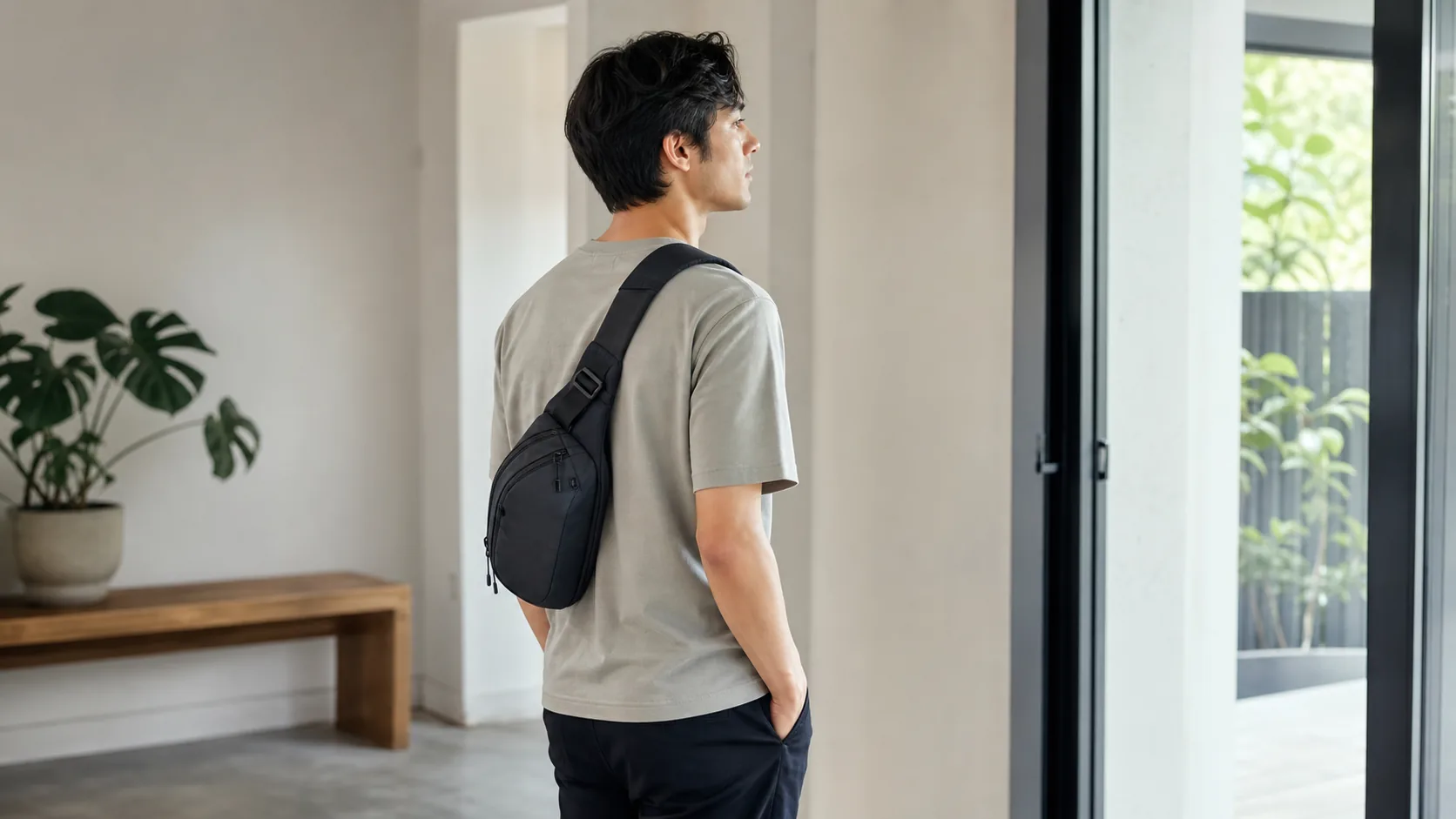
A sling bag rides diagonally across your chest or back on a single adjustable strap, so correct wear starts with adjusting that strap until the bag sits close without swinging or creating pressure, numbness, or restricted movement. The exact height varies by design and user: front carry commonly places the bag across the upper torso or near the opposite hip, while back carry keeps it centered on the upper or mid-back.

Sling bags combine elements of tactical carriers, messenger bags, waist packs, and compact day bags. Many models fall between roughly 3L and 15L, although exterior shape and internal organization matter as much as the stated volume. If your team sources bags in bulk, custom tactical backpacks provide useful references for strap routing, reinforced anchors, and modular organization.
How Does a Sling Bag Differ from a Traditional Backpack?
A traditional backpack can distribute weight across both shoulders, while a sling places most of the load through one shoulder and a diagonal contact path across the torso. A properly adjusted sling can provide quick side-swing access, but it does not distribute weight as evenly as a two-strap backpack and can bounce if overloaded or worn too loose.
- Single strap versus two straps
- Diagonal chest or back carry versus vertical back carry
- 3L-15L range versus 20L-35L range
- Fast side-swing access versus full-off unloading
Who Benefits Most from Wearing a Sling Backpack?
Commuters, travelers, and casual day-trippers often benefit when they need fast access without the bulk of a full pack. Office users may also choose a clean, compact sling for a small tablet, wallet, and charger. For cycling or running, the bag must be purpose-built, stable, light, and unable to interfere with safe movement.
| Sling Bag Feature | Practical Benefit |
|---|---|
| Single adjustable strap | Faster on-off transitions |
| Compact 3L-15L body | Enough space without bulk |
| Diagonal carry line | Stable during quick movement |
| Multi-position wear | Adapts to activity and outfit |
The table above shows why slings win when speed and comfort matter more than raw capacity.
How Do You Wear a Sling Backpack Over the Back?
Wearing a sling over your back sits closest to a traditional backpack carry. The strap normally runs diagonally from one shoulder toward the opposite side, and its adjustment matters because a single strap and its anchor system control the bag’s position.

Adjust the strap until the bag rests on the upper or mid-back without swinging when you turn. This position keeps the front of the body clear, but the bag should not interfere with helmet fit, shoulder checks, arm movement, or vehicle controls.
How to Set the Strap Length for a Back Carry?
Start with the strap loosened, put the sling on, then shorten it gradually until the bag rests securely on the upper or mid-back. There is no universal two-inch position; use the product’s anchor geometry, your torso length, and freedom of shoulder movement as the fit checks.
- Loosen the strap fully before putting on the sling
- Pull the adjuster while the bag sits behind you
- Aim for a mid-back resting position
- Check the swing test by rotating your torso side to side
When Should You Choose Back Carry Over Front Carry?
Choose back carry when you need the front of your torso clear and the bag can remain stable. For cycling or other active use, select a purpose-built sling, keep the load light, secure every loose strap, and test that it does not affect steering, visibility, or protective equipment. Back carry sacrifices quick pocket access, so front carry may work better while walking or waiting in transit areas.
| Back-Carry Scenario | Why It Works |
|---|---|
| Cycling and motorcycling | Front stays clear for controls |
| Rush-hour transit | Body silhouette stays slim |
| Trail walking | Weight rides high and stable |
| Airport connections | Wheels of carry-on stay unblocked |
These pairings prove that back carry rewards activities where a clear front matters more than pocket-quick access.
What Is the Right Way to Wear a Sling Backpack in Front?
Front carry places the sling bag diagonally across the chest and turns it into a fast-access pouch. Many urban commuters and travelers favor this position while walking because it improves access and makes the main openings easier to monitor.

When the bag sits on your chest, the zippers and pockets are more visible and harder for someone behind you to reach unnoticed. Front carry reduces a blind spot, but it does not make the bag theft-proof; use lockable or concealed openings and stay aware in crowded places.
How Does Front Carry Improve Anti-Theft Protection?
Front carry can keep the main zipper and pockets in the user’s line of sight and within natural arm reach. This helps in tourist areas, packed transit, festivals, and busy markets, but exposed quick-release buckles or easy-open zippers still require attention.
- Zippers stay visible during walking
- Main compartment sits inside your arm reach
- Fewer access points hidden behind your back
- Wallet and phone remain within your natural field of view
Which Sling Backpack Features Support the Front Carry Best?
Effective front-carry slings use strap anchors and a back panel that follow the intended torso position. Contoured padding, breathable contact fabric, stable anchors, and correctly placed buckles can reduce sliding, but fit should be tested across the intended user range.
| Front-Carry Feature | Reason It Matters |
|---|---|
| Contoured back panel | Helps reduce sliding on the chest |
| Non-slip strap lining | Keeps the strap in place |
| Quick-release buckle | Speeds up on-off transitions |
| Front-facing zipper pull | Enables one-hand access |
These features separate a truly front-carry-ready sling from a generic model that only pretends to work up front.
Can You Learn How to Wear a Sling Backpack as a Shoulder Bag?
Some sling bags can be carried briefly on one shoulder by resting the strap on top rather than crossing the body. This makes the bag easy to remove, but it provides less stability and more uneven loading than cross-body wear.

Short store trips, quick café stops, and moments when you constantly grab items in and out of the bag all favor the shoulder carry. It sacrifices some stability, but the trade-off pays back in speed.
What Strap Padding Works Best for Shoulder Carry?
Shoulder carry concentrates the load at one point, so a sufficiently wide, padded strap with stable contact material can reduce localized pressure. Comfort depends on load, strap shape, clothing, body size, and duration rather than a universal 2 kg threshold.
- Strap width proportionate to the intended load and user range
- Foam or memory-foam padding under the strap
- Anti-slip lining on the shoulder-facing side
- Reinforced stitching where the strap meets the body
When Is Shoulder Carry Better Than Cross-Body Carry?
Shoulder carry can suit quick errands when the bag comes on and off frequently. Cross-body carry provides better retention for longer walking periods, although neither single-strap position distributes weight as evenly as a two-strap backpack. Switch sides or remove the bag when pressure develops.
| Carry Style | Best For | Comfort Consideration |
|---|---|---|
| Shoulder carry | Quick errands, store trips | Lowest retention; keep the load light |
| Cross-body front | Walking, transit access | Monitor chest and shoulder pressure |
| Cross-body back | Walking and suitable active use | Check sway and shoulder loading |
| Waist carry | Festivals, hands-free days | Use only if the design fits securely at the waist |
The comfort duration column above helps you match the carry style to the length of your day.
How Do You Wear a Sling Bag Around the Waist?
Waist carry positions a compatible sling around the hips by shortening the strap until the bag rests against the lower back, front, or one hip. It keeps the shoulder free, but not every sling strap, buckle, or bag shape is designed to fit securely around the waist.

Travelers, festival-goers, and anyone who wants the sling to disappear from their upper body all benefit from waist positioning. It also pairs well with layered jackets in cold weather.
What Load Distribution Works Best for Waist Carry?
Keep the payload light enough that the bag does not sag, rotate, restrict sitting, or create concentrated pressure. A small tablet or e-reader may fit when its dimensions match the compartment and the bag remains stable.
- Follow the product’s stated load guidance and reduce weight if the bag sags or shifts
- Position heavier items closest to your body
- Avoid protruding accessories that catch on jackets
- Test the fit while sitting down before committing
How Do You Prevent the Sling from Sliding During Waist Carry?
A correctly adjusted strap and stable contact panel can reduce movement around the waist. The strap should be secure without restricting breathing, circulation, bending, or sitting; textured materials do not compensate for a poor bag shape or buckle position.
| Waist-Carry Use Case | Load Recommendation |
|---|---|
| Music festivals | Wallet, phone, cash |
| City tourism | Passport, camera, mini bottle |
| Amusement parks | Sunscreen, snacks, tickets |
| Casual weekend walks | Keys, phone, earbuds |
Matching load to occasion above ensures your waist carry stays comfortable from morning to evening.
How to Wear a Sling Backpack for Travel Without Neck Strain?
Travel days extend carry time, and custom travel backpacks provide a useful comparison when a sling load becomes too large for one shoulder. Keep the sling light, close to the torso, and easy to remove. A strap that is too loose can increase movement, while excessive tension can create pressure; heavy one-shoulder bags can strain the neck.
Aim for stable contact without pinching, numbness, tingling, restricted breathing, or reduced shoulder movement. There is no universal one-finger rule for every strap and body type.
How Do You Adjust Strap Tension for Long Travel Days?
Set the strap so the bag body sits close to the torso, then walk briefly and reassess movement and pressure. Strap tension may need adjustment when clothing layers or carry position change.
- Start secure, walk briefly, then reassess
- Loosen slightly if pressure builds on your trapezius
- Tighten if the bag begins to swing on quick turns
- Recheck after adding or removing outer layers
Which Packing Habits Reduce Long-Haul Fatigue?
Place denser items close to the body and prevent them from moving inside the compartment. Keep the load compact and balanced within the sling rather than deliberately creating a strong side-to-side imbalance.
| Travel Segment | Suggested Carry Position |
|---|---|
| Airport security lines | Front carry for quick access |
| Long flights (in-seat) | Under the seat, unworn |
| City walking tours | Cross-body front |
| Hotel-to-station transit | Cross-body back |
Changing positions, switching shoulders when the design allows it, and removing the bag during seated periods can reduce continuous pressure. Persistent pain, numbness, tingling, or weakness is a reason to stop carrying it and seek appropriate medical advice.
What Should You Pack Inside a Sling Backpack?
A sling backpack works best when packed with essentials only, and how to wear a sling backpack comfortably starts with what you decide not to bring. The compact geometry pushes you toward disciplined packing, which most owners quickly appreciate as a feature rather than a limitation.
Focus on daily-carry items: phone, wallet, keys, earbuds, mini power bank, sunglasses, and a compact water bottle. Larger or heavier loads are usually better suited to a two-strap backpack or a purpose-built custom gym bag.
What Everyday Essentials Fit a City Sling?
City slings commonly fit a phone, slim wallet, keys, earbuds, and a small bottle or folding umbrella. A tablet or e-reader fits only when its full dimensions, protective case, and the compartment opening are compatible.
- Smartphone with case
- Slim wallet or cardholder
- Keys with compact keychain
- Earbuds or over-ear headphones
- Mini power bank and short cable
- Sunglasses in soft case
- Folding umbrella or 350 ml water bottle
What Should You Leave Out of a Sling Backpack?
Leave out full-size laptops, thick binders, gym clothes, and bulky food containers. Overpacking a sling stretches the shell, distorts the shape, and shortens the product life, so restraint pays dividends over months of wear.
| Item Category | Sling Bag Fit |
|---|---|
| Daily electronics | Check device and compartment dimensions |
| Wallet and cards | Yes, ideal |
| Full-size laptop | No, use a laptop backpack |
| Gym clothes and towel | No, use a gym bag |
| Grocery haul | No, use a foldable tote |
The fit column above shows where the sling excels and where a different bag serves you better.
How Do You Match a Sling Backpack with Different Outfits?
Style pairing turns a functional sling into a wardrobe piece, and the visual result comes down to color coordination, material tone, and silhouette balance. A bulky technical sling reads more casual, while a slim, clean-faced design often suits tailored clothing.
Match casual streetwear with technical fabrics, and match business casual with muted tones and cleaner shapes.
Which Sling Styles Work Best for Casual Streetwear?
Technical nylon, ripstop polyester, and canvas slings pair naturally with hoodies, joggers, sneakers, and denim. Streetwear collections may use bold color blocking, reflective piping, or utility webbing as deliberate visual features.
- Ripstop nylon in muted or bold colorways
- Canvas with contrast stitching
- Slings with MOLLE webbing for accessory add-ons
- Reflective piping for evening visibility
Which Slings Suit Business-Casual and Smart-Casual Outfits?
Choose smooth-face fabrics such as coated polyester, waxed canvas, or synthetic leather in charcoal, navy, tan, or black. Compact proportions and restrained hardware usually read as more office-appropriate than a large technical body, although the right volume depends on the required contents.
| Outfit Style | Recommended Sling Look |
|---|---|
| Streetwear | Bold color, ripstop nylon |
| Smart casual | Charcoal or navy coated polyester |
| Business casual | Synthetic leather in tan or black |
| Athleisure | Technical nylon with reflective trim |
Pairing the sling to the outfit above tightens your overall silhouette instead of interrupting it.
How to Wear a Sling Backpack for Cycling, Hiking, and Sports?
Sport carry raises the stakes. A sling used during active movement must be purpose-built for the activity, kept light, secured against bounce, and unable to interfere with protective equipment or movement. Product teams serving the sports and fitness industry should test the complete loaded system rather than assume an everyday sling is suitable.
Cyclists who use a bag generally keep it secure on the back, while hikers may choose a stable cross-body position. Running and technical riding often call for vest-style or two-strap systems that distribute load more evenly.
How Do You Wear a Sling Bag Safely While Cycling?
If the sling manufacturer permits cycling use, adjust the bag so it remains stable on the upper back and secure every loose strap end in a keeper. A compatible secondary stabilizer can reduce movement, but it must not interfere with breathing, helmet straps, shoulder checks, or quick removal.
- Position the bag high on the back
- Use only a compatible stabilizer supplied or approved for the bag
- Tuck the free strap end through the keeper
- Wear a correctly fitted helmet and use bright clothing, reflective gear, and bicycle lights as conditions require
Which Sport-Specific Features Should You Look For?
Depending on the activity, look for breathable contact panels, secure strap keepers, a compatible secondary stabilizer, reflective details, and pockets that prevent contents from moving. Hydration systems and vest-style straps belong only on designs developed and tested for those functions.
| Activity | Key Sling Feature |
|---|---|
| Road cycling | Sternum stabilizer, reflective trim |
| Mountain biking | Stable retention, strap keepers, hydration compatibility when designed for it |
| Day hiking | Breathable mesh back panel |
| Trail running | Vest-style straps, high anchor |
Matching the sport to the correct carry system can reduce chafing, bouncing, and pressure points. Cycling safety still depends on a properly fitted helmet, visibility, alert riding, and keeping control of the bicycle.
How Do You Care for a Sling Backpack So It Lasts Longer?
Cleaning, storage, and hardware inspection affect a sling’s useful life, but no fixed two-to-five-year lifespan or repair cost applies to every material and construction. Follow the finished product’s care label and address damaged seams, anchors, buckles, or zippers before carrying the bag again.
Inspect the shell, strap anchors, adjuster, buckle, and zippers regularly and after heavy use. Clean only when needed using the method approved for the complete bag.
How Should You Clean Your Sling Backpack by Material Type?
Many nylon and polyester shells permit gentle spot cleaning, while leather, coated fabrics, synthetic leather, printed panels, foam, adhesives, and molded parts can require different products. The care label for the finished bag takes priority because a safe cleaner for one component can damage another.
- Nylon and polyester: spot-clean with a compatible mild solution when permitted
- Canvas: use the labeled hand-cleaning method and avoid unapproved soaking
- Leather or synthetic leather: use only a product approved for the exact material and finish
- EVA and molded shells: wipe or rinse only when the complete construction permits it
Which Storage Habits Preserve Sling Shape and Fabric?
Store the sling clean and dry, away from prolonged direct sunlight, high heat, and damp spaces. Light, clean stuffing can help a structured model retain its shape, but avoid stressing zippers or coating surfaces.
| Maintenance Task | Practical Trigger |
|---|---|
| Shell cleaning | Visible soil or care-label schedule |
| Interior cleaning | Spills, odor, or accumulated debris |
| Zipper care | Dirt, stiffness, or manufacturer schedule |
| Hardware inspection | Before use and after heavy loading or impact |
| Material conditioning | Only when approved for the exact material |
Condition-based care avoids unnecessary washing and helps identify damage before it affects normal use.
This guide covered four core carry positions, travel comfort, packing discipline, outfit pairing, sport-specific setup, and long-term care. The core message is simple: keep the load light, adjust the strap for stable contact without pressure, and match the carry system to the activity. Brands developing custom sling and crossbody products can contact us today to discuss target users, dimensions, materials, strap geometry, testing, and project-specific commercial terms.
FAQ
Can I wear a sling backpack on both shoulders like a regular backpack?
No, a sling backpack has only one strap, so it is designed for single-shoulder or cross-body carry. Two-shoulder use would require a two-strap backpack, because the sling frame lacks the second anchor point.
What’s the best side to wear a sling backpack on?
Wear it on the side that provides comfortable reach and matches the bag’s intended strap orientation. Some designs are reversible, while others have fixed anchors or zipper directions. Switching sides can also reduce continuous pressure when the design allows it.
How do I know if my sling backpack is too big or too small?
Fit the bag to your daily-carry list and body proportions. If it bulges when zipped, swings despite adjustment, blocks arm movement, or creates concentrated pressure, reconsider the size, packing, or carry system.
Can I wear a sling backpack under a jacket in cold weather?
Only when the jacket has enough room and the bag does not restrict breathing, movement, zipper operation, or access in an emergency. Bulky slings are usually better worn over outerwear, and the strap should not interfere with reflective gear or other safety equipment.
What’s the ideal weight limit for a sling backpack?
There is no universal ideal weight. Follow the manufacturer’s load guidance and keep the bag substantially lighter than a two-strap backpack. Reduce the load or switch carry systems if you feel pain, numbness, tingling, weakness, restricted movement, or persistent pressure.