
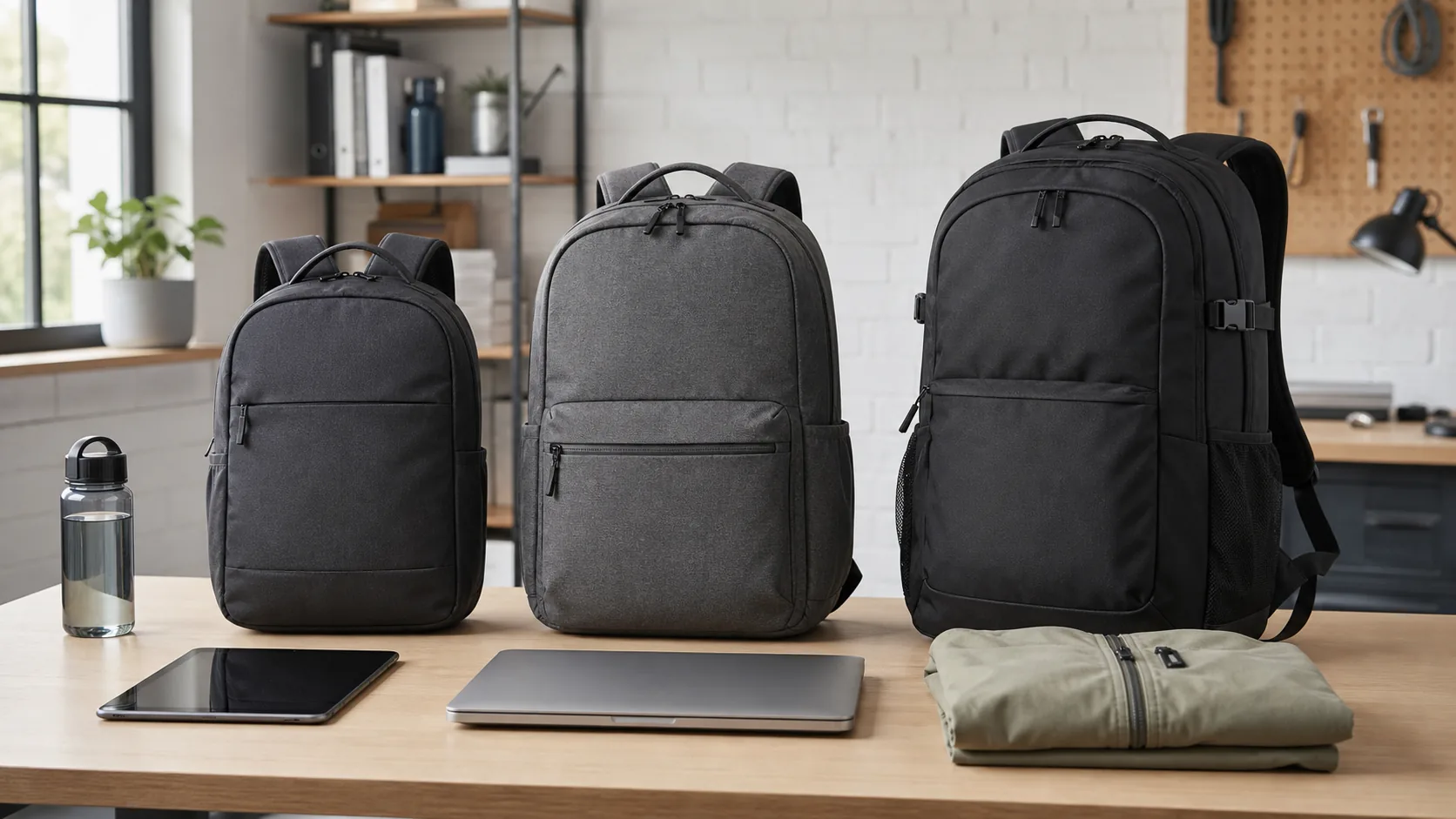
A standard backpack for everyday use typically ranges from 15 to 25 liters, with dimensions around 17 x 12 x 6 inches providing a useful starting point. There is no single universal standard, so the right size still depends on the load, user, and application.
A work bag that strains around a laptop is too small, while an oversized pack can feel awkward on a crowded commute. Finding the useful middle ground becomes straightforward once you compare capacity, exterior dimensions, fit, and the largest items you carry.
What size is a standard backpack for daily use?
A standard backpack for daily use generally features a capacity of 15 to 25 liters, providing sufficient volume without becoming overly cumbersome. This versatile size allows users to comfortably transport their daily essentials like tech, notebooks, and personal items. When considering what size is a standard backpack, this range serves as the ideal benchmark for most manufacturers and consumers.

What are the average dimensions of an everyday pack?
Everyday daypacks often measure approximately 17 inches in height, 12 inches in width, and 6 inches in depth. These proportions suit many adult daily-carry applications, although harness geometry and the packed load determine how the bag actually sits and distributes weight.
- Height usually ranges from 16 to 18 inches to fit standard torsos.
- Width generally stays between 11 to 13 inches to maintain a slim profile.
- Depth spans from 5 to 7 inches to prevent the bag from pulling backward.
These dimensions create a compact reference profile rather than a guaranteed fit. Selecting a bag that matches the user’s torso, load, and shoulder-strap adjustment supports daily comfort and easier movement during a commute.
How does backpack volume influence daily carry capacity?
Backpack volume represents the total internal space of the bag and dictates how much physical gear you can carry. While external dimensions give you the physical footprint, the volumetric capacity in liters tells you the true storage capability. Understanding this distinction helps you avoid buying a bag that looks large but lacks functional depth.
- 10L to 15L is ideal for light commuters carrying only essential electronics.
- 16L to 25L comfortably holds textbooks, a laptop, and a light jacket.
- 26L to 35L accommodates overnight travel gear and specialized sports equipment.
Material choice and internal compartmentalization also play a major role in how that volume is utilized. Stiff fabrics may limit packing flexibility, while flexible textiles expand slightly to accommodate extra items. Balancing volumetric needs with physical dimensions is the key to maximizing utility.
| Volume Range (Liters) | Example Dimensions | Carrying Capacity Profile |
|---|---|---|
| 10L – 15L | 16″ x 10.5″ x 5″ | Tablet, keys, wallet, light windbreaker |
| 16L – 25L | 18″ x 12″ x 6.5″ | 15-inch laptop, textbooks, lunch, water bottle |
| 26L – 35L | 20″ x 13″ x 8″ | Multi-day clothing, tech gear, shoes |
This volumetric breakdown illustrates how small changes in external dimensions yield substantial increases in total carrying capacity.
How do standard backpack dimensions compare to volume?
Standard backpack dimensions influence physical volume, with a typical 20-liter pack often measuring roughly 18 x 12 x 6 inches. Panel shape, padding, pocket construction, and the manufacturer’s measurement method can produce different capacities from similar exterior dimensions. Comparing both dimensions and stated volume helps buyers gauge real-world packing efficiency.

Why is volume in liters the industry standard?
Liters are the common metric for bag capacity because they express three-dimensional storage in a format that is easy to compare internationally. Manufacturers may use standardized fill media, geometric estimates, or digital modeling, so buyers should confirm whether pockets are included when comparing products from different suppliers.
- Liters capture the capacity of irregular shapes and curved panels.
- A liter-based rating simplifies international sizing standards for global brands.
- A documented volumetric method can account for irregular compartments and pockets.
Relying strictly on length, width, and height can be misleading due to tapered designs. A bag with rectangular corners will naturally hold more than a teardrop-shaped bag of the same height. Therefore, a consistently measured liter rating is generally more useful than exterior dimensions alone.
How do you measure external dimensions accurately?
To measure external dimensions accurately, you must measure the backpack when it is fully packed rather than flat. Standard flat measurements often underestimate the actual depth and width when the seams are fully extended. Utilizing a flexible tape measure ensures you capture the peak curves of the bag.
- Fill the pack with clothing to expand all internal panels and pockets.
- Measure height vertically between the outermost top and bottom points, including any non-compressible handle that affects the use case.
- Measure width horizontally across the widest section of the back panel.
- Measure depth from the back panel to the outermost front pocket.
Do not forget to include prominent external attachments like side water bottle pockets in your final width calculation. These minor elements can quickly push a bag past strict airline personal item dimensions. Accurate tracking of these three axes prevents unexpected packing or travel issues.
| Measurement Method | Dynamic State | Accuracy Level | Best Used For |
|---|---|---|---|
| Flat Lay | Empty / Compressed | Low | Flat-pack shipping, storage planning |
| Fully Packed | Expanded / Stuffed | High | Airline sizing checks, packed footprint |
Comparing these two measuring states highlights the physical expansion that occurs once a backpack is packed for active use.
Which standard backpack size fits your daily routine?
The standard backpack size that fits your daily routine depends on your specific lifestyle needs, but a 20-liter pack is generally the most versatile choice. This volume easily accommodates school supplies, office technology, or light travel gear without feeling excessively bulky. Determining what size is a standard backpack for your schedule ensures a comfortable, organized day from start to finish.

Is a standard school backpack big enough for textbooks?
A standard school backpack in the 20 to 24-liter range can hold multiple textbooks, binders, and electronics. Capacity alone does not prevent overpacking, so the packed weight still needs to be checked. Choosing a bag with structured compartments helps keep heavier books close to the back and distribute the load more evenly.
- Provides dedicated sleeves to protect Chromebooks or tablets from heavy books.
- Features front organizer pockets for quick access to pens, keys, and cards.
- Includes dual mesh side pockets designed for large water bottles.
An overloaded or poorly adjusted school bag can contribute to shoulder, neck, or back discomfort. A compact capacity can discourage unnecessary packing, but adults should check the actual load and fit rather than rely on liters as a safety limit.
What makes a standard work backpack professional yet spacious?
A professional work backpack combines a slim exterior aesthetic with highly organized internal compartments to protect valuable business tools. These packs generally range between 16 and 22 liters, maintaining a professional silhouette for corporate offices. The goal is to look polished while having dedicated spots for charging bricks, cables, and paperwork.
- Features padded tech sleeves to isolate and protect sensitive laptops.
- Includes concealed passport or wallet pockets for safe urban transit.
- Utilizes premium materials like ballistic nylon or leather for a refined look.
A bulky backpack can look unprofessional in a boardroom setting. Keeping the profile narrow prevents you from bumping into passengers on crowded commuter trains. Investing in a professional-grade work pack ensures your gear stays safe and your style remains sharp.
Why is a standard daypack ideal for weekend excursions?
A standard daypack is a practical companion for weekend hikes or quick day trips due to its lightweight and functional design. Typically sizing between 20 and 25 liters, it offers enough space for extra layers, snacks, and safety gear. Knowing what size is a standard backpack for the outdoors prevents you from hauling heavy, multi-day frames on simple trails.
- Equipped with external lash points or bungee cords for hiking poles.
- Utilizes highly breathable mesh backing to keep your back cool.
- Incorporates a sternum strap to stabilize the load on uneven terrain.
This versatility makes the daypack a favorite for active individuals who transition from city streets to forest paths. It compresses down easily when empty and expands to carry common outdoor essentials. Choosing this format leaves room for the equipment needed on many short excursions.
| Daily Routine | Recommended Volume | Key Functional Highlight |
|---|---|---|
| Academic / School | 20L – 24L | Dual main compartments, heavy book support |
| Corporate Office | 16L – 22L | Padded 15.6″ laptop compartment, slim profile |
| Weekend Daypack | 22L – 25L | Hydration sleeve compatibility, sternum strap |
This practical comparison showcases how different daily activities align with specialized structural layouts and volumetric targets.
How do you choose the right backpack size for your fit?
Choosing the right backpack size for your fit means considering torso length rather than relying solely on overall height, especially for framed or load-bearing packs. For simpler everyday bags, back-panel length, shoulder-strap range, and load position are practical fit checks. Brands developing custom travel backpacks should validate these dimensions on the intended user group.

How do you match a backpack to your daily needs?
Matching a backpack to your daily needs starts with listing the absolute largest items you must carry regularly. If your daily routine demands a 17-inch laptop alongside bulky gym shoes, your baseline size requirement will naturally increase. Properly identifying these objects saves you from purchasing an inadequate, cramped model.
- Assess your daily payload by laying out your routine essentials on a table.
- Factor in seasonal changes where you might need to pack bulky jackets.
- Account for commuter logistics such as subway crowds or bike rides.
A well-matched bag should fit your regular cargo comfortably with a small amount of leftover space for unpredictable items. Overstuffing a bag places unnecessary stress on the zippers and seams, reducing its overall lifespan. Therefore, planning ahead is the best strategy for long-term satisfaction.
Why are fit and comfort critical to long-term wear?
Fit and comfort are critical to long-term wear because carrying an improperly fitted backpack can lead to chronic shoulder, neck, and lower back pain. When a backpack’s torso length is mismatched, the weight shifts backward, forcing you to lean forward unnaturally. Ergonomically designed harnesses help keep the pack’s center of gravity close to your spine.
- Load-lifter straps pull the pack weight forward against your upper back.
- A properly fitted load-bearing hip belt can shift a substantial share of pack weight from the shoulders to the hips.
- Contoured S-curve shoulder straps can reduce edge pressure and underarm rubbing when correctly sized.
Ergonomic features matter when you commute on foot or stand for long periods. Your backpack should move with you rather than pull away from the back. Prioritizing proper fit supports more comfortable daily commutes and helps reduce avoidable pressure points.
What is the standard carry-on compatibility for airlines?
Airline carry-on and personal-item limits vary. Some major U.S. airlines use 22 x 14 x 9 inches for an overhead carry-on and 18 x 14 x 8 inches for a personal item, but other airlines, fare classes, aircraft, and routes can impose different size or weight limits.
- Many packs under 25 liters can fit under a seat, but exterior dimensions and the packed shape decide compliance.
- Soft-sided bags are easier to compress into tight metal airline sizers.
- External pockets should not be overstuffed when traveling on budget flights.
Checking the operating airline’s current dimensional and weight rules before packing is essential. Many modern travel backpacks are designed to use these regulatory envelopes efficiently. Keeping the packed bag within the applicable allowance reduces the risk of a gate check or baggage fee.
| Travel Placement | Common U.S. Reference | Approximate Volume | Packing Constraint |
|---|---|---|---|
| Under-Seat (Personal Item) | 18″ x 14″ x 8″ | 18L – 22L | Must fit completely flat under passenger seat |
| Overhead Bin (Carry-On) | 22″ x 14″ x 9″ | 30L – 45L | Must fit within rigid metal airport sizers |
Treat these figures as design references, not universal rules, and verify the operating airline’s current policy before every trip.
What size is a standard laptop backpack for professionals?
A standard laptop backpack for professionals typically ranges from 18 to 22 liters, featuring specialized, heavily padded tech sleeves to isolate electronic devices. This specific volume accommodates modern computing gear along with supporting files, chargers, and small accessories. Knowing what size is a standard backpack in this category allows professionals to transport expensive hardware securely and stylishly.

Will a standard laptop backpack fit a 15-inch screen?
Many laptop backpacks in the 18 to 22-liter range are designed for 15-inch devices, and some fit 16-inch models. Capacity does not determine laptop fit by itself; the sleeve’s usable height, width, depth, opening, and corner shape must match the device.
- Compartments are usually 15 to 16 inches tall and 10 to 11 inches wide.
- Sleeves are elevated from the bottom of the bag to prevent ground impact.
- Elastic strap closures keep the laptop securely in place during bumpy rides.
Always measure the physical bezel of your computer rather than relying on diagonal screen sizes alone. Some older rugged laptops have thick frames that require a slightly wider compartment than standard modern ultrabooks. Confirming these dimensions beforehand helps achieve a secure fit for your workstation.
What functional features protect your electronic devices?
High-quality professional tech bags employ multi-layered padding and shock-absorbing materials to shield your electronics from accidental drops. These physical safeguards are integrated directly into the walls of the laptop compartment to absorb sudden impacts. Proper protection ensures that daily bumps do not translate into expensive hardware failures.
- High-density foam lining provides a soft barrier against scratches and minor impacts.
- Coated zippers and storm flaps can reduce water entry, although they do not make a compartment waterproof by themselves.
- Soft, non-abrasive lining helps prevent cosmetic scratches during daily movement.
These built-in protective features are what elevate professional bags over simple school sacks. Investing in high-grade protection offers immense peace of mind when carrying thousands of dollars in tech. Selecting a well-featured laptop bag is a smart insurance policy for your remote work setup.
| Laptop Screen Size | Compartment Depth/Height | Recommended Bag Volume | Protection Standard |
|---|---|---|---|
| 13-Inch – 14-Inch | 14.5″ x 9.5″ | 15L – 18L | Basic padded sleeve |
| 15-Inch – 16-Inch | 16.0″ x 10.5″ | 18L – 22L | Suspended padded pocket (False Bottom) |
| 17-Inch | 17.5″ x 11.5″ | 24L – 30L | Large suspended padded sleeve |
This technical breakdown demonstrates how laptop size requirements dictate the optimal backpack capacity and protection level needed.
How do you determine the standard school backpack size?
Determining a school backpack size requires matching the student’s body size and actual school load with an approximate 12 to 24-liter range. Younger students generally need compact, lightweight designs, while many high school and college students use larger multi-compartment packs. The student’s fit and packed weight matter more than the age label alone.
What is the standard size range for elementary students?
For elementary students, the standard school backpack size stays within a conservative range of 12 to 15 liters. This restricted volume prevents young children from packing heavy, unnecessary items that could damage their posture. A bag that is too large will hang too low, pulling the child’s shoulders backward.
- Height should remain under 15 inches to align with shorter torsos.
- Padded shoulder straps must be fully adjustable to fit small frames.
- Lightweight materials like polyester prevent adding unnecessary base weight.
The American Academy of Pediatrics advises that a child’s loaded backpack should not exceed 15 percent of body weight. Adults should also watch for leaning forward, pain, numbness, or strap marks and reduce the load or seek professional guidance when needed. Keeping the bag proportional and lightweight is the practical approach for elementary school.
How do high school and college backpacks increase in size?
As students transition into high school and college, their carrying needs expand dramatically, pushing the standard backpack size to 20 to 24 liters. This increase in capacity accommodates heavier textbooks, larger binders, personal tech, and athletic clothing. The design must pivot toward a more robust, multi-compartment structure to manage these larger payloads.
- Reinforced base materials prevent tearing under the pressure of heavy books.
- Dedicated water bottle and tech organization dividers keep items separated.
- Ergonomic S-curve shoulder straps distribute heavy loads more comfortably.
College students often spend the entire day on campus, requiring a bag that acts as a mobile workstation. Selecting a larger capacity with smart internal organization prevents the bag from becoming a disorganized black hole. Ultimately, investing in a durable, larger-capacity pack is essential for managing dense academic schedules.
| Academic Grade Level | Recommended Bag Volume | Typical Height Limits | Key Feature Requirement |
|---|---|---|---|
| Elementary (K-5) | 12L – 15L | 14″ – 15″ | High-contrast reflective safety strips |
| Middle School (6-8) | 15L – 20L | 16″ – 17″ | Double main compartments, pen organizers |
| High School / College | 20L – 25L | 18″ – 19″ | Padded laptop pocket, heavy-duty base fabric |
This academic progression table provides planning ranges; final dimensions should be checked against the student, curriculum, and largest required item.
What are standard travel backpack size regulations?
Travel backpack regulations vary by airline. The often-cited 18 x 14 x 8-inch personal item and 22 x 14 x 9-inch carry-on limits are useful U.S. reference points, not an industry-wide allowance. Designing around the intended airline set, aircraft, fare class, and weight rule is essential.
What are the standard carry-on limits for major airlines?
Several major U.S. airlines cap overhead carry-ons at 22 x 14 x 9 inches, but airlines regulate exterior dimensions rather than liters. Depending on shape, a 35 to 45-liter backpack may or may not fit that envelope, and many international or low-cost carriers apply smaller dimensions or a separate weight limit.
- American Airlines currently lists 22 x 14 x 9 inches as its maximum carry-on dimensions; policies can change.
- International airlines often enforce strict weight limits along with dimensions.
- Compression straps help pull the bag’s depth down to meet tight size limits.
Exceeding these measurements even slightly can result in your pack being relegated to the cargo hold. Many specialized travel packs feature tuck-away shoulder straps to prevent catching on airport conveyor belts. Selecting a compliant carry-on backpack keeps you moving quickly and efficiently through airport security.
Can a standard personal item backpack replace a carry-on?
A standard personal-item backpack can replace a full-sized carry-on for some minimalist travelers on short trips. These bags often range from 18 to 22 liters, but they still need to fit the operating airline’s under-seat allowance when fully packed.
- Forces you to pack only standard, highly versatile clothing items.
- Ensures your essentials, tech, and medication remain within arm’s reach.
- Can reduce luggage fees on fares that include a free personal item but charge for a carry-on.
Packing organizers like compression packing cubes can help organize this smaller volume. Place dense items close to the back panel and avoid overfilling exterior pockets. For suitable trips, a personal-item-only approach can simplify airport movement and keep essentials accessible.
| Airline Bag Classification | Planning Range | Common U.S. Reference | Primary Placement |
|---|---|---|---|
| Personal Item | 18L – 22L | 18″ x 14″ x 8″ | Under-seat space |
| Overhead Carry-On | 35L – 45L | 22″ x 14″ x 9″ | Overhead storage bin |
This breakdown highlights how utilizing a personal-item-sized pack offers maximum accessibility while saving on baggage fees.
How do specialty sports backpacks differ in size?
Specialty sports backpacks often use larger, highly customized dimensions, frequently around 30 to 35 liters, to accommodate bulky equipment such as rackets, balls, and shoes. These packs add pockets and attachment systems that are uncommon on standard commuter bags.
What makes athletic and tactical packs unique in size?
Athletic and custom tactical backpacks often require a broader or deeper footprint to carry irregular gear such as helmets, protective equipment, or hydration systems. Many fall in the 30 to 40-liter range and may use rugged high-denier nylon or comparable fabrics. Internal retention and compression features, rather than size alone, control gear movement.
- Tactical bags feature MOLLE webbing to attach extra gear pouches externally.
- Athletic packs utilize separated, ventilated mesh zones for wet activewear.
- Heavy-duty sternum and waist straps secure the pack close to the body.
These physical adjustments ensure that specialized gear does not damage the pack’s primary structure. The reinforced walls and heavy-duty sewing techniques are specifically rated for rugged, real-world use. Investing in a high-capacity specialty pack ensures your critical gear remains organized and accessible under pressure.
How does a court sports bag compare to standard packs?
A court sports bag is often taller or wider than a standard commuter pack, with 19 x 13 x 9 inches serving as one useful product-development reference. Purpose-built tennis backpacks may include shaped openings, handle retention, shoe storage, or insulated compartments according to the target sport and price point.
- May include insulated racquet chambers intended to reduce rapid temperature exposure.
- Features ventilated base pockets to keep dirty shoes isolated from clean clothes.
- Incorporates quick-access mesh pouches designed to hold tennis balls and bottles.
Standard backpacks often lack the height and support required for wide racket frames. A poorly fitted general-purpose bag can leave equipment unsupported or place stress on fabric and closures. A dedicated court-sports layout provides more predictable protection and organization.
| Specialty Sport Bag | Target Volume | Standard Footprint (H x W x D) | Unique Structural Feature |
|---|---|---|---|
| Tennis Backpack | 30L – 35L | 19.5″ x 13″ x 9.5″ | Thermal racquet pocket, vented shoe slot |
| Tactical Assault Pack | 35L – 40L | 20.0″ x 12″ x 8.0″ | MOLLE attachment loops, heavy 1000D nylon |
| Standard Daypack | 20L – 22L | 18.0″ x 12″ x 6.5″ | Slim document sleeve, simple layout |
This comparison illustrates how specialized sports bags adapt their physical dimensions and features to handle unique gear profiles.
How can you contact us today for custom manufacturing?
You can reach our team through the website to discuss custom OEM backpack requirements. If your brand is unsure which size suits its target market, our team can help translate the use case, device dimensions, capacity, materials, and target price into a testable specification. Review our capabilities and contact us today to discuss the project scope.
Why choose us as your dedicated OEM bag manufacturer?
Choosing a dedicated OEM bag manufacturer gives a brand one production partner for specification review, material sourcing, sampling, bulk production, and inspection planning. Our facility works with diverse bag materials and construction requirements, from heavy-duty canvas to neoprene.
- Offers end-to-end design assistance, including material sourcing and patterning.
- Can discuss order quantities and sampling plans based on the design and materials.
- Can provide applicable compliance or audit documentation for buyer review when confirmed for the project.
We focus on long-term partnerships through clear communication, documented approvals, and agreed inspection requirements. Confidentiality terms, delivery schedules, quality criteria, and remedies should be confirmed in the commercial agreement for each project.
How do we turn your custom backpack designs into reality?
We turn your custom backpack designs into physical reality through a highly structured, collaborative four-step manufacturing process. First, our engineering team reviews your initial sketches, tech packs, or physical reference samples to analyze production feasibility. Next, we select the optimal fabrics and hardware components that fit your target price point.
- Develops precise physical prototypes for your team to test and approve.
- Executes high-capacity bulk manufacturing using advanced computer-guided stitching.
- Conducts final quality inspections before packaging and shipping your inventory.
This step-by-step approach uses the approved sample and specification as the production reference. Pre-production confirmation and an agreed inspection plan reduce avoidable manufacturing risk before shipment.
| Manufacturing Stage | Operational Focus | Timing Basis | Client Deliverable |
|---|---|---|---|
| Design & Sourcing | Material selection, tech pack analysis | Confirm after specification review | Detailed cost estimate |
| Prototype Sampling | Physical sample fabrication | Confirm by design and material lead time | Working prototype bag |
| Bulk Production | Cutting, sewing, assembly, inspection | Confirm after sample approval | Inspected production inventory |
This clear manufacturing workflow ensures complete transparency and high product consistency from the initial sketch to final delivery.
What are the most common standard backpack size FAQs?
The most common standard backpack size FAQs focus on airline carry-on rules, school-age fit recommendations, and material-specific maintenance routines. Addressing these common queries helps consumers make informed purchasing decisions based on verified manufacturing specifications. Understanding what size is a standard backpack for daily use resolves confusion regarding sizing conversions and real-world utility.
Can I use a standard backpack as an airline carry-on?
Yes, when its fully packed exterior dimensions and weight meet the operating airline’s current allowance. A 15L to 28L label alone does not establish whether the bag qualifies as a personal item or overhead carry-on.
What’s the best standard backpack size for middle schoolers?
A 15 to 20-liter backpack is a practical starting range for many middle schoolers. Check the student’s body size, largest folder or device, required daily load, and loaded weight, then adjust both shoulder straps so the pack sits close to the back.
How do I know if a 20L backpack is too small for my laptop?
Compare the laptop’s full height, width, and thickness with the sleeve’s usable internal dimensions and opening. A 20L bag often fits a 15-inch laptop, but capacity alone cannot guarantee compatibility.
Can I customize the standard sizing of a backpack for my brand?
Yes. An OEM project can adjust exterior dimensions, compartment depth, materials, hardware, padding, and pockets around the target user and load. Brands can also use small-batch product testing to validate a size concept before a larger order when the commercial plan allows it.
What’s the best way to clean a neoprene daily backpack?
Follow the finished bag’s care label because adhesives, coatings, foam, trims, and printing can change the safe method. When permitted, gentle hand cleaning with mild detergent and shaded air drying is usually safer than machine washing or heated drying.